

Cart
0
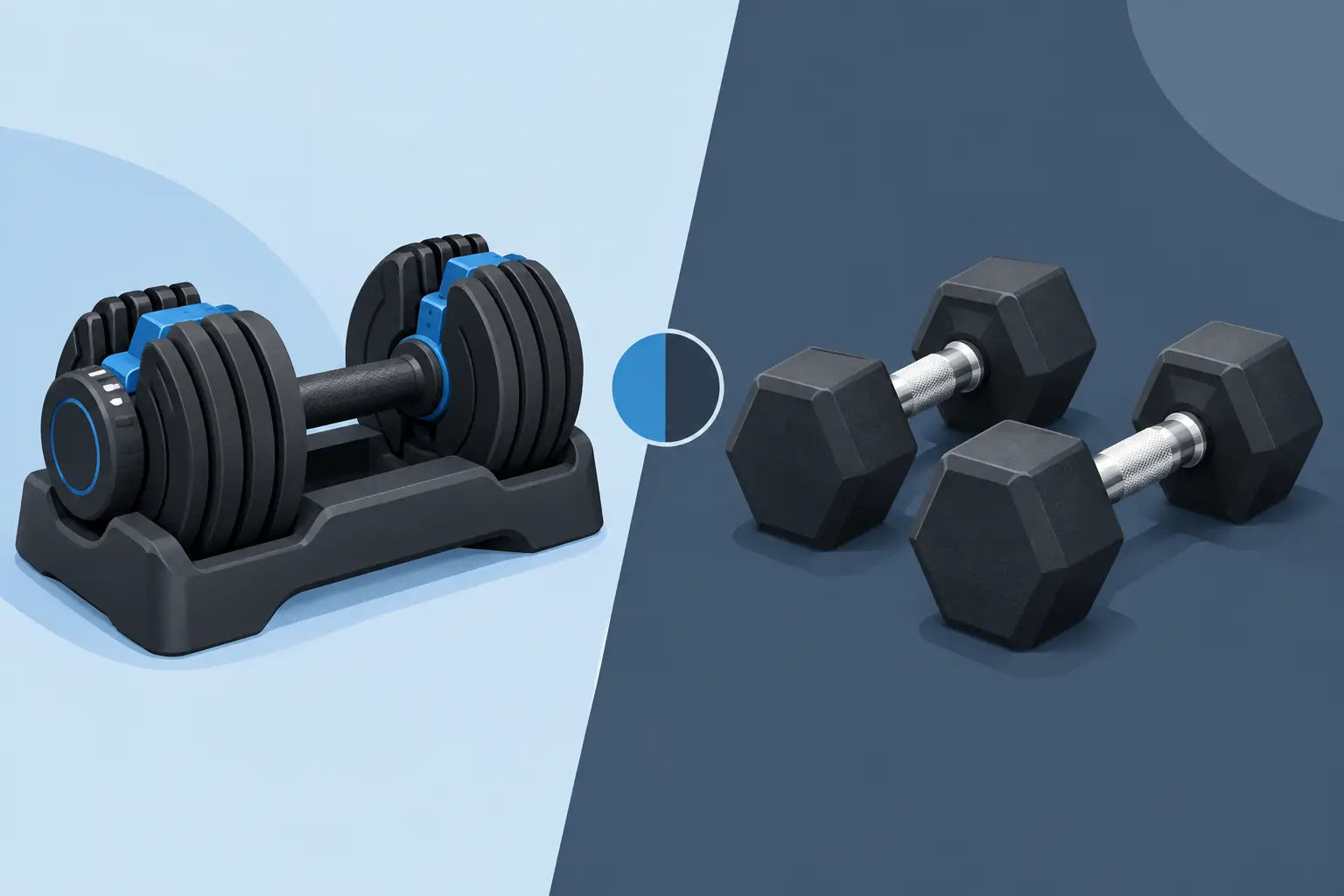
A crowded home gym can kill momentum before your first set. That is why the adjustable versus fixed dumbbells decision matters more than it seems. The right pair helps you train consistently, push for progress, and keep your workout space ready for action. The wrong pair can leave you short on weight, frustrated by slow changes, or tripping over equipment you do not have room to store.
Neither option wins for every lifter. Adjustable dumbbells bring versatility into a compact footprint. Fixed dumbbells bring fast, dependable training with a classic gym feel. Your best choice comes down to how you train, how much room you have, and how hard you plan to push.
Adjustable Versus Fixed Dumbbells: The Real Difference
Adjustable dumbbells let you change resistance on one handle. Depending on the design, you turn a dial, move a selector pin, slide weight plates onto a bar, or use a locking collar. One pair may replace several pairs of traditional dumbbells.
Fixed dumbbells have one permanent weight each. A 15-pound dumbbell stays 15 pounds. To train at different loads, you need multiple pairs, usually stored on a rack or along a wall.
That simple difference changes your training experience. Adjustable sets prioritize space and flexibility. Fixed sets prioritize speed, durability, and a no-distractions lift. Think less about which type is universally better and more about what will make you train hard, stay strong, and come back tomorrow.
Why Adjustable Dumbbells Earn Their Space
For most people building a home gym in an apartment, spare room, or garage corner, adjustable dumbbells are a practical starting point. Instead of buying and storing five or ten pairs of weights, you can cover a wide range of resistance with one compact set.
That range gives beginners room to grow. You may start with lighter weights for presses, rows, lunges, and curls, then increase resistance as those movements get stronger. You do not have to replace your dumbbells every time your current weights stop feeling challenging. That makes adjustable options especially useful for full-body training and progressive overload.
They can also be a smart value over time. A quality adjustable pair may cost more upfront than one fixed pair, but it can cost less than building out a full set of individual weights. If your budget needs to cover other essentials like resistance bands, a bench, a foam roller, or recovery tools, saving floor space and limiting duplicate purchases can make a big difference.
There is a training benefit, too. Adjustable dumbbells make it easy to use different loads within the same session. You can go heavier for goblet squats and Romanian deadlifts, then drop down for lateral raises or triceps work. That flexibility supports stronger workouts without filling your home with iron.
Where Adjustable Dumbbells Can Slow You Down
The trade-off is transition time. Changing the weight between exercises or sets is not always instant, particularly with plate-loaded models. If you train circuits, supersets, or fast-paced conditioning sessions, those pauses can break your rhythm.
Some adjustable designs also feel longer or bulkier than fixed dumbbells. That may not matter for rows and presses, but it can feel awkward during movements that need a compact, balanced weight, such as dumbbell snatches, certain curls, or close-grip presses. The shape can limit range of motion for some people.
Durability depends heavily on the construction. Selector mechanisms need care. Plates need to lock securely. Adjustable dumbbells should be set down with control, not dropped after a hard set. If you want equipment that can handle years of rough, high-volume use, fixed dumbbells usually have the edge.
Why Fixed Dumbbells Feel Built for Work
Fixed dumbbells are simple on purpose. Grab the weight you need and start your set. No dial, no locking pin, no plates to load. That convenience is powerful when your goal is to keep moving and make every minute count.
They shine in strength circuits, HIIT-style sessions, supersets, and workouts shared by more than one person. If one person is pressing 25 pounds while another is rowing 40 pounds, both weights are ready at the same time. You can move from curls to shoulder presses without stopping to reconfigure anything.
Fixed dumbbells also tend to feel more balanced in the hand. Their shorter, consistent design makes them easy to control through a wide range of exercises. Hex dumbbells, in particular, are a solid choice for home training because their flat sides help prevent rolling and support moves like dumbbell push-ups, renegade rows, and floor presses.
For lifters who train heavy, fixed options offer confidence. There are no moving parts to inspect before a set. Quality rubber or urethane-coated dumbbells can take serious daily use, protect floors better than bare metal, and hold up through tough training blocks.
The Space and Cost Reality
The downside is clear: a complete fixed dumbbell collection takes room. A few pairs can sit neatly in a corner, but a true range of weights calls for a rack and a dedicated area. That is a great setup if you have a garage gym or spare room. It is less practical if your workout area is also your bedroom or living room.
The cost builds as your collection grows. Buying only two or three pairs is manageable, but adding every weight jump from light to heavy is a bigger investment. You may also outgrow the weights you started with, then need to purchase additional pairs to keep making progress.
Choose Based on How You Actually Train
If your home gym is short on space and you want one tool that can support nearly every basic strength exercise, adjustable dumbbells are hard to beat. They work well for beginners, general fitness routines, and anyone focused on getting stronger without turning their home into a commercial gym.
If you train with intensity, move quickly between exercises, or want a more traditional lifting setup, fixed dumbbells are worth the footprint. They are especially strong for intermediate lifters who already know they enjoy dumbbell training and have room to build a collection over time.
A hybrid setup can be the strongest answer. Use adjustable dumbbells for your heavier and less frequently used weight ranges, then keep one or two fixed pairs for lighter, high-rep work. For example, fixed 10- and 20-pound dumbbells make quick sessions and warm-ups easier, while adjustable weights cover presses, rows, squats, and deadlifts. You get speed where it matters and flexibility where it saves space.
What to Check Before You Buy
Do not choose based on weight range alone. Check the smallest available increment. Smaller jumps make it easier to progress safely, especially for shoulder exercises, curls, and other movements where adding 10 pounds at once may be too much.
Pay attention to handle grip and overall dimensions. A secure grip supports better control when your hands get sweaty. If you have smaller hands, extra-thick handles may feel uncomfortable. For adjustable sets, make sure the handle length and plate shape will not interfere with the exercises you use most.
Consider the maximum weight with honesty. A lighter set may be enough for raises, presses, and accessory work, but legs and back often need more resistance as you improve. Buying equipment that gives you room to grow helps prevent a stall six months from now.
Finally, think about your floor and storage. A protective mat helps reduce noise and wear, especially in apartments. Fixed dumbbells need an organized storage plan. Adjustable dumbbells need a stable tray or base and careful handling. Good equipment lasts longer when your setup supports it.
Your dumbbells should remove excuses, not create them. Choose the option that fits your space, supports your next level of strength, and makes you want to pick it up again. At Grit Gain Co., the goal is simple: build a setup that helps you achieve more, one hard-earned rep at a time.

