

Cart
0
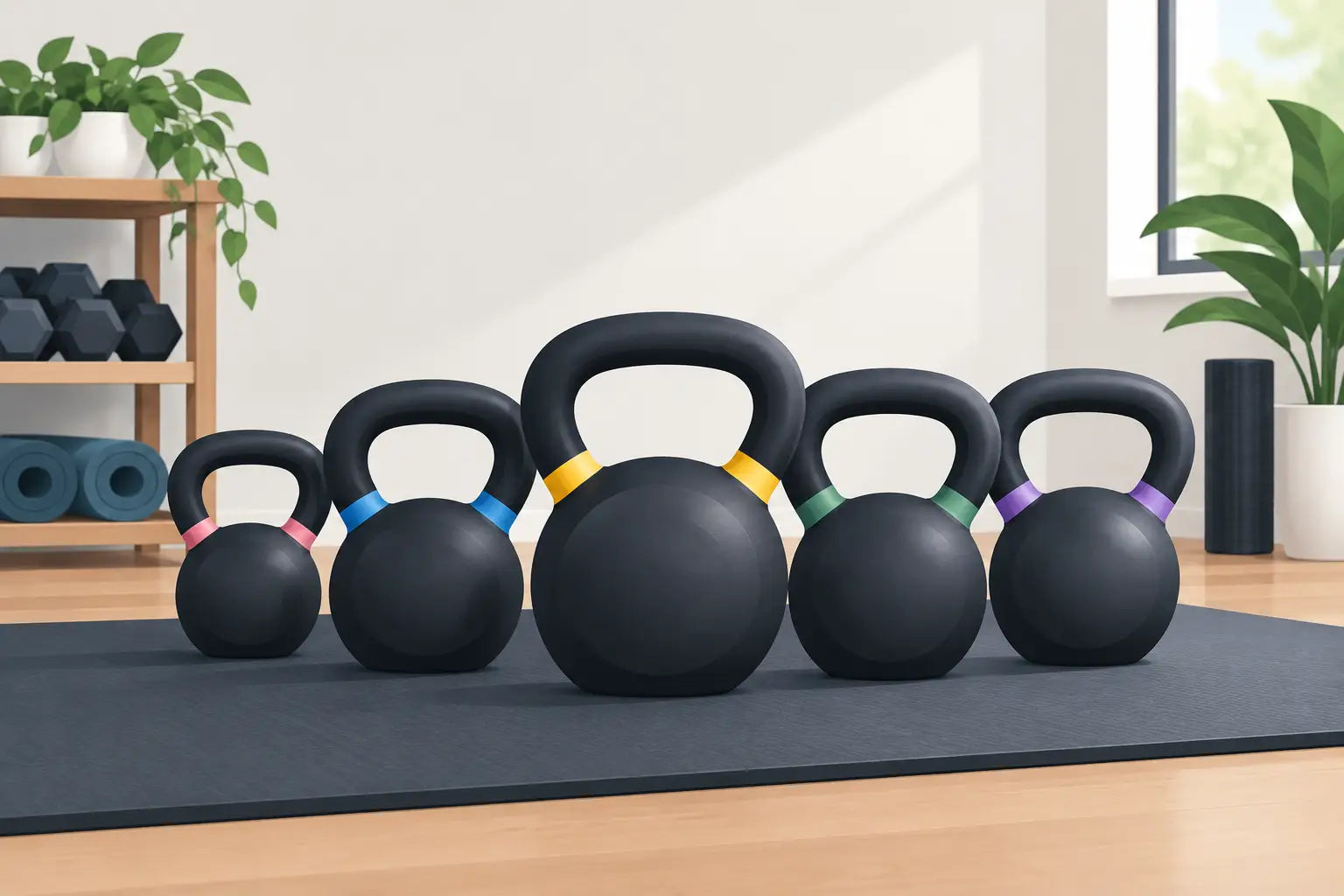
A kettlebell set review should answer one question before anything else: will these weights keep up when your workouts get stronger? A bargain set that chips, wobbles, or leaves you stuck between weights can slow down a home gym fast. The right set gives you room to swing, press, squat, carry, and progress without cluttering every corner of the room.
Kettlebells earn their space because they make simple movements work harder. A single bell can train your legs, grip, shoulders, core, and conditioning in one session. A well-chosen set turns that versatility into a long-term strength tool instead of a short-lived impulse buy.
Kettlebell Set Review: What Makes a Set Worth Buying
The best kettlebell set is not automatically the heaviest, the cheapest, or the one with the most pieces. It is the one that matches your current ability while leaving a clear path forward. That means looking beyond the total weight included in the box.
Start with the weight range. Most beginners benefit more from a few useful jumps in weight than a pile of very light bells. For many adults, a set that includes options for lighter presses and rows, a moderate bell for squats and carries, and a heavier bell for deadlifts and swings creates a solid foundation. Your exact starting point depends on your current strength, training background, and the exercises you plan to do.
If you are new to resistance training, it is better to start conservatively and own the movement than to force heavy swings with poor control. If you already train with dumbbells or barbells, do not underestimate how demanding a kettlebell can feel. The offset weight and longer range of motion challenge your grip, core, and coordination differently.
A set also needs useful increments. Large jumps can be frustrating, especially for overhead pressing. You might have the strength to press a 15-pound bell but not yet be ready for a 25-pound one. For lower-body moves and swings, bigger jumps are usually easier to manage. This is why a mixed set often makes more sense than buying several bells that are nearly the same weight.
Handle Comfort Matters More Than It Sounds
A kettlebell handle is where every rep begins. During swings, cleans, snatches, and carries, an awkward handle becomes obvious quickly. Look for a handle that lets you grip firmly without squeezing your hands into a cramped position.
A wider handle gives many lifters room for two-handed swings. It can also make transitions feel more natural as you learn the basics. But wider is not always better. If the handle is oversized or the bell is poorly balanced, it can feel clumsy during presses and cleans. The best fit depends on your hand size and how you train.
Pay attention to the finish as well. Smooth powder-coated handles generally offer a secure grip without feeling harsh. Glossy paint may look sharp at first, but it can become slick when your hands sweat. Bare metal handles can work well for some lifters, though they may feel slippery unless you use chalk. A textured grip should feel controlled, not rough enough to tear your hands after a few rounds.
For home training, comfort is not a luxury feature. It helps you stay consistent. If you dread picking up a bell because the handle pinches or rubs, your equipment is working against you.
Cast Iron, Coated, or Adjustable?
Traditional cast-iron kettlebells are the straightforward choice. They are durable, stable, and ready for repeated use. A quality cast bell has a solid feel through swings, rows, goblet squats, and loaded carries. There are no moving parts to check, which makes it a strong choice for anyone who wants simple equipment that can take regular work.
Vinyl- or neoprene-coated kettlebells add a layer of floor protection and often make weight markings easier to see. They can be a smart option for apartment workouts, lighter training, and beginners building confidence at home. The trade-off is that thick coatings may add bulk, and some finishes do not hold up as well under heavy daily use or accidental drops.
Adjustable kettlebells are built for tight spaces. One compact tool can replace multiple fixed weights, which is appealing if your workout area is a bedroom, office, or small garage. The downside is that adjusting weight takes time, and not every adjustable design feels as balanced as a fixed bell. Before buying, make sure the locking system is secure and easy to use. You should never question whether a weight plate is shifting in the middle of a workout.
There is no universal winner. Fixed bells are usually best for fast, no-excuses training. Adjustable options are practical when space and budget are the main limits. Choose the setup that makes you more likely to train four days from now, not just the one that looks good in a product photo.
Balance and Shape Change the Workout
A kettlebell should feel stable when it rests on the floor and predictable when it moves. Poorly shaped bells can tip, sit awkwardly against the forearm, or pull your wrist into an uncomfortable angle during presses. These issues may not matter for a few deadlifts, but they matter a lot once you start practicing cleans, front-rack squats, and overhead work.
For general home fitness, a compact round body is often a dependable choice. It stays close to your center during carries and feels manageable in goblet positions. Competition-style bells have a more uniform outer size across different weights. That can help athletes who want consistent technique as they move up in load, but it is not a requirement for getting stronger at home.
Try not to judge a bell only by its listed weight. Two kettlebells can weigh the same and still feel completely different in motion. The handle position, body shape, and weight distribution all affect how the bell moves. A set should feel predictable enough that you can focus on your effort and form.
Build a Set Around Real Training
Before choosing a full set, think about the movements you will actually repeat. If your plan is simple full-body workouts, you need weights that support swings, goblet squats, rows, floor presses, and carries. If you want more strength-focused work, you may eventually want matching pairs for double front squats, double presses, and loaded walks.
One bell is enough to begin, but a set removes limits as you improve. Lighter bells are useful for warm-ups, shoulder work, and controlled technique practice. Moderate bells become your everyday workhorses. Heavier bells let your legs and hips do the job they are built for.
A practical home setup can grow in stages. Start with one or two bells you can use safely across several exercises. Add a heavier option once swings and lower-body movements feel controlled. Add a second matching bell if double-kettlebell work fits your goals. This approach protects your budget while keeping progress moving.
Do not buy a very light set simply because it looks beginner-friendly if you expect to train for months. You may outgrow it quickly. On the other hand, buying heavy weights before you have learned basic movement patterns is not grit. It is an unnecessary shortcut toward sloppy reps. Train hard, but earn the load.
Storage, Noise, and Floor Protection
Home equipment has to live where you live. Consider where the kettlebells will sit between sessions and what happens if one lands harder than planned. A dedicated rack keeps multiple bells organized and makes weight changes faster. If you are using only a few pieces, a flat, stable corner of the room works fine, as long as the bells are out of walkways.
A dense exercise mat or rubber flooring helps protect floors and reduces noise. It also gives you a more reliable surface for swings and deadlifts. Avoid thick, soft carpet when possible. It can make your footing unstable and cause bells to sit unevenly.
If you train early, live upstairs, or share your space, plan for quieter movement choices. Carries, presses, rows, squats, and controlled deadlifts can build serious strength without dropping weight. You do not need a loud workout to make it count.
Who Should Buy a Kettlebell Set?
A kettlebell set is a strong fit for people who want full-body training without filling a room with machines. It works for beginners learning strength basics, busy adults who need efficient workouts, and experienced lifters who want conditioning that challenges more than just their muscles.
It may be less ideal if your main goal is maximum barbell strength or highly specific bodybuilding work. Kettlebells can support both, but they are not a full replacement for every piece of equipment. Think of them as a compact strength station: powerful, flexible, and built for action.
At Grit Gain Co., the goal is simple: give your home gym tools that make consistency easier. Pair a smart kettlebell setup with recovery basics such as a foam roller or massage tool, and you have a practical system for training hard and coming back ready.
Pick weights you can control, a handle you trust, and a setup that fits your space. Then put the set where you will see it. The next workout does not need to be complicated. It just needs to happen.

