

Cart
0
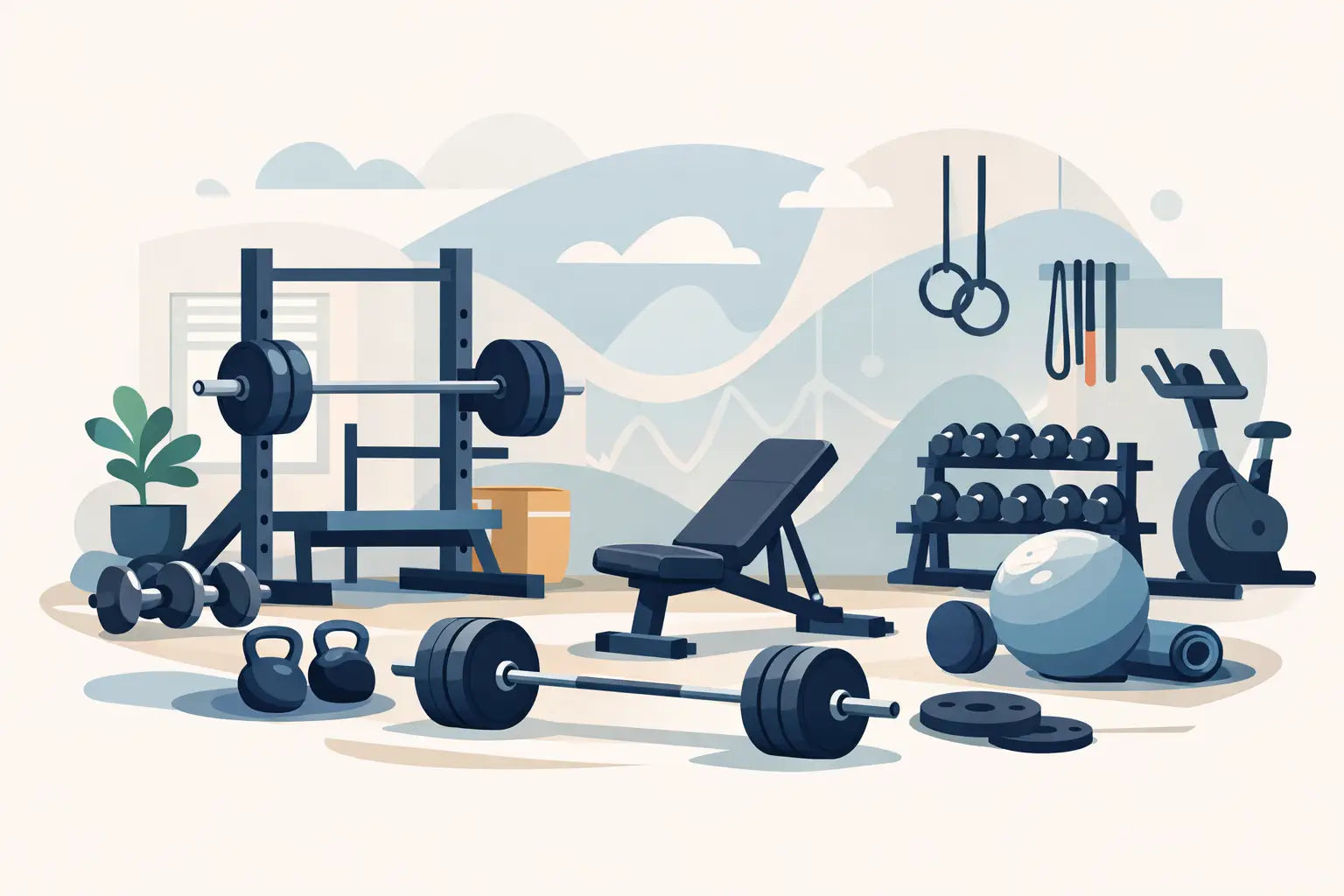
A shaky bench, one too-light dumbbell, and a yoga mat shoved under a bed is not the setup that keeps strength goals moving. The best home gym setup for strength training is the one that matches how you actually train, fits your space, and keeps you consistent when life gets busy. If your gear makes workouts easier to start and easier to stick with, you are already ahead.
Strength training at home does not need to look like a garage packed with steel. For most people, the right setup is simpler than that. You need enough resistance to challenge your main movement patterns, enough floor space to move safely, and a few recovery tools that help you come back strong for the next session.
What the best home gym setup for strength training really needs
A strong setup starts with one question: what lifts or movement patterns are you trying to train consistently? Most people need a way to squat, hinge, press, row, carry, and do some core work. If your equipment covers those basics, you can build real strength without filling every corner of your home.
That is why adjustable tools usually beat oversized single-use machines for home training. Dumbbells, kettlebells, and resistance bands give you more exercise variety per square foot than most larger equipment. They also let beginners start simple while giving intermediate lifters enough room to progress.
The trade-off is worth understanding. A full barbell and rack setup can be better for max strength goals, especially if you want to push heavy squats, bench press, and deadlifts over time. But it also costs more, takes more room, and asks for better flooring and more confidence under load. For a lot of home users, that is more setup than they need right now.
Start with the core strength tools
If you want the most practical build, start with dumbbells. They are the backbone of a smart home gym because they handle presses, rows, squats, split squats, Romanian deadlifts, carries, and plenty of accessory work. A lighter pair and a moderate-to-heavy pair can cover a surprising amount of training, especially for beginners and intermediate lifters.
Kettlebells are the next strong add. They are especially useful if you want strength with a conditioning edge. Goblet squats, swings, cleans, presses, and carries all train power, control, and grip. If your space is tight, one or two kettlebells can earn their keep fast.
Resistance bands do not replace free weights, but they solve a lot of problems. They add warm-up options, make rows and presses possible without bulky machines, and give you joint-friendly ways to train shoulders, glutes, and upper back. Bands also help when your dumbbells are not heavy enough yet because you can combine them with bodyweight or weighted movements.
A jump rope is not required for strength, but it is a useful low-space conditioning tool. It helps with warm-ups, footwork, and work capacity. If you like quick sessions, it makes it easier to get your heart rate up before lifting.
Build around your space, not fantasy
The best home gym setup for strength training depends on where it is going. A spare room gives you options. An apartment bedroom or living room corner asks for a more disciplined approach. Either way, function beats looks.
You do not need a huge footprint. Enough room to lie down, hinge safely, press overhead if ceiling height allows, and move side to side is usually enough. If your ceiling is low, skip overhead movements that force bad form and put more focus on floor presses, front raises, rows, and split-stance work.
Flooring matters more than people think. If you are lifting on slippery tile or thin carpet, your training will feel unstable fast. A solid exercise mat or protective flooring helps with traction, joint comfort, and noise. It also protects your floors if you are using heavier weights.
Storage matters too. If your setup is a mess, motivation drops. A simple rack, basket, or dedicated corner for dumbbells, bands, rollers, and accessories keeps the space ready. The easier it is to start, the more often you will train.
How to choose gear based on your level
If you are just starting, keep it tight. A pair of dumbbells, a few resistance bands, a mat, and a foam roller can carry months of progress. You do not need to buy every tool on day one. Your first goal is consistency, not collecting equipment.
If you are at an intermediate level, progression becomes more important. That usually means heavier dumbbells or kettlebells, stronger bands, and possibly a bench if you have room for one. At this stage, variety helps, but only if it supports better training rather than distracting from it.
If strength is your main priority and you already know you will train hard for the long run, a bench and a wider range of loading options can make sense. Still, it depends on space, budget, and noise tolerance. Home setups should remove excuses, not create new headaches.
Do not ignore recovery and mobility
A lot of people build the training side of a home gym and forget the recovery side. That is a mistake. If you want to train hard and stay strong, recovery tools deserve space in the setup too.
A foam roller is one of the easiest wins. It helps reduce stiffness, improve tissue quality, and make warm-ups feel less sluggish. It is not magic, but it can help you move better before training and feel less beat up after.
A massage gun is a strong add for people who deal with soreness, long workdays, or tight muscles from sitting. It will not replace sleep or smart programming, but it can help you recover faster between sessions and feel more ready to train.
Mobility bands or lighter resistance bands are useful here too. They support shoulder prep, hip activation, and general movement work. If posture is an issue from desk time, posture support tools can also help reinforce better habits outside the workout itself.
This is where a brand like Grit Gain Co. fits naturally. Strength is not just about lifting harder. It is also about recovering well enough to show up again tomorrow.
The smartest setup is one you can progress with
Progression is what separates a real strength setup from random gear. You need a way to make movements harder over time. That can mean adding load, adding reps, slowing tempo, increasing range of motion, or tightening rest periods. If your equipment gives you no path forward, your results will stall.
This is why adjustable resistance is so useful. A fixed light dumbbell may work for curls and raises forever, but it will stop challenging your lower body quickly. Your setup should let your strongest patterns grow, not just your smallest ones.
That said, more equipment is not always better. Too much gear can make training feel scattered. A focused setup with a few versatile tools usually beats a crowded room full of things you barely use.
A practical setup for most people
For most adults training at home, the sweet spot looks like this: a couple sets of dumbbells, one or two kettlebells, a resistance band set, a durable mat, and at least one recovery tool like a foam roller or massage gun. Add a jump rope if you want simple conditioning. Add a bench only if you know you will use it often enough to justify the space.
That mix gives you strength work for upper and lower body, core training, warm-up options, conditioning, and recovery support without turning your home into a commercial gym. It is practical, efficient, and easy to build in stages.
If your budget is limited, start with dumbbells and bands. If your budget is wider, build in layers instead of buying everything at once. Use what you have for a few weeks, notice what is missing, and add gear that solves a real problem.
The best setup is not the most expensive one or the one that looks impressive online. It is the one that gets used on tired weekdays, early mornings, and busy weekends. Train hard. Stay strong. Build a space that makes progress easier, and your results will follow.

