

Cart
0
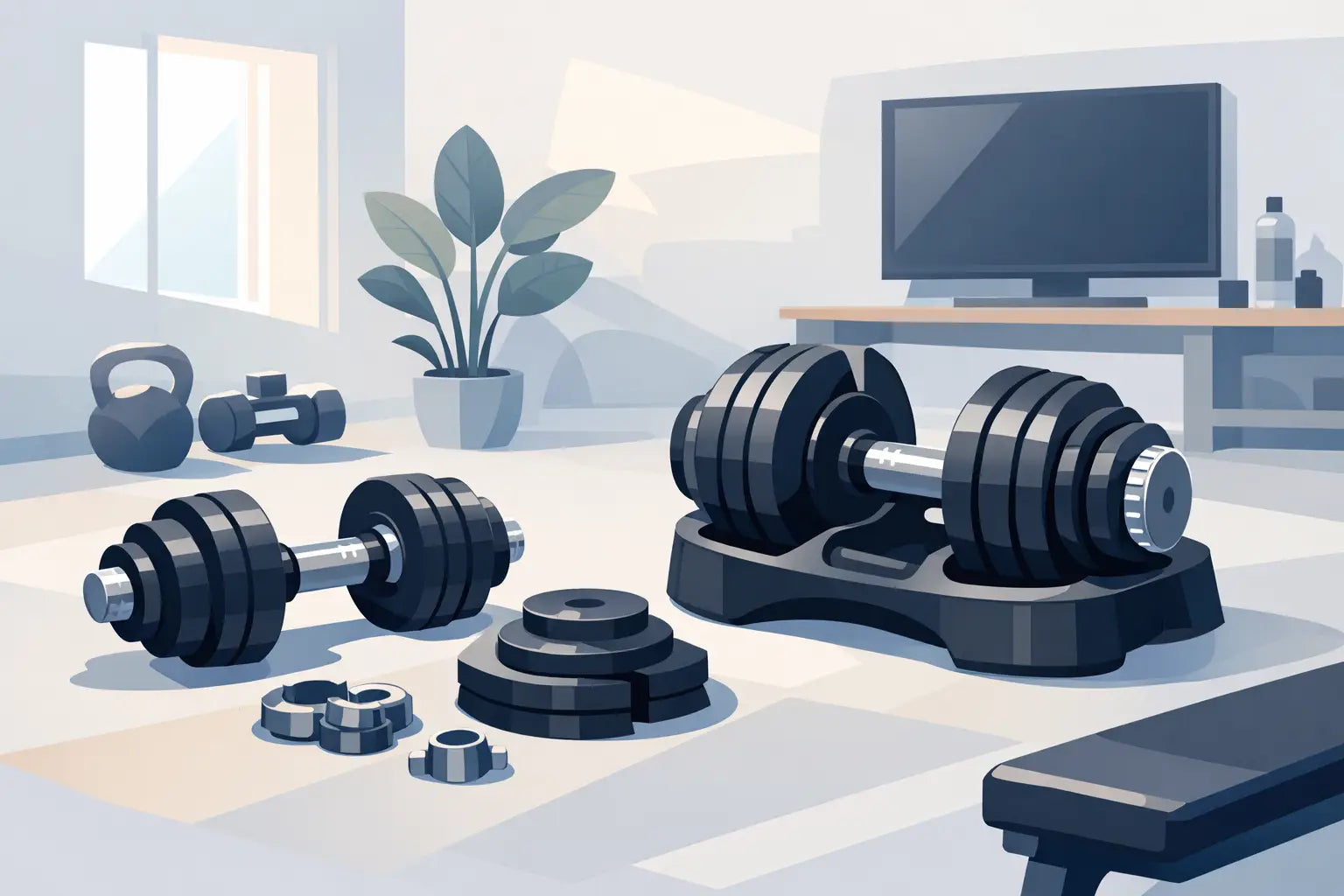
A crowded floor, mismatched weights, and the constant hunt for the pair you need can drain momentum from a home workout. This adjustable dumbbells review cuts through the noise: the right set can replace a full rack, save serious space, and keep strength training within reach every day. The wrong set can feel awkward, rattle during reps, or leave you stuck when your lifts outgrow the available weight.
For most home lifters, adjustable dumbbells are a smart investment. They are not identical to a traditional fixed dumbbell rack, and they are not the best choice for every type of training. But if you want more strength without turning your spare room, garage, or living room into a crowded gym, they deliver a lot of training power in a small footprint.
What Makes Adjustable Dumbbells Worth It?
Fixed dumbbells are simple. Pick them up, train, put them down. Their downside is obvious once you start building a collection: every new weight requires another pair, more storage, and more money. A quality adjustable set condenses multiple dumbbell pairs into one compact system.
That matters when consistency is the goal. Instead of skipping leg day because the weights are too light or avoiding rows because your heaviest pair is not heavy enough, you can move quickly from one exercise to the next. Light weights for lateral raises, moderate weight for presses, and heavier settings for squats or Romanian deadlifts can all come from the same pair.
The biggest benefit is progression. Getting stronger means gradually asking more from your muscles. Adjustable dumbbells make it easier to add a small amount of weight when your current set becomes manageable. That simple change keeps workouts challenging and gives you a clear way to measure progress.
Adjustable Dumbbells Review: What to Check Before Buying
Not all adjustable systems feel the same in your hands. The best choice depends on your training style, strength level, available space, and budget. Focus on the features that affect how often you will actually use them.
Weight range determines how long they will last
A lower-range set can be perfect for beginners, mobility work, high-rep training, and upper-body exercises. If your goal is general fitness, a pair that reaches a moderate weight may cover plenty of ground.
If you want to build serious strength, pay attention to the top-end weight. Legs, back, chest, and shoulders can outgrow light dumbbells quickly. A set that feels challenging for curls may be far too light for goblet squats, deadlifts, or heavy rows. Buying a little more capacity than you need today can save you from replacing your equipment too soon.
Weight increments matter, too. Smaller jumps help with exercises like curls, lateral raises, triceps extensions, and shoulder presses, where even a five-pound increase can feel huge. Larger jumps are less of a problem for lower-body movements, but they may make upper-body progression frustrating.
Adjustment speed affects the flow of your workout
Some dumbbells use selector dials. Others use plates secured with a spin-lock collar or a pin system. Dial-based models are fast and convenient, especially for circuits or workouts that move from exercise to exercise with minimal rest.
Plate-loaded models take longer to adjust, but they are often straightforward, durable, and less expensive. They can be a strong fit for lifters who prefer slower, focused strength sessions and do not mind taking a minute between movements.
There is a trade-off. Fast-changing systems are convenient, but they can have more moving parts. Basic plate systems are less flashy, but simple equipment is often easier to maintain over years of hard training. Choose the setup you will use, not the one that merely looks impressive in a product photo.
Handle feel and shape are not small details
A dumbbell can have a great weight range and still sit unused if it feels uncomfortable. Look for a handle that gives you a secure grip without being so thick that it strains your hands during rows, presses, and curls. Textured grips can help when your palms get sweaty, though overly aggressive knurling may be uncomfortable for high-rep work.
The overall shape matters as well. Adjustable dumbbells are usually longer than fixed dumbbells at lighter settings because the base or unused plates still take up space. That extra length may feel different during curls, presses, or close-grip movements. It is not necessarily a deal-breaker, but it is worth understanding before you buy.
A stable design protects your training
Your dumbbells should feel locked in when you lift. Plates that shift, collars that loosen, or selector mechanisms that do not fully engage can disrupt a workout and create a safety problem. Always make sure the chosen weight is secured before the first rep.
Most adjustable dumbbells are not built for repeated dropping. Even a durable pair benefits from control. Set them down with purpose, especially if the system uses a dial, plastic housing, or fitted storage tray. A workout mat or rubber flooring helps protect both the equipment and the floor underneath it.
Where Adjustable Dumbbells Perform Best
Adjustable dumbbells work especially well for full-body home strength training. You can train chest with floor presses, back with one-arm rows, legs with split squats and Romanian deadlifts, shoulders with overhead presses, and arms with curls and extensions. Add a bench and a resistance band, and your home setup can handle a wide range of effective workouts.
They also make progressive workouts easier to organize. Start with heavier compound movements while your energy is high, then reduce the weight for controlled accessory work. For example, you might move from goblet squats to rows, then finish with shoulder presses and curls without needing a wall of equipment.
They are less ideal for workouts built around rapid dropping or constant weight changes. If you do high-volume metabolic circuits, fast-paced bootcamp sessions, or explosive dumbbell movements, fixed dumbbells may feel more natural. Dedicated powerlifters and advanced lifters may also eventually need heavier equipment for certain lower-body and pulling movements.
That does not make adjustable dumbbells a compromise. It makes them a tool with a job. For practical home strength, they handle that job extremely well.
Getting More From One Pair
The equipment only works when it becomes part of your routine. Keep your dumbbells where you can reach them easily, but store them securely. A visible setup removes one of the biggest obstacles to training: the excuse that getting started takes too much effort.
Train two to four days per week and build around basic movements. Aim to squat or lunge, hinge, push, pull, carry, and strengthen your core across the week. Use a weight that makes the last few reps feel demanding while your form stays controlled. When you can complete your target reps with confidence, increase the load at the next session.
Do not chase heavy weight at the expense of movement quality. A controlled row builds more than a sloppy row. A steady press beats a rushed press. Pair your lifting with mobility work, a foam roller, or recovery tools when your muscles need attention. Train hard, recover smart, and come back ready.
The Bottom Line for Your Home Gym
Adjustable dumbbells are worth it when you want versatile strength equipment without the cost and clutter of multiple fixed-weight pairs. Prioritize a useful weight range, comfortable grip, secure adjustment system, and a design that fits the way you train. Convenience gets you started, but progressive resistance is what keeps results coming.
Set up the space, choose the weight, and earn the next rep. Your strongest routine is the one you can repeat tomorrow.

