

Cart
0
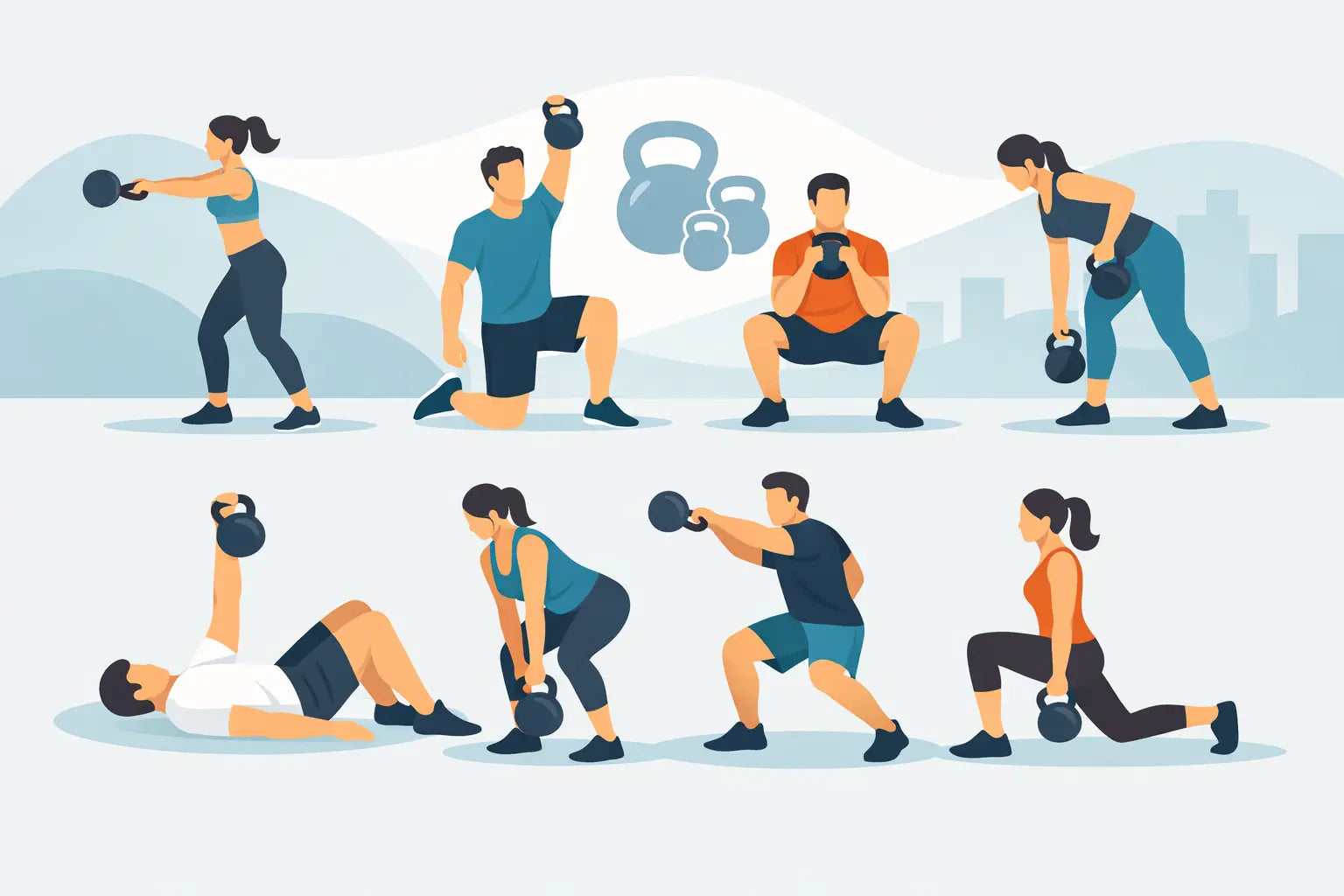
You do not need a room full of equipment to start getting stronger. A single bell on the floor can carry a full workout, and that is why kettlebell exercises for beginners have become a smart choice for home training. They build strength, raise your heart rate, challenge your balance, and teach your body to move as one unit instead of in isolated pieces.
That matters if you want results without wasting time. Kettlebells are simple, but they are not careless tools. The shape shifts the load away from your hand, which means every rep asks your grip, core, shoulders, and hips to do real work. For a beginner, that is a huge upside as long as you start with the right moves and focus on clean form before speed.
Why kettlebell exercises for beginners work so well
A kettlebell lets you train strength and conditioning at the same time. Squats and presses build muscle. Swings and carries train power, posture, and control. Even basic movements can feel more demanding than they do with a dumbbell because the weight sits differently and wants to pull you out of position.
That is the trade-off too. Kettlebells are efficient, but sloppy reps can turn a great workout into a frustrating one. Beginners usually do better when they treat the kettlebell like a skill tool first and a fat-burning tool second. Get the pattern right, then push the pace.
If you are choosing your first bell, go lighter than your ego wants. Many beginners start around 10 to 15 pounds for upper-body work and 15 to 25 pounds for lower-body patterns, but it depends on your training history. If a move forces you to twist, shrug, or lose control, the weight is too heavy for now.
Start with these 8 kettlebell exercises for beginners
1. Kettlebell deadlift
If you only learn one move first, make it the deadlift. It teaches the hip hinge, which is the foundation for swings, cleans, and stronger glutes and hamstrings. Place the kettlebell between your feet, push your hips back, keep your chest proud, and grip the handle with both hands. Stand tall by driving through your feet and squeezing your glutes.
This should not feel like a squat. Your hips move back more than your knees move forward. If you feel it only in your lower back, reset and shorten the range.
2. Goblet squat
The goblet squat is beginner-friendly because the weight in front of your chest helps you stay more upright. Hold the kettlebell by the horns, keep your elbows close, and sit down between your hips. Stand up with control and keep your feet planted.
This is a strong move for legs, core, and posture. It also shows you where your mobility needs work. If your heels pop up or your back rounds hard at the bottom, lower the depth and build from there.
3. Kettlebell swing
The swing is the move most people think of first, but beginners should earn it after learning the deadlift. A proper swing is a hinge and snap from the hips, not a front raise with your arms. Hike the bell back, drive your hips forward, and let the kettlebell float to about chest height.
Done right, the swing trains power, conditioning, and posterior-chain strength fast. Done wrong, it becomes a shoulder lift with extra chaos. Start with short sets, and stop as soon as your form gets loose.
4. One-arm kettlebell row
Rows help balance out all the pressing and typing most people do. Set one hand on a bench, couch, or sturdy support, hinge forward, and pull the kettlebell toward your hip. Keep your shoulders square and avoid twisting to finish the rep.
This move builds the upper back, lats, and grip. It is also a quiet fix for posture when paired with solid recovery habits and mobility work.
5. Overhead press
The kettlebell press builds shoulder strength and core control at the same time. Start in the rack position with the bell resting against your forearm and your wrist straight. Press overhead without leaning back, then lower it slowly.
A lighter weight matters here. Beginners often arch their lower back to force the bell up. If that happens, squeeze your glutes harder, brace your abs, and drop the load.
6. Reverse lunge with goblet hold
Holding the kettlebell at your chest turns a basic lunge into a full-body challenge. Step one leg back, lower under control, and drive through the front foot to return. Keep your torso tall and your front knee tracking over your foot.
Reverse lunges are usually more beginner-friendly than forward lunges because they place less stress on the knee and make balance easier. They also expose left-to-right strength gaps fast, which is useful if one side always seems less stable.
7. Kettlebell halo
The halo looks simple, but it does a lot. Hold the kettlebell upside down by the horns and slowly circle it around your head while keeping your ribs down and your neck relaxed. Switch directions each rep or each set.
This is not a max-strength move. It is a control move for shoulders, upper back, and core stability. If you sit a lot or feel stiff through the shoulders, halos are a smart warm-up choice.
8. Farmer carry
Pick up the kettlebell, stand tall, and walk. That is it, and it is tougher than it sounds. Carries train grip, posture, core tension, and total-body control. You can hold one bell on one side for an offset carry or use two if you have them.
Farmer carries are beginner gold because they teach tension without overcomplicating things. Walk slow, breathe behind your brace, and do not let the weight pull you sideways.
A simple beginner kettlebell workout
You do not need a complicated split to start. Two or three full-body sessions per week is enough to build momentum. Pick four or five moves and stay consistent for a few weeks before changing everything.
Try this format. Start with kettlebell deadlifts for 3 sets of 8 to 10 reps, then goblet squats for 3 sets of 8 reps, one-arm rows for 3 sets of 8 reps per side, overhead presses for 3 sets of 6 to 8 reps per side, and finish with farmer carries for 3 rounds of 20 to 30 seconds. If you want a conditioning finisher, add kettlebell swings for 5 short sets of 10 reps with plenty of rest.
That is enough to train hard and stay strong without frying yourself. The goal in the first month is not to crush every session. It is to own the basics, recover well, and come back ready for the next workout.
Common beginner mistakes
The biggest mistake is picking a weight based on ambition instead of control. Heavy bells look impressive until your shoulders creep up, your back rounds, or your knees cave in. Good reps beat ugly reps every time.
The next issue is rushing the learning curve. Swings, cleans, and snatches can be great tools, but they are not where most beginners should start. Build your hinge, squat, row, press, and carry first. Skill now saves setbacks later.
Another common problem is ignoring recovery. Kettlebell training can leave your forearms, grip, glutes, and core more smoked than expected. A little mobility work, a quick foam rolling session, and enough rest between training days can keep you moving better instead of feeling beat up.
How to keep progressing
Progress does not always mean grabbing a heavier kettlebell right away. You can add reps, tighten your form, slow the lowering phase, increase time under tension, or shorten rest periods. Those changes are often smarter for beginners because they build control before load.
It also helps to track a few basics. Write down the bell weight, reps, and how the session felt. If your goblet squat gets cleaner, your carries get steadier, and your swings feel sharper, you are moving in the right direction.
For home training, simplicity wins. A kettlebell, a little floor space, and a recovery routine can take you a long way. That is the appeal. At Grit Gain Co., the mindset is simple: train with purpose, recover with discipline, and stack small wins until they look like serious progress.
Kettlebells reward effort, but they reward consistency even more. Start light, move well, and let your strength build one solid rep at a time.

