

Cart
0
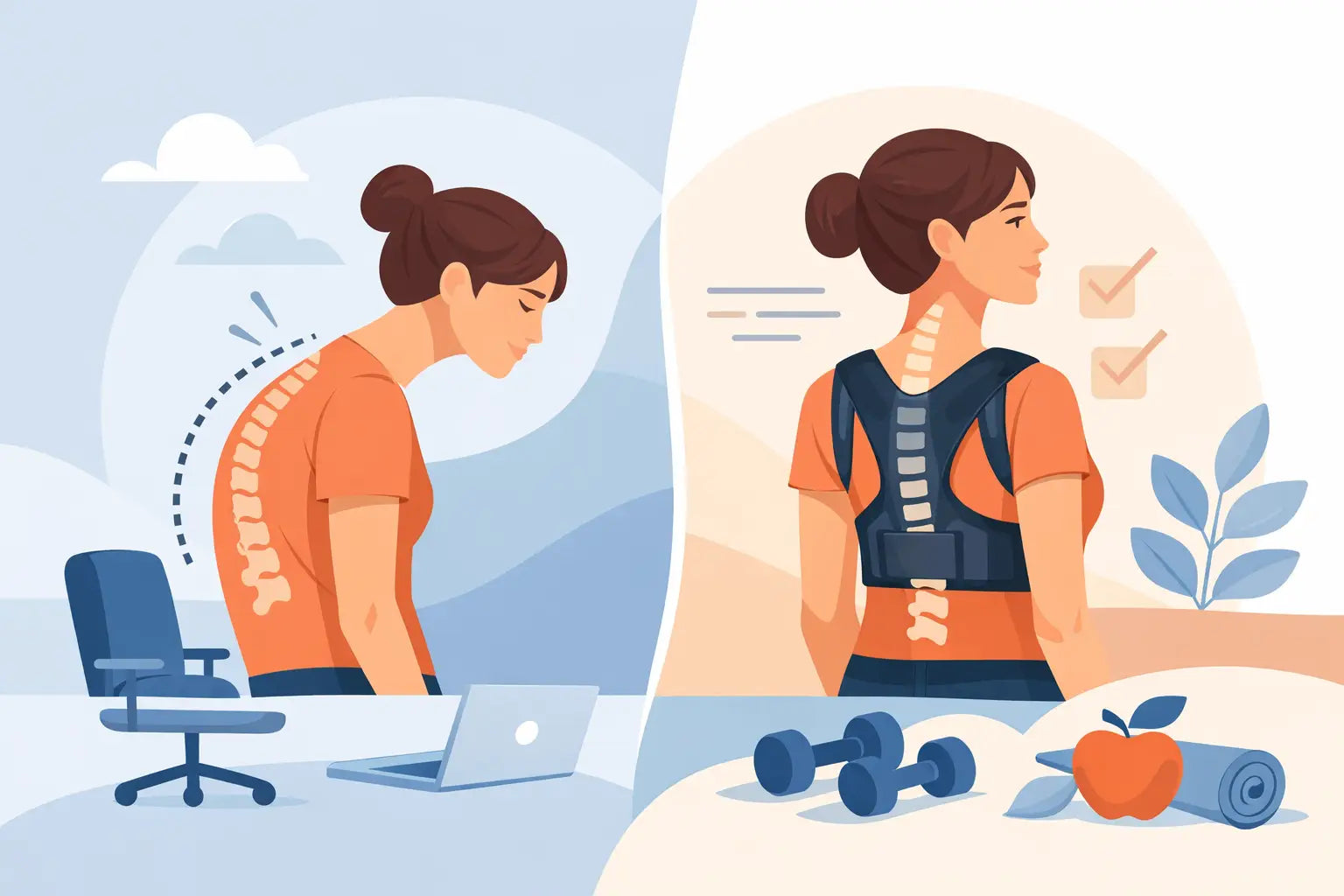
You usually notice posture when something starts to ache. Your upper back feels tight after hours at a desk, your shoulders round forward during workouts, or your neck stays stiff long after the day is over. That is when people start asking, are back posture correctors good for you? The honest answer is yes, sometimes - but only if you use them for the right reason and not as a shortcut.
Are back posture correctors good for you or just a quick fix?
A back posture corrector can be useful when it gives you a reminder to stop collapsing forward. That reminder matters. Many people are not dealing with a major structural problem. They are dealing with long workdays, too much screen time, weak upper back muscles, limited mobility, and a body that has adapted to sitting.
In that case, a posture corrector can help you become more aware of your position. It can cue your shoulders back, reduce slouching, and make it easier to feel what better alignment is supposed to be. For some people, that alone brings short-term relief.
But here is the part that gets missed. A posture corrector does not build strength by itself. It does not fix poor movement habits on its own. And it definitely does not replace mobility work, smart training, or basic recovery. If you wear one all day and do nothing else, you may end up depending on support instead of improving the muscles that should be doing the job.
So yes, posture correctors can be good for you. They are just not the whole plan.
What a posture corrector actually does
Most back posture correctors work by gently pulling the shoulders into a more open position and discouraging the rounded posture many people fall into. Some are soft straps. Some include a brace-like back panel. Some are minimal and designed mainly as a cue.
That cue can be powerful. When your shoulders drift forward, the corrector creates tension and reminds you to reset. It can also help you notice how often you slump, which is useful if your posture habits are mostly unconscious.
For people easing into fitness, working from home, or trying to stay more comfortable during long seated hours, that feedback can support daily progress. Think of it like training wheels for body awareness, not a permanent solution.
A good posture corrector may also help you feel more stable during light daily activity. Some users like them during computer work, standing tasks, or short walks. Others wear them briefly after workouts when fatigue makes form harder to maintain.
When back posture correctors can help
The best-case scenario is simple. You have mild posture issues, no serious injury, and you want a tool that helps reinforce better habits while you work on strength and mobility.
In that situation, a posture corrector can help in a few real ways. It can reduce the tendency to round forward during long desk sessions. It can make you more mindful of your ribcage, shoulders, and upper spine. And it may ease some discomfort caused by holding the same bad position for too long.
Beginners often benefit the most because they are still learning what good posture feels like. If you have spent years slouching, “sit up straight” is vague advice. A posture corrector gives your body a clearer signal.
It can also be useful during a reset phase. Maybe you are getting back into training, rebuilding after a long stretch of inactivity, or trying to support your upper back while adding mobility drills and pulling exercises into your routine. Used that way, it is part of a disciplined approach. Train hard. Recover smart. Move better every day.
When posture correctors are not enough
This is where the trade-off matters. Poor posture is often less about needing to be held in place and more about needing to earn better positioning through strength and movement quality.
If your upper back is weak, your chest is tight, and your core does not do much to support your torso, a brace will not solve the root issue. It might make you look better in the mirror for the moment, but the underlying pattern will still be there when you take it off.
There is also a risk of overuse. If you rely on a posture corrector for hours every day, your body may start to expect external support. That does not mean the device automatically weakens you, but it can reduce the pressure to actively hold yourself well. That is the opposite of long-term progress.
And if you have sharp pain, numbness, tingling, a known spinal condition, or pain that keeps getting worse, a posture corrector is not the first move. That is a sign to get medical guidance instead of guessing.
Are back posture correctors good for you if you work out?
They can be, but context matters.
If you lift, train at home, or stay active through walking, bands, or bodyweight work, a posture corrector can support awareness outside your actual workout. It may help you avoid spending the rest of the day folded over a laptop after training your back in the morning.
What it should not do is become a replacement for strengthening the muscles that improve posture naturally. Stronger rear delts, rhomboids, mid traps, lower traps, core muscles, and glutes all contribute to better alignment. So do better breathing mechanics and thoracic mobility.
For active people, the best use is usually limited and intentional. Wear it briefly as a reminder. Then train your body to hold that position without help.
If your workout plan already includes rows, band pull-aparts, face pulls, carries, planks, and mobility drills for the chest and upper spine, a posture corrector can fit in as a small support tool. If your routine has none of that, the corrector is doing too much of the work.
How to use a posture corrector the smart way
Think short sessions, not all-day wear. For most people, 15 to 30 minutes at a time is a practical starting point. That is often enough to build awareness without turning it into a crutch.
Use it during parts of the day when you know your posture slips - desk work, evening screen time, or after long periods of sitting. Pay attention while you wear it. Pull your shoulders gently down and back. Engage your core lightly. Breathe normally. Let the corrector teach you the position, not force it aggressively.
Then back that up with movement. Open the chest. Strengthen the upper back. Build a stronger trunk. Stand up more often. Change positions more throughout the day. A posture corrector works best when it supports action.
Fit matters too. If it digs into your skin, restricts breathing, or yanks your shoulders too far back, it is not helping. Good support should feel firm but manageable. You want a cue, not a cage.
What to pair with a posture corrector for better results
The strongest results usually come from combining support with simple daily work. You do not need a complicated system. You need consistency.
A few minutes of chest opening, thoracic extension work, band pull-aparts, and rows can go a long way. So can improving your desk setup, bringing your screen to eye level, and breaking up long stretches of sitting. If your lower body is part of the problem, add glute work and core stability too.
Recovery matters just as much. Tight muscles from hard training or long static positions can pull you into bad alignment. Foam rolling, mobility work, and regular movement breaks help your body hold better posture with less effort.
That is where the right gear can actually support your progress. At Grit Gain Co., the best approach is never just one product. It is training, recovery, and posture support working together so you can stay active and keep building.
Who should be cautious
If you are dealing with significant pain, recent injury, spinal curvature, nerve symptoms, or breathing issues, do not self-diagnose with a posture corrector. There is a difference between everyday slouching and a condition that needs medical evaluation.
You should also be careful if you expect instant correction. Bodies do not change from one strap and two days of better sitting. Better posture is built through repetition, awareness, strength, and time.
That is the bigger mindset shift. Tools can help, but they do not replace the work.
A back posture corrector can be a solid addition if you use it with purpose. It can remind you, support you, and help you stay more aware during the parts of the day that wear your posture down. Just do not ask it to do a job your muscles, habits, and movement routine still need to learn. Use it as a boost, keep your body strong, and let daily discipline do what quick fixes never can.

