

Cart
0
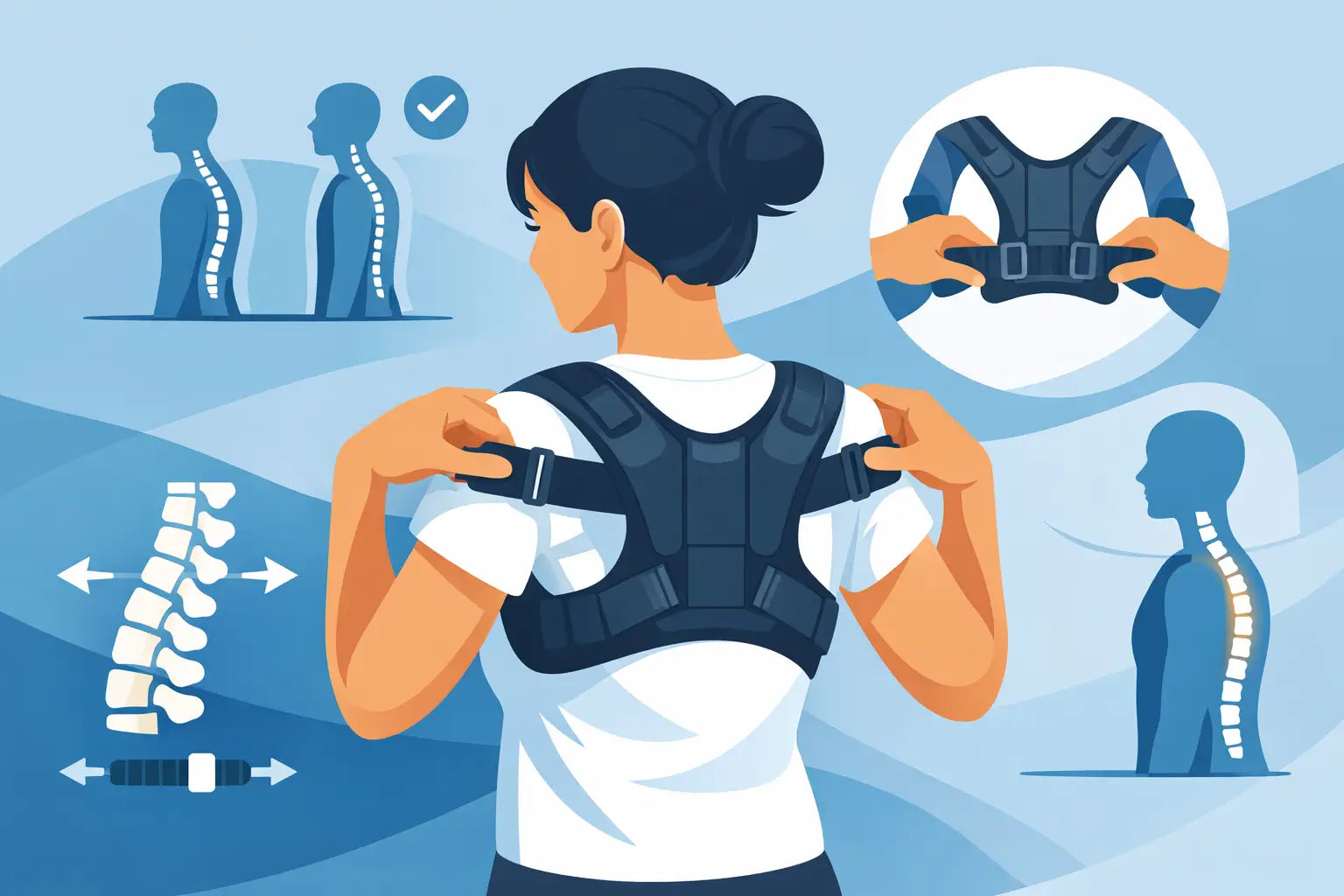
If your posture corrector feels like it is either doing nothing or squeezing the life out of your shoulders, the fit is the problem. Knowing how to adjust posture corrector straps the right way makes the difference between real support and a device that ends up in a drawer after two days.
A good posture corrector should guide your body, not fight it. You want a fit that reminds your shoulders and upper back where they should be, while still letting you breathe, move, and get through your day. Too loose, and you get no benefit. Too tight, and you trade slouching for soreness, skin irritation, and stiff movement.
How to adjust posture corrector the right way
Start before you tighten a single strap. Put the posture corrector on while standing tall with your chest relaxed, shoulders gently back, and neck in a neutral position. Do not force a military stance. The goal is better alignment, not exaggerated posture.
Most posture correctors use shoulder straps, a back panel, and sometimes a chest or torso band. Slide it on according to the design, then begin tightening gradually. Adjust one side, then the other, so the pull feels even across both shoulders. If one strap is tighter than the other, the support will feel crooked and can create more tension than it solves.
The correct tension feels noticeable but not aggressive. You should feel a light pull that encourages your shoulders back and opens your upper chest. You should still be able to take a full breath, raise your arms, and sit or stand without feeling pinned into place. That is the sweet spot.
If you are asking yourself how tight is too tight, use this test. Wear it for five to ten minutes. If your hands tingle, your underarms feel rubbed raw, your breathing feels restricted, or your shoulders start aching fast, back off the straps. A posture corrector is a training tool for awareness, not a brace you crank down as hard as possible.
What a properly adjusted posture corrector should feel like
A solid fit creates support in the upper back and shoulder area without turning your whole torso rigid. You should feel more aware of your posture right away, especially if you spend hours at a desk, driving, or looking down at a phone. That awareness is a big part of why these products help.
At the same time, comfort matters. A posture corrector that fits well should stay in place during normal daily movement. It should not slide around every time you walk, and it should not dig into the front of your shoulders or bunch up between your shoulder blades.
There is some trial and error here. Body shape, shirt thickness, and even the time of day can affect the fit. If you are wearing it over a thin workout shirt, you may need a slightly different adjustment than if you are wearing it over a thicker tee. Small changes can make a big difference.
Common signs your fit is off
When the fit is wrong, your body tells you quickly. If the straps leave deep marks, the tension is probably too high. If your shoulders still round forward as if nothing is there, it is too loose. If the support shifts side to side, you likely need to rebalance the strap tension.
Another common issue is overcorrecting. Some people tighten the straps until their chest is forced up and their lower back arches hard. That is not better posture. That is compensation. A proper adjustment should help you stack your head, ribs, and pelvis more naturally, not throw one area out of line to fix another.
How to adjust posture corrector for sitting, walking, and work
Your best adjustment depends on what you are doing. If you are wearing the posture corrector while sitting at a desk, you may prefer a slightly lighter fit. Sitting already changes the angle of your torso, and too much tension can feel harsher when you are bent at the hips.
For walking, light chores, or standing work, you can often handle a firmer adjustment because your body is moving more naturally. Even then, you should not feel locked down. You want support that travels with you.
If you train regularly, do not assume your posture corrector belongs in every workout. Most people should not wear one for strength training, intense cardio, or anything that demands full shoulder movement unless the product is specifically designed for that use. Your muscles need to do their own job during training. Use the corrector to build awareness outside your lifts, not to replace stability while you move weight.
Should you wear it all day?
Usually, no. More is not always better.
If you are new to posture support, start with short sessions, around 15 to 30 minutes. See how your body responds. From there, you can build up gradually if it feels comfortable. For many people, one or two shorter sessions a day work better than wearing it for hours straight.
This matters because posture correctors are best used as a reminder, not a permanent crutch. The long-term win comes from pairing support with better movement habits, stronger upper back muscles, and smarter recovery. Train hard, stay strong, but let your body keep doing the work too.
The fastest way to fine-tune the fit
If your first adjustment feels close but not quite right, do not rip it off and give up. Make one small change at a time.
Loosen both straps slightly if you feel pressure near the neck or underarms. Tighten both evenly if the support feels weak. If one shoulder feels pulled back more than the other, reset both sides and start over instead of guessing which strap is the issue.
It also helps to check your fit in a mirror from the front and side. Your shoulders should look more balanced, not dramatically forced back. Your neck should stay long and neutral. If your chin juts forward or your rib cage flares up, the posture corrector may be adjusted too aggressively or sitting in the wrong position on your body.
Wear it over the right layer
A thin, fitted shirt usually works best under a posture corrector. Bare skin can lead to rubbing, especially around the shoulders and underarms. Thick hoodies or bulky tops can make the fit inconsistent and reduce support.
If you plan to wear it during part of your workday, test it at home first. Sit, stand, reach, and walk around for a few minutes. That quick check can save you from hours of annoyance later.
Adjustment mistakes that ruin the benefits
One big mistake is expecting the device to fix everything on its own. A posture corrector can help reinforce better alignment, but it will not undo weak upper back muscles, tight chest muscles, poor desk setup, or nonstop screen hunching by itself.
Another mistake is using pain as a sign that it is working. It is not. Mild awareness is normal. Sharp discomfort, numbness, or skin irritation are signs to loosen it, reposition it, or stop wearing it.
People also forget that posture is dynamic. Your body is meant to move. A posture corrector should support better positioning while still allowing natural motion. If the fit makes you feel stiff and robotic, the adjustment is too extreme.
Get more from your posture corrector
The best results come when you treat posture support as part of a bigger routine. A few minutes of band pull-aparts, wall slides, chest opening stretches, and regular movement breaks can make your posture corrector more effective. It is easier to hold better alignment when your muscles and joints are ready for it.
Recovery matters too. If your upper back and shoulders are always tight, your posture will fight you no matter how well the straps are set. Mobility work, light strengthening, and daily consistency go further than chasing a perfect fit once and forgetting about it.
That is the real answer to how to adjust posture corrector use for lasting results. Get the straps right, keep the tension honest, and use the tool to build awareness you can carry without it. Move better, feel stronger daily, and let the support help you earn better posture instead of borrowing it.
When your posture corrector fits the way it should, it stops being a gimmick and starts being useful. Make the small adjustments, trust what your body tells you, and give your posture the same discipline you bring to the rest of your training.

