

Cart
0
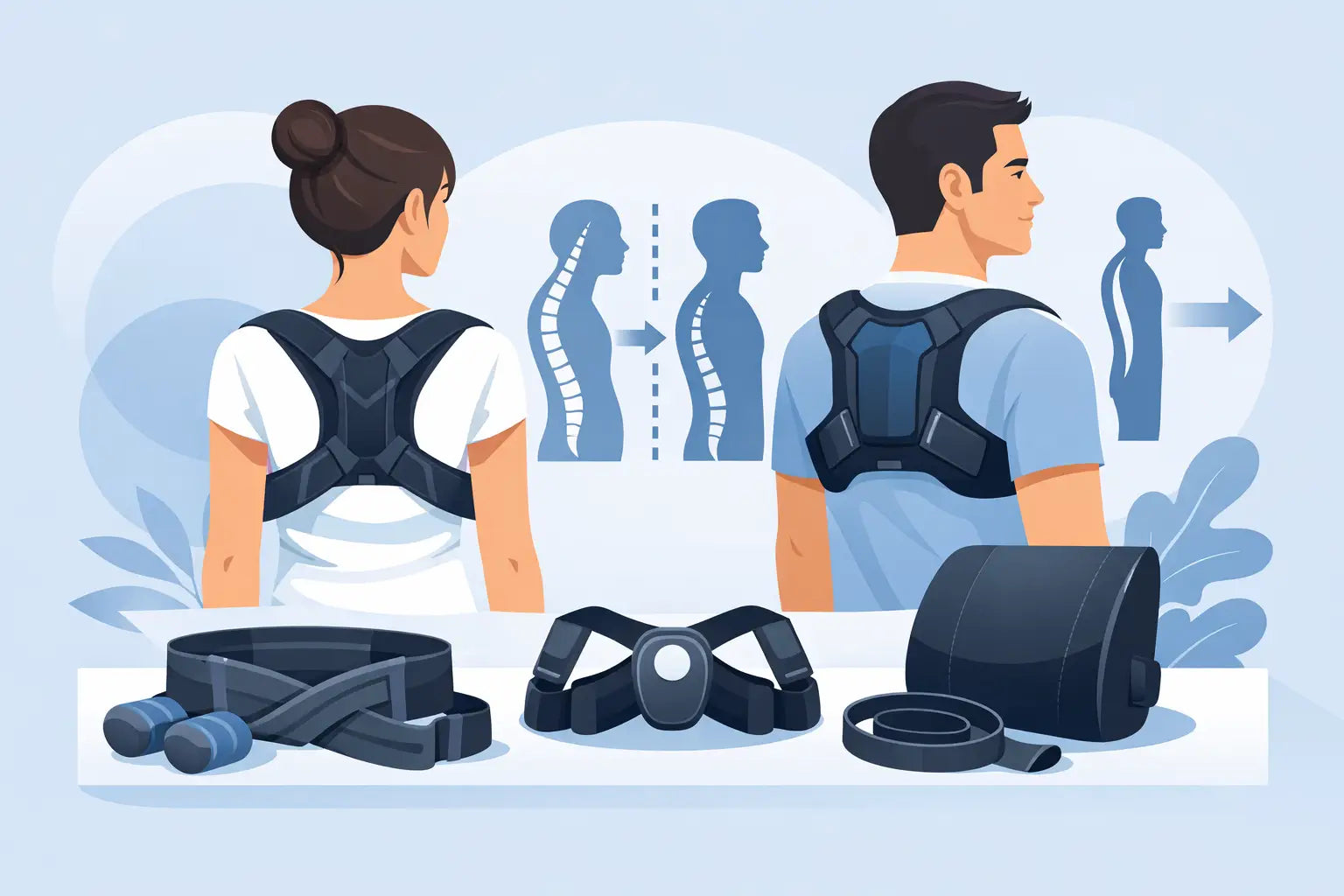
If your shoulders round forward by noon, your neck feels cooked after a workday, or your lower back starts talking after long hours at a desk, you have probably wondered what is the most effective posture corrector. Fair question. But the real answer is not just about the product. It is about matching the right kind of support to the reason your posture keeps slipping in the first place.
A posture corrector can help, but not all of them work the same way. Some gently pull your shoulders back. Some support your lower back. Some give you a simple reminder to stop collapsing into the same tired position for hours. The most effective one is the one you will actually wear, that fits your body, and that solves your specific posture problem without turning into a crutch.
What is the most effective posture corrector for most people?
For most adults, the most effective posture corrector is a lightweight upper-back brace that provides gentle shoulder retraction without locking the body into a rigid position. That style works well because it addresses one of the most common issues people deal with - rounded shoulders from desk work, phone use, driving, and long periods of sitting.
A good upper-back posture corrector does not force you into military posture. It gives you feedback. That matters. If a brace is too stiff, too bulky, or too aggressive, people stop wearing it. If it is comfortable enough for short daily use and noticeable enough to remind you to sit and stand better, it tends to be more effective over time.
That said, effectiveness depends on the goal. If your main issue is slouching through the upper back, a shoulder-support posture corrector usually makes sense. If your lower back feels unsupported during long sitting sessions, a lumbar support tool may help more. If you want lasting improvement, no device beats a mix of awareness, mobility, and strength.
Why posture correctors work - and where they fall short
Posture correctors work best as training wheels, not permanent solutions. They create awareness and reduce the effort it takes to hold a better position. That can be useful when your body has spent months or years adapting to bad habits.
The problem is that posture is not just a position. It is a pattern. Tight chest muscles, weak upper back muscles, limited thoracic mobility, poor core control, and long sedentary hours all play a role. A brace cannot fully fix that on its own.
This is where people get frustrated. They buy a posture corrector, wear it for a few days, and expect their body to reset. That is not how it works. The brace helps you interrupt the habit. Your muscles and movement practice are what make the change stick.
So if you are asking what is the most effective posture corrector, the best answer is this: the one that supports better alignment while you build the strength and mobility to maintain it yourself.
The main types of posture correctors
The most common posture correctors fall into three buckets, and each one has a different job.
Upper-back posture correctors
These are the most popular and usually the best fit for people with rounded shoulders and a forward head position. They wrap around the shoulders and upper torso and apply light tension that encourages the chest to open and the shoulders to sit back.
They are effective for desk workers, students, remote workers, and anyone who spends too much time looking down. They are also easy to wear under a shirt if the design is low-profile.
The trade-off is that some models can dig into the armpits, feel restrictive, or create dependence if worn for too long every day.
Lumbar support posture devices
These focus more on the lower back and pelvis. They are often used while sitting and can help maintain a more neutral spine position. If your posture issue starts with slumping at the waist instead of rounding mainly through the shoulders, this type can be useful.
They can help during work or driving, but they are not ideal for all-day wear while moving around. They are more about support in a specific setting than broad posture correction.
Posture reminder wearables
These devices do not physically pull your body into place. Instead, they alert you when you start slouching. For some people, that is actually more effective because it builds awareness without external support.
The downside is simple - reminders only work if you respond to them. If you ignore the buzz after the first week, the value drops fast.
How to tell which posture corrector will actually help you
Start with your pattern, not the marketing.
If your shoulders roll forward and your upper back feels rounded, an upper-back posture corrector is usually the right move. If you mainly feel strain in the lower back during long sitting sessions, lumbar support may be more useful. If you already know how to hold good posture but keep forgetting during the day, a reminder device could be enough.
Fit matters just as much as design. A posture corrector that shifts around, pinches, or feels bulky will end up in a drawer. Look for adjustable straps, breathable material, and enough structure to guide you without cutting into your skin or restricting breathing.
Wear time matters too. Short sessions are usually better than marathon use. Think 20 to 60 minutes at a time, especially at first. You want the brace to reinforce better positioning, not do all the work for your muscles.
What makes a posture corrector effective?
The most effective posture corrector usually checks five boxes. It is comfortable enough to wear consistently. It gives gentle correction instead of hard force. It fits your specific posture issue. It allows normal breathing and movement. And it works as part of a bigger plan instead of replacing one.
That bigger plan does not need to be complicated. A few minutes of movement and basic strength work go a long way. Chest stretching, band pull-aparts, rows, wall slides, and core work can support better posture more than a brace alone ever will. If you already train, that is good news. You do not need a full overhaul. You just need to be more intentional.
This is where a brand like Grit Gain Co. fits naturally into the conversation. Better posture is not separate from training. It supports stronger lifts, cleaner movement, better recovery, and less wear and tear from daily life.
Common mistakes people make with posture correctors
One mistake is choosing the stiffest brace possible. More force does not always mean better results. If a posture corrector feels like armor, you probably will not wear it consistently, and your body may fight against it.
Another mistake is wearing it all day. That sounds disciplined, but it can backfire. Your muscles still need to engage. Long wear can make you rely on the device instead of improving control.
The third mistake is expecting a product to solve a lifestyle issue. If you sit for ten hours, never train your upper back, and spend every evening hunched over your phone, no posture corrector can completely clean that up. The tool helps. Your habits decide how far it goes.
Who should be cautious
Posture correctors can be helpful, but they are not right for every situation. If you have significant pain, numbness, a spinal condition, recent injury, or trouble breathing with compression around the chest, it is smart to check with a medical professional before using one.
Mild posture support is one thing. Trying to self-treat serious pain with a brace is another.
So, what is the most effective posture corrector?
For the average person dealing with slouched shoulders, the most effective posture corrector is a comfortable, adjustable upper-back brace used for short daily sessions alongside mobility and strength work. That combination is what gets results. The brace builds awareness. The training builds durability. Together, they give you a better shot at lasting change.
If your issue is more specific, the answer changes. Lower-back discomfort during sitting may call for lumbar support. Habitual slouching with decent body awareness may be better served by a reminder device. The best choice depends on where your posture breaks down and what you will realistically use.
Good posture is not about looking stiff. It is about moving better, breathing better, and feeling stronger through everyday life. Pick a posture corrector that helps you stay consistent, then back it up with the kind of work that makes your body hold the line on its own. Train hard, recover smart, and let your posture reflect the effort.

