

Cart
0
A lot of people waste money on a home setup that looks impressive but gets ignored after two weeks. The best home gym for resistance training is not the one with the biggest footprint or the highest price tag. It is the one that fits your space, matches your strength goals, and makes you want to train again tomorrow.
That matters because resistance training at home only works when the setup removes friction. If your equipment is easy to grab, easy to progress, and easy to store, you are far more likely to stay consistent. And consistency is what builds strength, improves muscle tone, supports better posture, and helps you feel stronger in daily life.
What makes the best home gym for resistance training?
The right setup gives you enough variety to train your full body without turning your garage, bedroom, or living room into a crowded mess. For most people, that means choosing equipment that covers the main movement patterns: pushing, pulling, squatting, hinging, carrying, and core work.
A good home gym also needs progression. If your gear only feels challenging for the first month, it will stop delivering results fast. Adjustable resistance, multiple loading options, or tools that work across beginner and intermediate levels make a much better investment than single-use equipment.
Comfort matters too. Not because training should feel easy, but because poor grips, awkward bench angles, and unstable equipment can make workouts frustrating. If something feels clunky, you will avoid it. If it feels solid, you will use it.
The smartest setup starts simple
If you are building from scratch, there is no need to buy every piece of equipment at once. The strongest home gyms usually start with a tight group of tools that cover a lot of ground. Adjustable dumbbells are one of the best anchors because they let you train presses, rows, squats, lunges, carries, and accessory work without needing an entire rack of weights.
Resistance bands deserve a spot too. They are affordable, easy to store, and surprisingly useful for strength work, warmups, mobility drills, and recovery sessions. Bands can add resistance to squats and presses, create tension for rows and pulldown patterns, and give beginners a lower barrier to entry.
Kettlebells are another strong option if you want power, grip strength, and efficient full-body sessions. One or two kettlebells can handle swings, goblet squats, deadlifts, presses, and carries. They are especially useful if your training space is limited and you want equipment that does more than one job.
Then there is the bench question. A bench is not mandatory on day one, but it expands your training fast. It gives you more pressing variations, better support for rows, step-ups, split squats, and plenty of core work. If you plan to train regularly, a stable adjustable bench is usually worth it.
Best home gym for resistance training by space and goal
The best setup depends on what you actually need, not what looks good in a product photo. A small apartment setup will look very different from a dedicated garage gym, and that is fine.
For small spaces
If you are working with a corner of a bedroom or a living room, focus on compact gear. Adjustable dumbbells, resistance bands, a jump rope, and a mat can take you a long way. Add a foam roller or massage gun and you also cover recovery without adding clutter.
This kind of setup works well for beginners, busy professionals, and anyone who values speed. You can train hard, put everything away fast, and keep your routine moving.
For balanced strength training
If your main goal is building overall strength at home, a strong middle-ground setup includes adjustable dumbbells, a bench, resistance bands, and at least one kettlebell. That combination gives you enough resistance for upper body and lower body work while keeping workouts varied.
It also supports steady progression. As you get stronger, you can increase dumbbell loads, change tempos, add band tension, and stack more challenging variations instead of replacing your whole gym.
For heavier strength goals
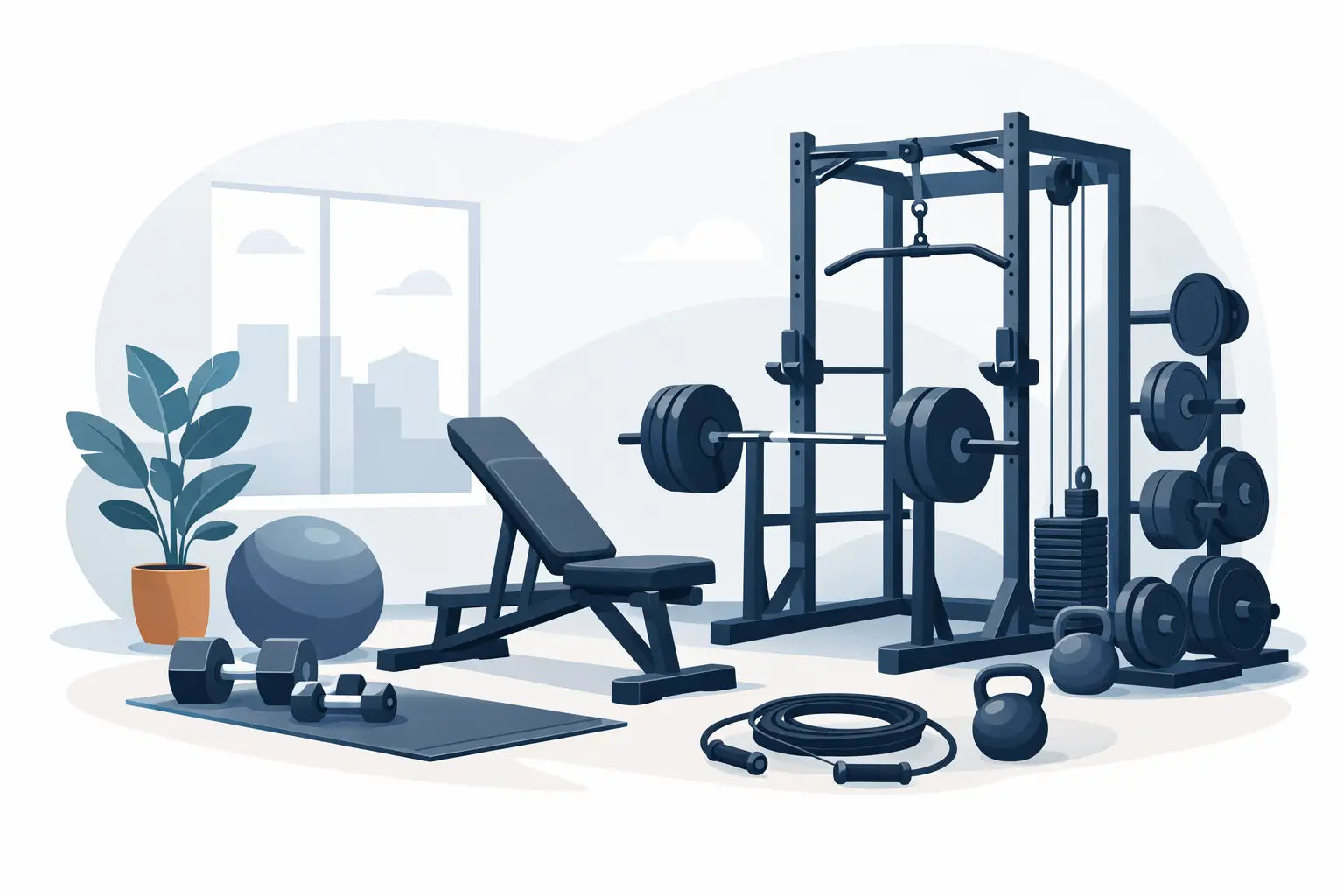
If you want a more advanced setup and have room for it, you may want a barbell, plates, a squat rack, and a bench. This is the closest thing to a traditional gym experience and makes sense for experienced lifters chasing heavier squats, presses, and deadlifts.
But there is a trade-off. It costs more, takes up more space, and usually demands more planning around flooring, storage, and safety. For many people, that level of setup is useful but not necessary. More equipment does not always mean better training.
The gear that gives you the most return
Some tools pull more weight than others, literally and financially. If you want a setup that earns its keep, prioritize versatility first.
Adjustable dumbbells are hard to beat because they replace multiple pairs of fixed weights. Resistance bands bring warmup, strength, and mobility value in one low-cost tool. Kettlebells add explosive work and grip training. A bench increases exercise options. These four pieces create a practical resistance training base for a wide range of users.
Recovery tools are also worth considering, especially if soreness and tightness tend to derail your consistency. A foam roller, massage gun, and mobility accessories will not replace training, but they can help you recover faster and feel more ready for the next session. That matters when your real goal is sticking with the plan.
How to choose without overbuying
The fastest way to waste money is to shop based on ambition instead of behavior. Be honest about how you train now, not how you hope to train someday.
If you are new to resistance training, start with equipment that is simple to use and easy to progress. Adjustable dumbbells and bands are usually enough. If you already train three to five days a week and know you enjoy strength work, adding a bench and kettlebell makes sense. If lifting heavy is already part of your routine, then larger equipment may be worth the investment.
Also think about your environment. Noise matters in apartments. Storage matters in shared homes. Flooring matters if you are doing carries, deadlifts, or kettlebell work. A smart setup respects your space so training stays realistic.
Don’t ignore recovery and movement quality
A lot of people think resistance training starts when the weights come out. It starts earlier than that. If your joints feel stiff, your posture is off, or your muscles stay tight for days, your training quality drops.
That is why the best home gym for resistance training should include at least a basic recovery plan. A few minutes with a foam roller, massage gun, posture support tool, or mobility band can improve how you move and how you feel. You do not need a complicated routine. You need enough support to keep showing up strong.
This is where a well-rounded store like Grit Gain Co. fits naturally. Strength tools matter, but so do the recovery and posture basics that help you keep training hard and moving better.
Build a setup you will actually use
There is no single perfect home gym for everyone. The best one is the setup that fits your life and keeps your training consistent. For some people, that is a pair of adjustable dumbbells and bands beside the couch. For others, it is a full garage build with a bench and heavier loading options.
The key is choosing gear that supports real progress without adding unnecessary friction. Go for equipment that lets you train your whole body, increase resistance over time, and recover well enough to come back ready. Keep it practical. Keep it strong. And build a space that makes hard work easier to repeat.
When your home gym works with your routine instead of against it, strength stops being something you plan to do and becomes something you actually do.
