

Cart
0
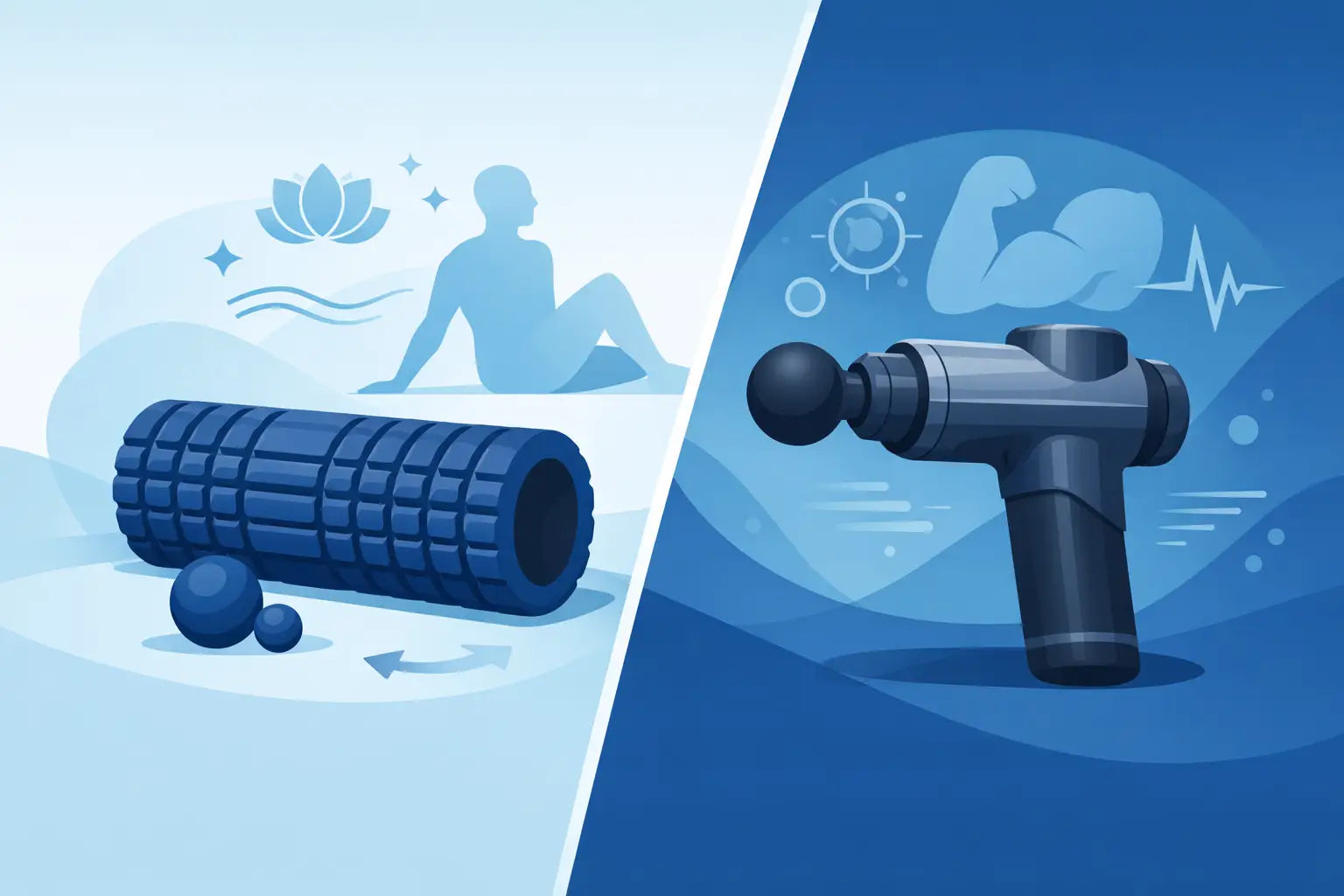
Your legs are smoked after squats, your back feels tight after a long day, and you want relief without turning recovery into another complicated task. The foam roller vs massage gun decision comes down to how you want to target sore muscles, improve mobility, and stay ready for your next workout.
Both tools can earn a place in a serious home fitness setup. They help you spend a few focused minutes on muscles that feel stiff, tender, or overworked. But they do not deliver the same experience. One uses your body weight to create broad pressure. The other delivers fast, targeted pulses with less effort from you.
Foam Roller vs Massage Gun: The Core Difference
A foam roller is a simple recovery tool that lets you apply pressure to larger muscle groups by moving your body across a firm cylinder. Think calves, quads, hamstrings, glutes, upper back, and the sides of your hips. You control the pressure by shifting more or less body weight onto the roller.
A massage gun uses percussive movement to create quick pulses against a specific area. It is easier to use while sitting, standing, or relaxing on the couch. You can reach smaller or harder-to-roll areas, such as your shoulders, forearms, feet, calves, and glutes, without having to get down on the floor.
Neither tool magically repairs a muscle or replaces sleep, smart programming, hydration, and enough protein. What they can do is help you feel less stiff, warm up with purpose, and make recovery work feel easier to repeat. Consistency is where the payoff lives.
When a Foam Roller Makes More Sense
A foam roller is the better pick when you want broad coverage and a more active recovery session. Rolling your quads after leg day, for example, lets you work through a large area while adjusting pressure as you go. It can also encourage you to slow down, breathe, and pay attention to where your body feels restricted.
For mobility work before training, the roller has a real advantage. A few controlled passes over your upper back can pair well with thoracic extensions before pressing. Gentle work on the calves and glutes can help you feel more prepared for squats, lunges, or a run. The goal is not to crush yourself into the roller. It is to reduce that stiff, locked-up feeling so you can move with better control.
Foam rollers are also straightforward and budget-friendly. There are no batteries to charge, speed settings to learn, or attachments to keep track of. If you are building a home gym from the ground up, a roller gives you a durable recovery option that works for nearly every training style.
The trade-off is effort. Rolling requires floor space, body positioning, and enough mobility to get into useful positions. It can be awkward to target the neck, traps, lower legs, or one exact spot in your glute. A firm roller may also feel intense if you are brand new to recovery work or already very sore.
Best uses for a foam roller
Use a foam roller when you want to cover large muscles after training, add mobility work to your warm-up, or build a simple recovery habit without adding another device to charge. It is especially useful for lifters, runners, and anyone who spends long stretches sitting and feels tight through the hips, legs, and upper back.
When a Massage Gun Pulls Ahead
A massage gun is built for convenience and precision. You can use it on one calf while sitting at your desk, work around your shoulder after an upper-body session, or target the bottom of your foot after a day on your feet. That lower barrier to use matters. The best recovery tool is often the one you will actually use regularly.
It is also easier to control the intensity in a small area. Start on a low setting, keep the gun moving slowly, and let it glide over the muscle instead of jamming it into one painful point. Many people find this gentler than putting their full body weight on a roller, especially when soreness is fresh.
Massage guns work well before a workout, too. A brief pass over the muscles you are about to train can help you feel more prepared without creating fatigue. Before a lower-body session, try light work on the glutes, quads, hamstrings, and calves. Before an upper-body workout, use it lightly around the lats, pecs, and shoulders, avoiding the front of the neck and bony areas.
The downside is cost and maintenance. A quality massage gun generally costs more than a foam roller, needs charging, and has moving parts. More power is not automatically better, either. You do not need maximum speed and heavy pressure to get a useful recovery session. Control beats intensity.
Best uses for a massage gun
Choose a massage gun when you want targeted work, quick relief between meetings or errands, and a recovery tool that does not require floor time. It is a strong option for busy people, athletes who train frequently, and anyone who wants a practical way to address specific sore spots.
Which Tool Helps You Recover Better?
The honest answer is: it depends on your routine, your body, and what keeps you consistent. A foam roller may be more useful if your legs feel generally tight after training. A massage gun may be more useful when one calf, shoulder, or glute needs focused attention.
The roller creates pressure through your own movement, so it doubles as a mobility practice. You are supporting your body, changing angles, and working through range of motion. The massage gun is more passive. That can be a strength when you are tired, short on time, or not comfortable getting on the floor.
For value, a foam roller wins. For convenience and targeted use, the massage gun wins. For a complete home recovery setup, having both is not overkill if you train regularly. Use the roller for broad work and mobility. Use the gun for quick, precise sessions when you need to stay on track.
A Simple Way to Use Both Tools
Keep recovery short enough that it fits real life. Before training, spend 30 to 60 seconds per muscle group using light pressure. You should feel more ready to move, not beaten up before your first working set.
After training or later that day, use one to two minutes per area that feels especially tight. Move slowly, breathe normally, and avoid chasing pain. If a spot feels tender, reduce pressure rather than forcing your way through it. A productive session should leave you feeling looser and more comfortable, not bruised.
A practical lower-body routine might include a few passes on the quads and upper back with a foam roller, followed by targeted massage gun work on the calves and glutes. On upper-body days, use the roller for the upper back and lats, then use the gun carefully around the shoulders and forearms.
Recovery Rules That Keep You Moving
Do not use either tool directly over joints, bones, the front or sides of the neck, open wounds, varicose veins, or areas with swelling and sharp pain. Avoid aggressive pressure on a fresh injury. Numbness, tingling, worsening pain, major bruising, or pain that does not improve are signs to stop and speak with a qualified medical professional.
More pressure is not proof of a better recovery session. The tough mindset is showing up for smart work, not turning every sore muscle into a battle. Train hard, then give your body the support it needs to come back stronger.
Choose the tool that makes recovery easier to repeat after the sessions that challenge you most. A foam roller can build better movement. A massage gun can make targeted care fast. Put either one where you will see it, use it for a few focused minutes, and keep stacking the work that helps you move better and feel stronger daily.

