

Cart
0
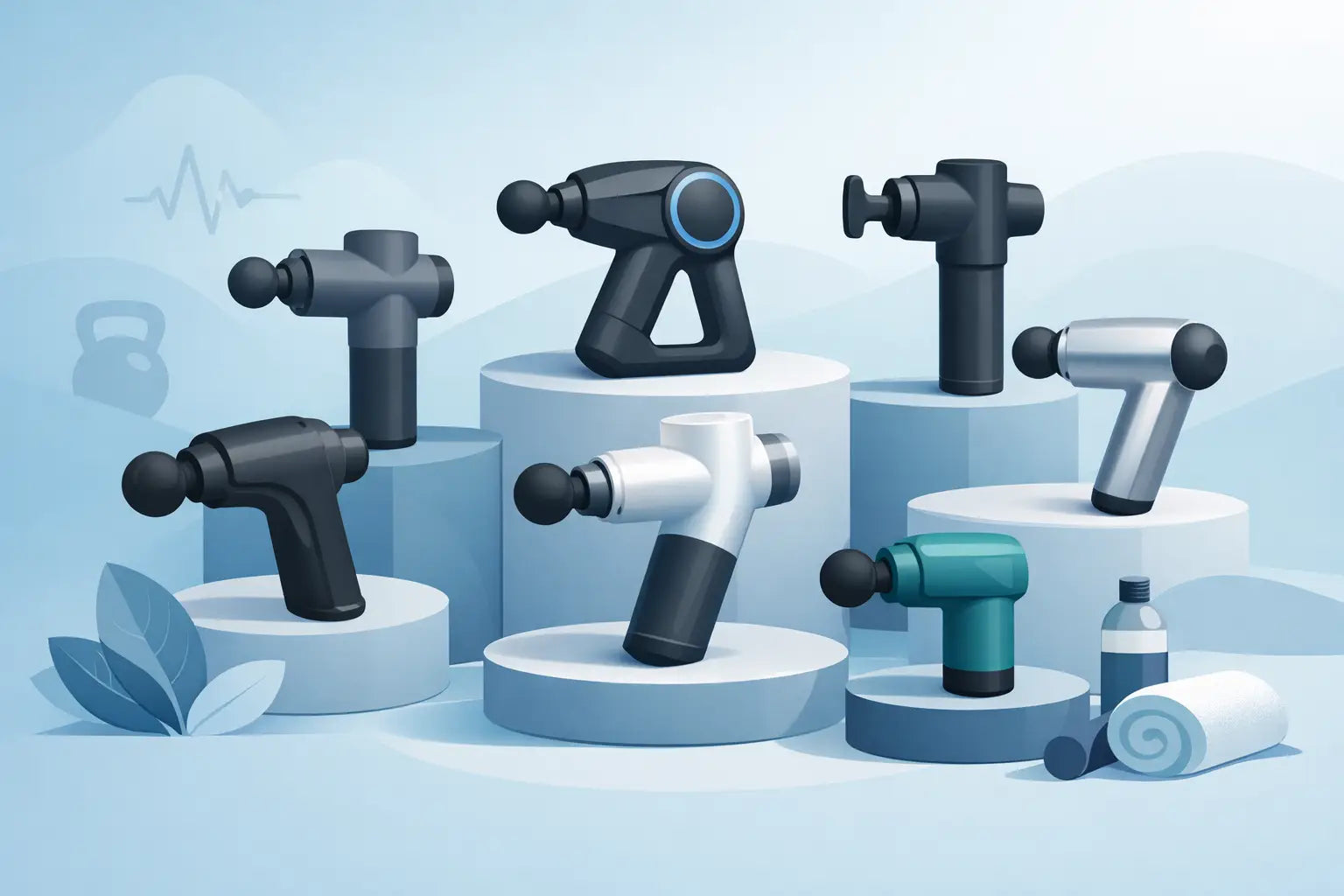
Sore legs after squats are one thing. That tight shoulder that keeps showing up during presses, long workdays, and bad sleep is another. The best massage guns for recovery help you handle both - not by replacing rest, but by making it easier to move better, loosen up, and get back to training without feeling wrecked.
A good massage gun should do three jobs well. It should hit enough force to work through stubborn muscle tightness, feel easy enough to use that you actually reach for it, and stay quiet enough that it does not feel like starting a power tool at home. Everything else - attachments, app features, carrying cases, fancy displays - matters less if those basics are missing.
What makes the best massage guns for recovery?
The short answer is balance. A massage gun that is too weak feels like vibration with no payoff. One that is too aggressive can leave you guarding the muscle instead of relaxing it. The best option depends on how you train, how sore you get, and how much control you want over the pressure.
Amplitude is one of the biggest factors. That is the distance the head travels with each strike. More amplitude usually means a deeper-feeling percussion, which many strength-focused users prefer for quads, glutes, and upper back work. Lower amplitude can still be useful, especially for lighter recovery sessions, calves, forearms, and more sensitive areas.
Stall force matters too. If you press the gun into a dense muscle and it slows down fast, it may not be enough for someone who lifts regularly. On the other hand, many beginners do not need maximum power. They need something comfortable, simple, and hard to misuse.
Battery life, handle shape, and weight also play a real role. Recovery tools only help if they fit your routine. A heavy device with an awkward grip can be frustrating when you are trying to reach your mid-back or hold it on your hamstrings for more than a minute.
7 best massage guns for recovery
1. Theragun Prime
If you want a dependable all-around pick, the Theragun Prime stays near the top for a reason. It delivers strong percussion, an ergonomic triangle handle, and enough power for post-leg-day work without forcing you into a premium price tier.
It feels especially useful for people who want easier reach across different muscle groups. That handle design is not hype. It genuinely helps when you are trying to hit your back, traps, or glutes without twisting into awkward positions. The trade-off is noise and price. It is not the cheapest option, and some buyers will not need everything it offers.
2. Hyperice Hypervolt 2
The Hypervolt 2 is a smart fit for users who want recovery to feel smooth and approachable. It tends to run quieter than some high-powered competitors, and the overall feel is controlled rather than overly intense.
That makes it a strong pick for mixed households, beginners, or anyone who wants a massage gun for daily use instead of only heavy-duty sessions. It may not feel quite as aggressive as deeper percussion models, but for many people that is a plus, not a weakness.
3. Ekrin Athletics B37
The B37 earns attention by doing a lot of things right without inflating the price. It offers solid power, a comfortable angle for self-treatment, and a battery setup that supports regular use.
This is the kind of option that works well for practical buyers. If your priority is performance per dollar, the B37 belongs in the conversation. The finish and branding may feel less flashy than bigger names, but the actual recovery experience is strong where it counts.
4. Theragun Mini
Not every recovery session needs maximum force. The Theragun Mini is built for convenience, travel, and quick use between work, errands, and training. If you want something that can live in a gym bag or desk drawer, this is the category leader.
Its biggest strength is consistency. Smaller devices get used more often because they are easy to grab. The obvious trade-off is depth and power. If you want to dig into heavy glute or quad soreness after a hard lower-body session, a mini model will feel limited.
5. Hyperice Hypervolt Go 2
The Hypervolt Go 2 sits in a similar lane to compact recovery tools, but with a polished, user-friendly feel. It is light, portable, and less intimidating for people who are just getting started with percussion therapy.
This is a strong choice for daily maintenance, light soreness, and smaller muscle groups. It is not the best pick if you want one device to handle every recovery need at a high level. But if your goal is staying mobile, reducing stiffness, and building a recovery habit you can stick with, it checks the right boxes.
6. Bob and Brad D6 Pro
For buyers who care about value and features, the D6 Pro often stands out. It usually comes with multiple attachments, strong battery performance, and enough power for heavier use, all at a price that feels more accessible than top-tier flagship models.
It is a good example of where budget-friendly no longer has to mean weak. Still, lower-cost models can be more inconsistent in fit, finish, and long-term durability. If you want premium build quality above everything else, you may still lean toward Therabody or Hyperice.
7. A well-built store-brand massage gun
This category deserves a spot because many everyday shoppers do not need elite branding. A well-built store-brand massage gun with multiple speed settings, useful attachments, decent stall force, and a comfortable handle can absolutely get the job done.
For home gym users, that matters. If the tool helps you loosen tight calves after jump rope, reduce quad soreness after lunges, or warm up your upper back before training, it is doing the work. Grit Gain Co. understands that recovery should be practical, not precious. You want gear that supports consistency and keeps you moving.
How to choose the best massage gun for your training style
If you lift heavy three to five days a week, prioritize power, handle comfort, and battery life. You will likely use the device on larger muscle groups and denser tissue, so deeper percussion matters. Look for a model that feels stable under pressure instead of stalling out when you lean in.
If your training is more general fitness, walking, mobility work, or home workouts, a mid-range or compact model may be enough. You probably do not need maximum force. A quieter unit that feels easy to use regularly can be the better buy.
If you are buying for shared household use, control matters more than intensity. Different people will have different tolerance levels. In that case, choose a massage gun with straightforward speed settings and a gentler starting point.
And if you know yourself well enough to admit you hate bulky gadgets, believe that instinct. The best recovery tool is the one you will use after the workout, not the one that looks impressive in the box.
Where massage guns help most
Massage guns work best for common trouble spots that build tension from training and daily life. Quads, hamstrings, calves, glutes, traps, lats, and pecs are all common targets. They can be useful before a session as part of a warm-up and after a session when stiffness starts to set in.
They are less useful when people expect them to fix everything. A massage gun cannot correct poor sleep, replace mobility work, or erase the effects of training too hard too often. It is a support tool. Used well, it can help you move more freely, reduce that heavy beat-up feeling, and make recovery feel more active.
Be careful around joints, bony areas, the front of the neck, and any spot that feels sharply painful instead of tight. More pressure is not always better. Start easy, keep sessions short, and let the muscle respond instead of trying to overpower it.
Are expensive massage guns worth it?
Sometimes yes, sometimes no. Premium models usually offer better ergonomics, more consistent power delivery, quieter motors, and stronger overall build quality. If you use a massage gun several times a week, that difference can be worth paying for.
But not everyone needs the top shelf. A mid-priced device can be the smarter move if your use is occasional or your soreness is moderate. Plenty of shoppers overspend on recovery tech when what they really need is a simple, durable tool they will use for ten minutes after training.
That is the real standard. The best massage gun is not the one with the most hype. It is the one that fits your body, your routine, and your recovery habits. Train hard, recover on purpose, and choose the tool that helps you show up strong again tomorrow.

