

Cart
0
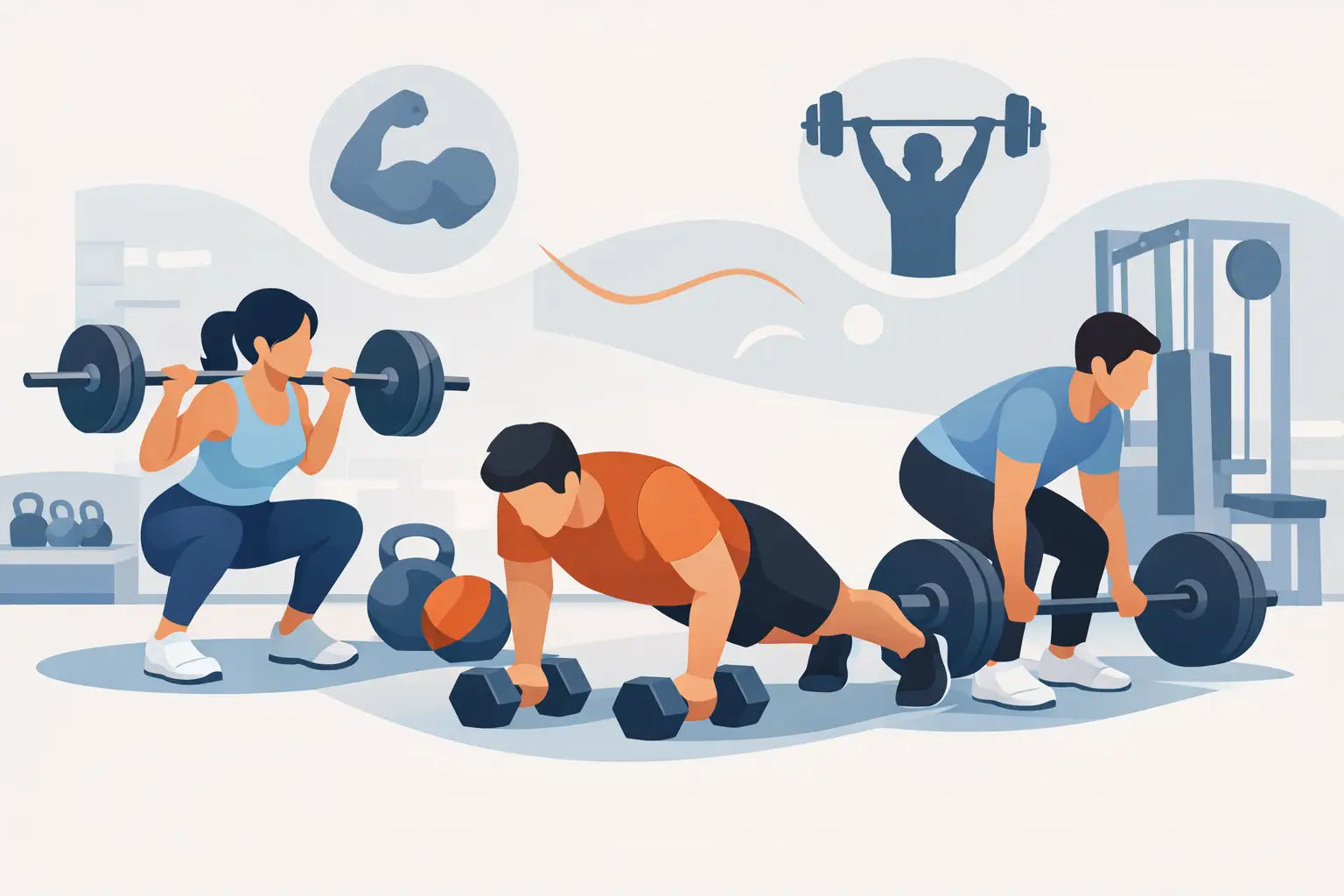
If your legs shake after squats, your arms burn after push-ups, and you have to fight for the last few reps, that usually counts. Still, a lot of people ask what exercises count as strength training because not every workout that feels hard is actually helping you build strength.
Strength training is any exercise that makes your muscles work against resistance. That resistance can come from dumbbells, kettlebells, resistance bands, machines, your own body weight, or even loaded household items if that is what you have. The goal is simple - challenge the muscles enough that they adapt by getting stronger over time.
That means strength training is not limited to heavy barbell lifts in a gym. You can do it in a spare bedroom, garage, backyard, or living room. If the movement asks your muscles to produce force against a meaningful load, it belongs in the strength training category.
What exercises count as strength training?
A good way to answer the question is to stop thinking about exercise names and start thinking about resistance. Bicep curls count. So do lunges, rows, deadlifts, presses, glute bridges, step-ups, and pull-ups. If the movement is loaded enough to make your muscles work hard, it fits.
The key word is loaded. Walking is movement, but for most people it is not strength training. Doing air squats for two easy reps is movement too, but not much of a strength stimulus. On the other hand, bodyweight squats done for challenging sets, split squats that leave your legs smoked, or push-ups that force you to grind through the last reps can absolutely be strength training.
This is where people get tripped up. The exercise itself is not the whole story. The way you perform it matters just as much. A plank can be a light core drill for one person and a serious strength challenge for another. A kettlebell deadlift can be easy warm-up work or a real lower-body strength exercise depending on the load and effort.
The main types of strength training exercises
Most strength exercises fall into a few big movement patterns. You do not need a complicated plan to train well. You need movements that cover the basics and enough resistance to make them count.
Lower-body pushes
These are exercises where you push the floor away using your legs. Squats, goblet squats, split squats, lunges, and step-ups all belong here. They train your quads, glutes, and to some extent your core. If you are using dumbbells, kettlebells, or bands to make these harder over time, you are doing strength work.
Hip hinges
Hip hinges train the back side of your body - glutes, hamstrings, and lower back. Deadlifts, Romanian deadlifts, kettlebell swings, and good mornings are common examples. Not every swing session is pure strength training since lighter, faster swings can become more about power or conditioning, but heavier hinges done with control definitely count.
Upper-body pushes
Push-ups, overhead presses, chest presses, and floor presses fit here. These train the chest, shoulders, and triceps. Push-ups deserve extra attention because people often underestimate them. If standard push-ups are difficult for you, they count as strength training. If they are too easy, changing the angle, slowing the tempo, or adding resistance can make them challenging again.
Upper-body pulls
Rows, band rows, dumbbell rows, pull-ups, chin-ups, and reverse fly variations all help build the upper back, lats, rear shoulders, and arms. Pulling strength matters for posture, shoulder balance, and everyday function. It is one reason home setups with bands, dumbbells, or kettlebells can go a long way.
Core strength work
Core training counts as strength training when it is resistance-based and progressive. That can include weighted carries, dead bugs with tension, planks, side planks, Pallof presses, weighted sit-up variations, and slow mountain climbers. The core is not just about abs showing. It is about bracing, resisting movement, and transferring force.
Does bodyweight training count?
Yes, bodyweight training counts as strength training if it is hard enough to challenge your muscles. Push-ups, pull-ups, dips, single-leg squats, glute bridges, wall sits, and tempo lunges can all build strength. For beginners, bodyweight alone is often more than enough to get results.
The trade-off is progression. With weights, it is easy to add five pounds and keep moving forward. With bodyweight, progression takes a little more creativity. You may need to change leverage, slow the lowering phase, pause at the bottom, increase range of motion, or move to a single-arm or single-leg version.
That does not make bodyweight training less real. It just means your path to overload looks different. If your muscles are being pushed to adapt, it counts.
What does not usually count as strength training?
Some workouts improve fitness without being true strength work. Light cardio, casual stretching, and very low-resistance movement are all useful, but they are not the same thing.
A dance workout may boost endurance and coordination. A long walk helps general health. Yoga can improve mobility, balance, and body control. None of that is a waste. But if resistance is too low to seriously challenge the muscles, those sessions are not doing the same job as dedicated strength training.
Circuit workouts live in the middle. A fast circuit with very light weights may be more about cardio than strength. A slower, more demanding circuit with solid resistance can absolutely count. It depends on load, rep quality, rest time, and how close you are working to fatigue.
How to tell if an exercise is building strength
Forget fancy terms for a minute. Ask yourself a few practical questions. Does the exercise make a specific muscle group work hard? Can you only do a limited number of solid reps before form breaks down? Can you make it harder over time by adding load, reps, time under tension, or a tougher variation?
If the answer is yes, you are probably looking at a strength training exercise.
Another strong clue is recovery. After real strength work, muscles often feel worked in a focused way. You may notice fatigue, soreness, or a drop in performance if you try to repeat the same session too soon. That does not mean you need to be wrecked after every workout, but it does mean the session asked something from your body.
What exercises count as strength training at home?
More than most people think. A solid home routine can include goblet squats, Romanian deadlifts, bent-over rows, overhead presses, floor presses, push-ups, split squats, band pull-aparts, carries, and planks. That covers a lot of ground with minimal space.
Dumbbells are one of the easiest tools to build around because they work for nearly every major movement pattern. Kettlebells are great for squats, hinges, carries, and pressing. Resistance bands are useful for rows, presses, glute work, and travel workouts. Even recovery tools matter here because training hard is only half the job. If your muscles stay tight and beat up, consistency gets harder.
This is where a simple home setup wins. You do not need ten machines. You need gear you will actually use and a plan you can repeat.
Strength training is about progression, not just effort
A workout can feel brutal and still not be an effective strength program. Sweat is not the test. Progress is. If you are doing the same easy routine every week with no increase in challenge, your results will stall.
Strength training works best when you gradually ask more from your body. That could mean heavier dumbbells, thicker bands, more reps with good form, slower tempo, longer pauses, or better control through the full range of motion. Small upgrades matter. Daily progress adds up.
This is especially important for beginners who assume they need to go all out every session. You do not. You need consistency, solid form, and enough resistance to create adaptation. Train hard, recover smart, and repeat.
The simple rule to remember
If an exercise makes your muscles work against resistance and you can progress it over time, it counts as strength training. That includes free weights, bands, machines, bodyweight movements, and loaded carries. The label matters less than the stimulus.
So if you are training at home and wondering whether your routine is legit, do not overcomplicate it. Pick a few basic movements, make them challenging, and stay consistent. That is how strength gets built. Keep showing up, keep adding a little more, and let the results prove the point.

