

Cart
0
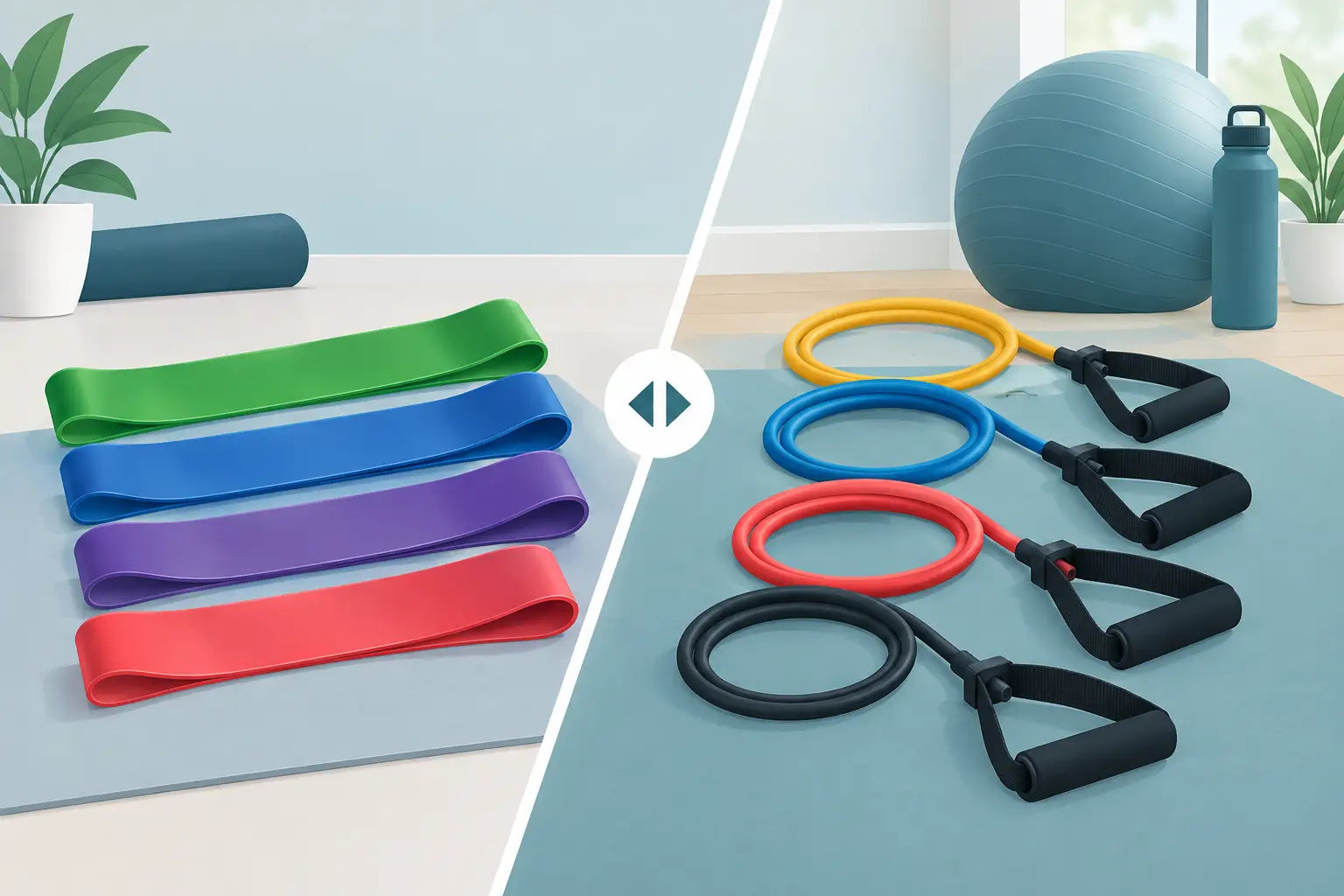
A resistance band can turn a spare corner of your home into a serious training space. But when you are comparing loop bands versus tube bands, the right choice is not about which one looks more intense. It is about how you want to move, what you want to train, and which band you will actually use consistently.
Both types can build strength, improve mobility, and make bodyweight workouts more challenging. They are affordable, portable, and easy to store. The difference is in the feel of the resistance, the exercises they support best, and the setup required to train hard safely.
Loop Bands Versus Tube Bands: The Core Difference
Loop bands are continuous circles of elastic material. They come in short, flat versions often called mini bands and longer, thicker versions used for assisted pull-ups, squats, deadlifts, and full-body strength work. There are no handles to grab. You step into them, wrap them around your hands, place them above your knees, or anchor them around a stable object.
Tube bands use a hollow elastic tube, usually with handles on each end. Many sets also include clips, ankle straps, and a door anchor. They feel closer to cable-machine training because you can stand on the tube, pull the handles, or attach one end to a secure anchor point.
Neither style wins every workout. Loop bands are usually simpler and more versatile for mobility, lower-body activation, and bodyweight assistance. Tube bands make it easier to perform familiar pulling and pressing movements with a comfortable grip.
Choose Loop Bands for Simple, Versatile Movement
Loop bands earn their place in home workouts because they are fast to use. Grab one, step into it, and start training. That simplicity matters when you have 20 minutes between work, errands, and everything else that competes for your attention.
Mini loop bands are especially useful for glute activation and hip stability. Place one just above your knees for squats, lateral walks, glute bridges, or clamshells. The band creates outward tension, giving you a clear reminder to keep your knees tracking well as you move. They are also excellent for warm-ups before lower-body lifting or a run.
Long loop bands can handle bigger strength movements. Stand on one for banded deadlifts, overhead presses, and rows. Anchor one high for pulldowns or low for presses. Use it for assisted pull-ups if you have a stable pull-up bar. Because the band is one continuous piece, you can change the setup quickly without fussing with clips or attachments.
The trade-off is grip comfort. Holding a flat loop band directly can feel less natural than holding a handle, especially during higher-rep rows, curls, or presses. The band can also rub against bare skin if it is twisted or poorly positioned. That is manageable, but it is worth considering if upper-body strength work is your main goal.
When loop bands make the most sense
Choose loop bands if you want an easy tool for warm-ups, mobility sessions, glute work, pull-up assistance, or full-body training with minimal setup. They are also a strong choice for people who travel, train in small spaces, or want to add resistance to squats, push-ups, and other bodyweight movements.
If you are new to resistance training, mini loops can make it easier to feel which muscles should be working. That immediate feedback builds better movement habits. Start light, control every rep, and earn stronger resistance over time.
Choose Tube Bands for Handle-Based Strength Work
Tube bands work well when you want movements that feel more like traditional gym exercises. The handles give you a secure, familiar grip for biceps curls, triceps pressdowns, chest presses, shoulder presses, rows, and fly variations. For many beginners, that makes training feel more straightforward.
A tube-band set can also create a lot of exercise variety from one small bag. Stand on the tube for curls and presses. Anchor it in a door for rows, chest presses, face pulls, and triceps work. Add ankle straps for leg extensions, hamstring curls, hip abductions, and kickbacks.
This style is particularly helpful if your goal is upper-body volume at home. You can train your chest, back, shoulders, and arms without needing a bench full of dumbbells. Since the handles stay in your hands, you may find it easier to keep your wrists in a comfortable position during pressing and pulling movements.
The biggest consideration is the anchor. A door anchor must be placed on the opposite side of a closed door, ideally near the hinges, with the door secured before every set. Never anchor a band to furniture that can slide, tip, or break. A strong workout is only productive when your setup is stable.
When tube bands make the most sense
Choose tube bands if you want handle-based exercises, more upper-body isolation work, or a cable-style training feel without a gym membership. They are a practical fit for beginners who want clear exercise options and intermediate trainees who need more home workout variety.
Tube bands are not automatically better for heavy training, though. Resistance rises as the band stretches, so the hardest part of the movement is often near the end range. That can be useful for strength and muscle-building, but it feels different from lifting a dumbbell, which provides a more consistent load from start to finish.
Resistance, Comfort, and Progress
With either band style, color is not a universal resistance standard. A black band from one brand may feel completely different from a black band from another. Check the stated resistance range when it is available, then judge the band by your own performance.
A good starting resistance lets you complete your planned reps with control while the final few reps feel challenging. If your form falls apart early, use a lighter band. If you can cruise through 20 repetitions without slowing down, increase resistance, add repetitions, slow the lowering phase, or move farther from the anchor point.
Loop bands often feel more stable around the legs and are easy to layer for more resistance. Tube bands can be clipped together in some systems, which makes progression convenient. Still, more resistance is not always better. A lighter band with clean range of motion beats a heavy band that pulls you into rushed, sloppy reps.
Comfort affects consistency, too. If handles help you train your upper body more often, tube bands may be the better buy. If you hate complicated setups and want to move immediately, loops may win. The best equipment is the equipment that gets used on ordinary weekdays, not just during a burst of motivation.
Build a Smarter Home Band Setup
For most home gyms, owning both styles is the strongest move. A set of mini loop bands handles activation, mobility, and lower-body burnouts. A long loop band supports pull-up assistance, bigger compound movements, and stretching. Tube bands cover handle-based pushes, pulls, curls, and triceps work.
If you can only choose one, let your training goal decide. Pick loop bands for lower-body training, mobility, compact travel workouts, and simple full-body sessions. Pick tube bands for cable-inspired upper-body workouts and exercises where a handle gives you more confidence and control.
Inspect bands before each workout. Look for cracks, thinning, fraying, damaged handles, or weak clips. Keep them away from sharp edges and avoid leaving them in direct heat or sunlight. Replace a worn band before it snaps, not after.
Make the Band Fit the Work
Do not get stuck searching for one perfect piece of equipment. Loop bands and tube bands are tools, and each one can help you train hard, move better, and stay consistent when getting to the gym is not realistic.
Start with the band that makes your next workout easier to begin. Then show up, control the reps, and build strength one session at a time. That is how home training turns into real progress.

