

Cart
0
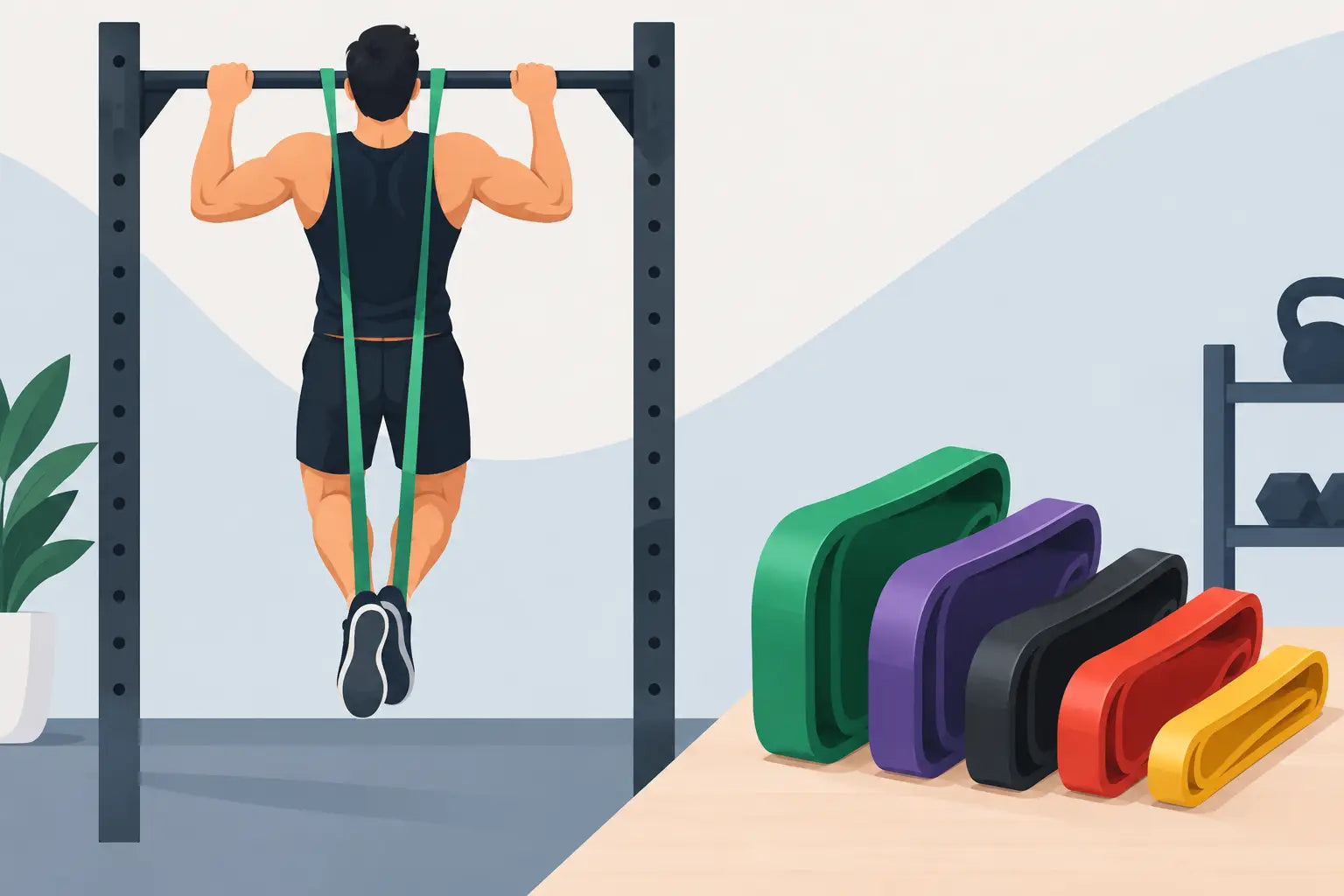
The hardest part of a pullup is usually not getting started. It is getting past the point where your arms shake, your grip fades, and your chin still sits below the bar. The best resistance bands for pullups give you help exactly where you need it most, so you can practice the real movement, build strength, and keep showing up for the next rep.
A good pullup band is not a shortcut. It is a training tool. Used well, it helps beginners earn their first strict pullup and gives experienced lifters a way to add volume without turning every set into a grind. The key is choosing the right style and resistance for your current strength, not the band that looks toughest on the rack.
What Makes a Great Pullup Band?
For assisted pullups, long loop bands are the clear choice. These are the flat, continuous rubber loops often called pullup assist bands or power bands. They are long enough to anchor over a pullup bar and create a secure foothold or knee support below you.
Small therapy bands, mini loops, and tube bands with handles have their place in warmups, mobility work, and lower-body training. They are not built for safe, comfortable pullup assistance. A proper long loop band should be wide, durable, and made from quality latex that stretches smoothly without feeling thin, brittle, or overly slick.
The best option also fits more than one workout. A long loop band can support pullups, chin-ups, rows, pushups, deadlifts, shoulder activation, and mobility drills. That gives your home gym more training value without filling a closet with one-use gear.
Best Resistance Bands for Pullups: Choose by Assistance Level
Band colors are not universal. A green band from one company may provide very different resistance than a green band from another. Shop by the stated resistance range and band width, not color alone.
For most people, a set of several long loop bands is the smartest buy. Your strength will change, and the right band for your first workout probably will not be the right one a few months from now. Having options lets you progress instead of stalling.
Light bands for building clean reps
Light bands are best for people who can already perform a few unassisted pullups or can control a slow negative. They take off a modest amount of load while keeping the movement challenging. Use them when your goal is cleaner technique, more total reps, or extra back training after your strict sets.
If you can get your chin over the bar but struggle to repeat the effort, a light band can help you add quality volume. It should not launch you upward. You should still feel your back, arms, and grip working from the first rep to the last.
Medium bands for the first pullup phase
Medium bands are often the sweet spot for beginners who have built some pulling strength but cannot yet complete a full strict rep. They provide enough help to move through the full range of motion while still demanding control.
This is usually the band level that lets you train productive sets of three to eight repetitions. If you are doing 12 or more easy reps, the band is likely providing too much assistance. Move to a lighter option when you can keep your shoulders controlled and your reps consistent.
Heavy bands for beginners and bigger lifters
Heavy bands make pullup practice possible when bodyweight pulling is still out of reach. They are also useful for larger athletes, people returning after time away, or anyone who needs enough assistance to avoid swinging and half reps.
There is no prize for choosing too little help. A heavier band that allows full, controlled pullups beats a lighter band that turns every rep into a kick-and-swing battle. Start where you can train well, then reduce assistance over time.
Extra-heavy bands for confidence and control
Extra-heavy bands offer the most support. They can be a solid starting point if you are brand new to pullups, but they come with a trade-off: the band helps much more at the bottom than at the top. You may feel powerful leaving the dead hang and still struggle near the bar.
That is normal. Pair the band with top-position holds, slow negatives, and band rows to strengthen the range where assistance drops off. As your control improves, move toward a medium or light band instead of relying on maximum help forever.
How to Pick the Right Band Width
Band width generally tells you how much assistance to expect. Narrower bands offer less support, while wider bands provide more. Exact resistance numbers vary by material and manufacturer, but this simple framework makes shopping easier:
- Narrow bands work best for advanced assistance, mobility work, and adding a few reps to an existing pullup set.
- Medium-width bands suit many developing lifters working toward their first unassisted pullup.
- Wide and extra-wide bands are built for greater assistance, larger bodyweights, and true beginner practice.
- A multi-band set gives you a progression path for pullups plus options for full-body strength work.
Set Up Your Band the Safe Way
Loop one end of the band securely around the center of a stable pullup bar. Pull the lower end through the top loop and tighten it so the band hangs straight down. Before stepping in, give it a firm pull to make sure it is centered and secure.
For most people, placing one foot in the band is the easiest setup. Step into the hanging loop, then tuck your other ankle over the banded foot for more stability. If the band is too short to step into comfortably, place one knee in it instead. Knee support can feel steadier for beginners, though it may limit how naturally you can position your lower body.
Grip the bar before you load the band. Keep your hands just outside shoulder width, start from an active hang with your shoulders pulled down away from your ears, and brace your core. Pull your elbows toward your ribs rather than trying to yank your chin to the bar.
Inspect bands before every workout. Skip a band with cracks, deep nicks, frayed-looking edges, or dry, chalky material. Keep it away from sharp edges, rough bar surfaces, excessive heat, and direct sunlight. Resistance bands store a lot of tension, so basic care matters.
Train for Progress, Not Just Assisted Reps
Assisted pullups work best when you treat them like strength training. Keep the reps controlled. Avoid bouncing at the bottom or letting the band fling you up. Lower for two to three seconds whenever you can, because the lowering phase builds serious pulling strength.
Train assisted pullups two or three times per week, leaving at least a day between hard sessions. Start with three to four sets of three to eight solid reps. Rest long enough to maintain form, usually 90 seconds to two minutes. When you can complete your target reps with no swinging, use a lighter band or add a slow negative after your final rep.
You can also use a simple progression: begin each session with a few attempts at an unassisted pullup, then complete your working sets with the band. Even if those unassisted attempts do not leave the ground at first, they teach your body the demand of the movement. Finish with rows, dead hangs, or biceps curls to build the muscles that support stronger pulling.
Do not judge progress only by whether you have earned a full pullup yet. A longer dead hang, less band assistance, slower negatives, and more controlled assisted reps all count. Strength is built rep by rep, especially when you stay patient enough to train the movement well.
Common Mistakes That Slow You Down
The biggest mistake is using a band that is so heavy you never have to work through the hardest part of the rep. Assistance should make the movement possible, not remove the challenge. On the other hand, a band that is too light can force ugly form and irritate your shoulders or elbows.
Another common problem is losing tension at the bottom. Do not simply hang on your joints. Start each rep by gently pulling your shoulder blades down, then drive your elbows down and back. Keep your ribs from flaring wildly and avoid kicking your legs for momentum.
Finally, do not make pullups your only back exercise. Bands make it easy to add rows, face pulls, straight-arm pulldowns, and external rotations at home. Those movements help build a stronger upper back and healthier shoulders, which makes every pullup feel more solid.
A set of long loop bands belongs in a home gym because it meets you where you are and keeps pace as you get stronger. Choose a resistance level that lets you own every rep, train with intent, and move to less assistance when you are ready. Keep putting in the work. The bar does not move, but you will.

