

Cart
0
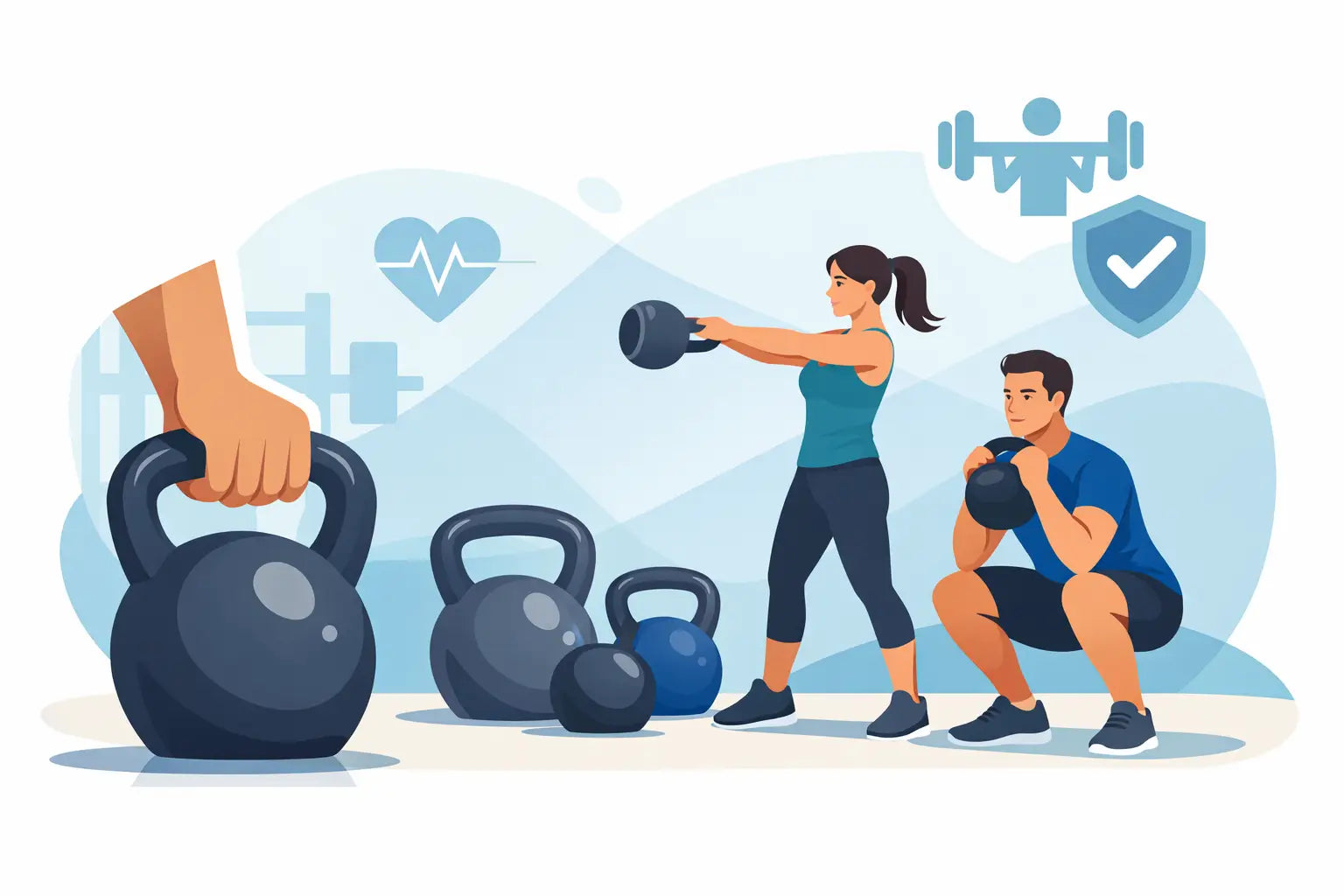
A kettlebell can make a home workout feel powerful fast. It can also punish rushed technique. Learning how to use kettlebells safely means treating the bell like a tool for building strength, not something you need to muscle through with bad form. Start controlled, earn speed, and let every rep support the next one.
Start With the Right Kettlebell Weight
The right starting weight depends on the movement, your training background, and how well you can control your body. A bell that feels manageable for a squat may be too heavy for an overhead press. That is normal. Kettlebells ask your grip, core, hips, shoulders, and balance to work together.
For many beginners, an 8 to 15 pound kettlebell is a reasonable place to learn presses, carries, and controlled lower-body movements. For hip-hinge work such as deadlifts, some people can safely begin somewhat heavier because the hips and legs are stronger muscle groups. But a number on the bell is never more important than your ability to move it with control.
Choose a lighter bell if you cannot keep your back neutral, your shoulder feels unstable, or the bell pulls you out of position. Choose a heavier bell only when you can complete every rep without swinging, twisting, or rushing to finish. Strong training is not about picking the biggest weight in the room. It is about owning the weight you have.
Set Up Your Training Space First
Kettlebells move in arcs. That is part of what makes them effective, but it also means you need clear space around you. Train on a flat, stable surface with enough room in front, behind, and above your body. Move furniture, pets, loose mats, water bottles, and anything else that could get in the way.
Wear shoes with a stable sole, or train barefoot only if your floor has reliable grip and you are comfortable doing so. Avoid slippery socks. Keep a firm grip on the handle, and wipe down sweaty hands or a slick handle before starting another set.
Before lifts that travel overhead, look up and check your clearance. A low ceiling fan or hanging light can turn a good workout into an avoidable accident. Home training is convenient, but convenience still needs a setup that lets you move with confidence.
Learn the Hinge Before You Swing
The kettlebell swing is popular because it builds explosive hip power, grip strength, and conditioning. It is also commonly done wrong. A safe swing is a hinge, not a squat with the bell lifted by your arms.
Start by practicing a kettlebell deadlift. Place the bell on the floor between your feet. Stand with your feet about shoulder-width apart, push your hips back, and bend your knees slightly. Keep your chest proud, brace your midsection, and grip the handle with both hands. Stand by driving your feet into the floor and squeezing your glutes.
Notice what does not happen: your lower back does not round, and your arms do not pull the bell upward. The power comes from your hips.
Once the deadlift feels solid, practice a hike pass. Hinge back and pull the bell behind you like you are snapping a football to someone behind your legs. Then stand tall and let the bell travel forward from hip drive. Your arms guide the bell. They do not do the heavy lifting.
At the top of a swing, your body should form a straight, tall line from head to heel. Do not lean backward to force the bell higher. The bell only needs to reach roughly chest height for a strong, safe Russian-style swing. If you feel the movement mostly in your lower back or shoulders, stop and reset your hinge.
How to Use Kettlebells Safely in Common Moves
Build skill with simple movements before moving into fast, complex exercises. These foundational patterns give you strength that carries into nearly every kettlebell workout.
Goblet Squat
Hold the kettlebell close to your chest by the horns, with your elbows pointed down and slightly forward. Keep your feet planted, brace your core, and sit down between your hips. Let your knees track in the same direction as your toes.
Do not chase extreme depth if your heels rise, your knees collapse inward, or your back rounds. Squat only as low as you can maintain control, then drive through the whole foot to stand. A goblet squat should feel stable and strong, not shaky.
Deadlift
The deadlift is your best teacher for safe hip positioning. Keep the bell close to your body, hinge at the hips, and stand tall by pressing the floor away. Avoid looking sharply upward or letting your shoulders round forward. Your neck should stay relaxed and in line with your spine.
Overhead Press
For a press, begin with the bell in the rack position: near your chest, wrist straight, elbow close to your side, and forearm vertical. Squeeze your glutes and brace your abs before pressing. This keeps you from arching your lower back to get the bell overhead.
Press only if your shoulder can move smoothly without pinching or pain. At the top, the bell should be balanced over your shoulder, with your arm straight and your ribs controlled. If overhead work does not feel right, carries, rows, and goblet squats are still excellent ways to get stronger.
Suitcase Carry
Pick up one kettlebell and walk slowly with it at your side. Keep your torso tall and resist leaning toward or away from the weight. This simple move trains grip, core stability, posture, and control.
Use a weight that challenges you without making your gait uneven. Walk with purpose, take small controlled turns, and set the bell down with the same care you used to pick it up.
Brace, Breathe, and Protect Your Back
A solid brace is not about holding your breath for an entire set. Before each rep, lightly tighten your midsection as if preparing for a firm tap to the stomach. Keep your ribs stacked over your hips rather than flaring them forward.
For slower movements such as squats and presses, inhale as you prepare and exhale as you complete the hard part of the rep. For swings, use a sharp, natural exhale as your hips drive forward. This rhythm helps your core stay active without making you tense everywhere.
Back discomfort is a signal to pay attention to, not a challenge to ignore. Stop if you feel sharp pain, numbness, tingling, or a sudden loss of strength. Muscle fatigue is expected. Joint pain and nerve-like symptoms are not. If you have an injury, are returning after surgery, or have ongoing pain, get guidance from a qualified healthcare professional before training through it.
Keep Your Reps Clean, Not Endless
Kettlebells reward quality. When your grip starts slipping, your back position changes, or the bell becomes difficult to control, the set is done. Do not keep going just to hit a number.
For beginners, two or three sessions a week is plenty. Start with a few sets of 5 to 10 controlled reps for strength movements, or short sets of swings with full rest between rounds. Leave a rep or two in the tank while you are learning. You can add weight, reps, or rounds later. You cannot undo a sloppy rep after it happens.
A quick warm-up helps too. Spend five minutes moving your hips, shoulders, ankles, and upper back before grabbing the bell. Bodyweight squats, hip hinges, arm circles, and easy marching are enough to prepare most home workouts. After training, walking, light mobility work, a foam roller, or a massage tool can help you stay ready for the next session.
Build Strength You Can Repeat
The safest kettlebell routine is the one you can repeat week after week. Start with the basics, give your body time to adapt, and focus on positions you can control. Grit Gain Co. is built around that kind of progress: train hard, recover smart, and keep showing up.
Your goal is not to survive a workout. It is to finish feeling stronger, more capable, and ready to move better tomorrow.

