

Cart
0
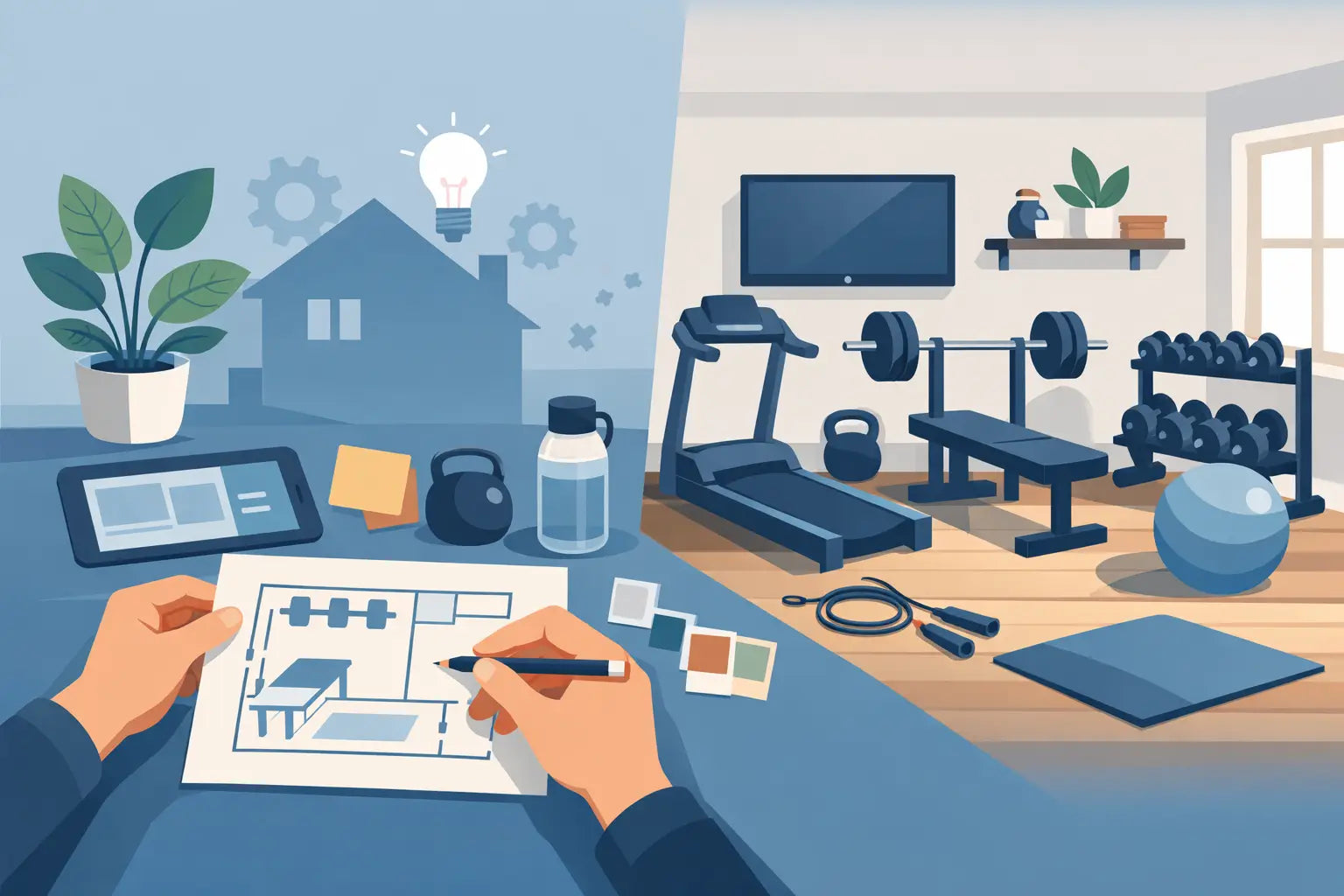
Most home gyms fail before the first workout gets hard. Not because the gear is bad, but because the setup never matched real life. If you want to know how to build home gym space that actually gets used, start with one rule: build for consistency, not fantasy.
That means skipping the dream setup you saw online and creating a space that fits your room, your schedule, and the way you really train. A solid home gym does not need to be huge or expensive. It needs to remove friction, make training easier to start, and support recovery so you can come back tomorrow and do it again.
How to build home gym around your real goal
Before you buy a single piece of equipment, get clear on what the gym needs to do. If your main goal is strength, your setup should lean toward resistance tools and progressive overload. If you want fat loss, general fitness, or quick daily sessions, you may need a mix of strength and conditioning equipment. If your body feels stiff, sore, or beat up from sitting all day, mobility and recovery tools deserve just as much attention as the training gear.
This is where a lot of people overspend. They buy a little of everything, then realize none of it supports a clear plan. A better move is to pick one primary focus and one secondary focus. For example, strength first, mobility second. Or quick full-body workouts first, recovery second. That gives your gym a job.
Your available space matters too. A garage setup has different options than a bedroom corner or apartment living room. Measure your floor space, ceiling height, and storage areas before you shop. If the room is tight, equipment that stores fast and does more than one thing will beat large machines every time.
Start with the equipment you will use every week
The best home gym is built in layers. First, get the essentials you can use across dozens of workouts. Then add specialty gear once your routine is locked in.
For most people, dumbbells are the foundation. They work for presses, rows, squats, lunges, carries, and core work. If you are short on space, a few versatile weights can carry a lot of your training. Kettlebells are another strong option, especially if you like swings, goblet squats, presses, and conditioning circuits.
Resistance bands deserve more respect than they usually get. They are affordable, easy to store, and useful for warm-ups, strength work, mobility drills, and travel workouts. They also help beginners train safely while still building real tension. If your budget is tight, bands plus a few dumbbells can create a surprisingly complete setup.
A jump rope can cover your cardio needs without taking over the room. It is simple, effective, and great for short conditioning sessions. If high-impact cardio is not your thing, you can still build excellent workouts with timed strength circuits and loaded carries.
Then there is the category people often ignore until they are sore enough to regret it: recovery. A foam roller, massage gun, and mobility tools can help reduce stiffness, improve movement, and make it easier to train consistently. That is not extra credit. It is part of the system.
Build in phases so you do not waste money
If you are figuring out how to build home gym on a budget, the smartest move is to phase it out instead of buying everything at once. Start with a base layer that covers strength, movement, and recovery. Then train for a few weeks and pay attention to what feels limited.
Phase one might be simple: a mat, resistance bands, a jump rope, one or two kettlebells or dumbbells, and a foam roller. That setup works for beginners and experienced lifters who want efficient home sessions.
Phase two can add load and variety. Maybe that means heavier dumbbells, more bands, a massage gun, or posture support tools if long workdays are beating up your upper back and shoulders. Phase three is where bigger upgrades make sense, but only if your training proves you need them.
This approach keeps your spending tied to action. You earn the next piece of equipment by using the first one.
Set up your home gym for zero excuses
Equipment matters, but layout matters more than people think. If your weights are buried in a closet and your mat is under a pile of laundry, you have built storage, not a gym.
Keep your most-used items visible and easy to grab. Store bands on hooks, keep dumbbells where you can reach them fast, and leave enough open floor space for basic movement. Even a small training area should let you squat, hinge, press, plank, and stretch without moving furniture every time.
Lighting and flooring also change how a space feels. A dark, cramped corner kills momentum. Good lighting and a stable surface make training more inviting and safer. If you are working on hard floors, a durable mat helps with comfort, grip, and noise.
Think about recovery in the same way. If your foam roller or massage gun is easy to reach after a workout, you are more likely to use it. That matters. Recovery tools do not help from the back of a drawer.
Do not confuse more gear with better results
A lot of people assume a serious home gym needs racks, benches, machines, and enough equipment to fill a warehouse. Sometimes it does. Most of the time, it does not.
If you train three to five days a week, a compact setup can take you a long way. The key is choosing equipment that supports movement patterns, not just exercises. Can you push, pull, squat, hinge, carry, rotate, and recover? If yes, you are in good shape.
There are trade-offs, of course. Heavy strength training eventually benefits from heavier loads and more specialized equipment. But that is a later-stage problem. Early on, the bigger risk is overbuilding a space you barely use. Consistency beats complexity every time.
How to build home gym for motivation that lasts
Motivation is not built from hype alone. It comes from making the next workout easy to start and satisfying to finish. That means your home gym should feel like a place where progress happens, not a place where good intentions go to collect dust.
Keep your setup clean. Keep your sessions simple. Use tools that match your current level but still let you grow. If you are a beginner, that may mean lighter dumbbells, bands, and a few mobility tools. If you already train regularly, it may mean expanding your strength options and dialing in recovery so your body can handle more work.
Tracking helps too. You do not need a complicated system. Just know what you did last week and aim to beat it over time with one more rep, a little more resistance, or cleaner form. Home training works best when your gym reminds you that progress is built one session at a time.
That is also why a balanced setup matters. Strength tools help you push harder. Recovery and posture support tools help you keep going. Grit Gain Co. leans into both sides for a reason. Training hard is only half the job. Moving better and recovering smarter is what keeps momentum alive.
A smart home gym checklist without the fluff
If you want a practical way to decide what belongs in your setup, focus on coverage instead of quantity. A strong beginner-to-intermediate home gym usually includes:
- Strength tools like dumbbells, kettlebells, or resistance bands
- Conditioning support like a jump rope
- A mat or clear floor space for bodyweight work
- Recovery tools like a foam roller or massage gun
- Optional posture or mobility support if your daily routine creates tightness
If money is tight, start smaller and buy better. Cheap gear that feels bad to use often gets abandoned. If you have more room to spend, resist the urge to fill the cart just because you can. Buy what earns its spot.
When people ask how to build home gym the right way, the answer is not bigger, fancier, or more expensive. It is more useful. Build a space that meets you where you are, helps you train without friction, and supports the recovery that keeps you coming back. Start there, put the work in, and let the gym grow with your discipline.

