

Cart
0
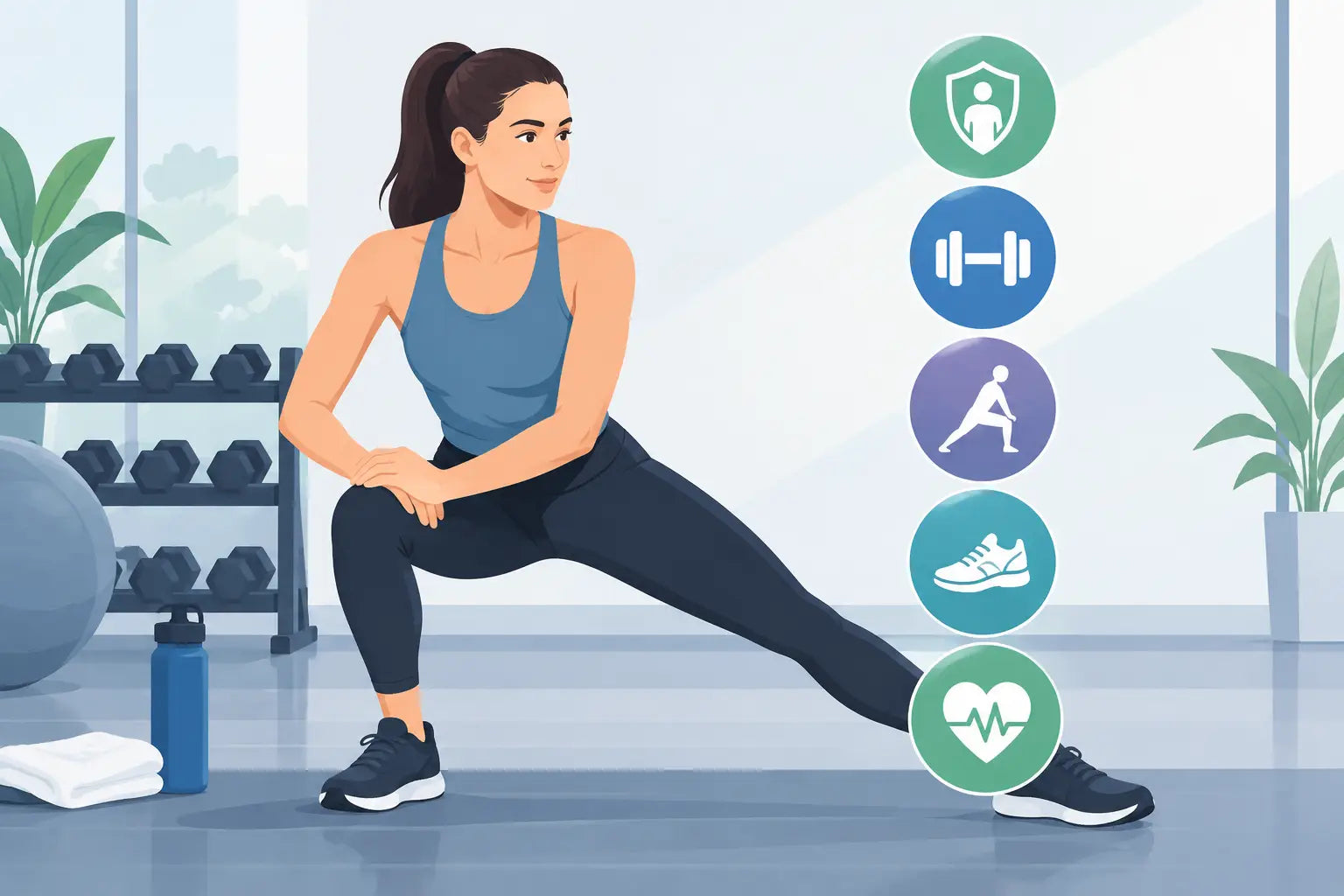
The fastest way to derail a good training streak is not a missed workout. It is the sharp pull in your back during a rushed lift, the shoulder pain that keeps showing up on push day, or the ankle tweak from landing one jump poorly. Knowing how to prevent workout injuries lets you keep building strength instead of constantly restarting.
You do not need a perfect gym setup, elite athleticism, or a complicated program to train safely at home. You need a plan that respects your current ability, pays attention to form, and gives your body enough time to adapt. Train hard, but give your effort somewhere solid to go.
How to Prevent Workout Injuries Before They Start
Most workout injuries are not caused by one bad exercise. They build through small decisions: adding weight too quickly, skipping the warm-up, training through sharp pain, or repeating the same movement when your body is already worn down.
The goal is not to make every workout easy. It is to make your hard work repeatable. Strength comes from challenging your muscles, then recovering well enough to challenge them again.
Start with a warm-up that matches the workout
A few arm circles are better than nothing, but a useful warm-up prepares you for the movements you are about to perform. Before a lower-body workout, spend five to 10 minutes getting your hips, ankles, knees, and core ready. Before upper-body training, wake up your shoulders, upper back, wrists, and elbows.
Begin with light movement that raises your body temperature, such as marching, a brisk walk, jumping rope at an easy pace, or bodyweight squats. Then use a few controlled practice reps of the exercises ahead. If you are planning goblet squats with a kettlebell, start with bodyweight squats, then do a light set before your working sets.
A warm-up should not leave you exhausted. It should make the first real set feel more controlled. If you still feel stiff, unstable, or unusually sore after warming up, reduce the load or adjust the session.
Earn heavier weight instead of chasing it
Progress matters, but forcing it does not. Your muscles, tendons, joints, and coordination do not always improve at the same speed. You may feel strong enough to lift more before your body is fully prepared to handle the added stress.
Increase one variable at a time. Add a few pounds, an extra rep, a set, or a little more range of motion, rather than changing everything at once. For example, if you have been doing three sets of 10 dumbbell presses with clean form, try 11 or 12 reps before immediately jumping to much heavier dumbbells.
This is especially important when you are returning after time off. Your motivation may be high, but your training capacity needs a rebuild. Start lighter than your ego wants. A steady comeback beats another setback.
Make Good Form Your Non-Negotiable
Form is not about making every exercise look identical. Body proportions, mobility, and training experience vary. Good form means you can control the movement, keep the target area doing the work, and avoid positions that create pain or instability.
During strength work, slow down enough to feel each phase of the rep. Do not yank a dumbbell off the floor. Do not let your knees collapse inward during squats. Do not turn a shoulder press into a backbend just to finish the last rep.
Use a mirror, record a short video, or lower the weight until you can move with control. Resistance bands can be especially useful here because they let you practice rows, presses, pull-aparts, and mobility drills with lower joint stress while you learn the pattern.
Know the difference between effort and pain
A burning muscle, heavy breathing, and normal fatigue are part of training. Sharp, pinching, stabbing, or electric pain is not something to push through. Neither is pain that changes how you walk, grip, squat, or move the next day.
Stop the movement when pain appears and assess it. Sometimes the fix is simple: reduce the range of motion, lower the resistance, improve your setup, or choose a similar exercise that feels better. A bodyweight split squat may be a better option than a loaded lunge if your balance is not ready. A neutral-grip dumbbell press may feel better than a straight-bar movement for sensitive shoulders.
Pain that is severe, persistent, worsening, or paired with swelling, numbness, weakness, or loss of function deserves professional medical guidance. Discipline is knowing when to back off before a minor issue becomes a bigger one.
Build a Balanced Home Workout Routine
Doing the same favorite moves every day can create overuse problems, even when each workout feels manageable. Your body benefits from variety in movement patterns, training intensity, and recovery demands.
A balanced routine includes pushing, pulling, squatting, hinging, carrying, core work, and mobility. You do not need to hit every pattern hard every day. Across a week, though, balance helps reduce the chance that one area takes all the stress.
If your routine is packed with push-ups and presses, add rows and band pull-aparts for your upper back. If you squat often, include hip-hinge movements such as Romanian deadlifts with dumbbells or kettlebells. If you run, jump rope, or do high-impact circuits, schedule lower-impact strength and mobility days between harder sessions.
Your home setup should also be safe. Clear loose rugs, cords, toys, and clutter from your training space. Use shoes with a stable grip when needed, and make sure benches, chairs, and other support surfaces will not slide or tip. Small setup details can prevent very avoidable falls and twists.
Recovery Is Part of How to Prevent Workout Injuries
Recovery is not a reward for finishing a workout. It is part of the workout. When you consistently train on poor sleep, high stress, and lingering soreness, your coordination drops and your form usually follows.
Aim for regular sleep, enough water, and meals that support your activity level. Protein helps repair muscle tissue, while carbohydrates can support energy for demanding training. You do not need to eat perfectly to recover better, but underfueling hard workouts makes progress harder and fatigue more likely.
Light movement on rest days can help you feel better than doing nothing at all. Take a walk, use gentle mobility work, or spend a few minutes with a foam roller on tight areas. A massage gun can feel useful for short-term muscle soreness and relaxation, but it is not a substitute for rest, sound technique, or reducing a training load that is too high.
Plan recovery before you feel broken down
You do not need to wait for pain to take a lighter day. Build easier sessions into your routine. After several demanding weeks, reduce your weights, sets, or intensity for a week to give your body room to recover. This is not losing progress. It is protecting the progress you have earned.
Pay attention to trends, not just one rough workout. If your usual weights suddenly feel heavy, your sleep is poor, your joints ache, and you dread training, that is useful feedback. Adjusting early can keep your momentum alive.
Use Equipment That Supports Control
The right equipment does not magically prevent injuries, but it can make smart training easier. Adjustable resistance lets you scale movements to your ability. Dumbbells and kettlebells build strength while allowing natural movement paths. Resistance bands offer a low-impact way to train, warm up, and strengthen smaller stabilizing muscles.
Recovery and posture tools have a role, too. A foam roller can help you spend a few focused minutes addressing stiffness after long periods of sitting. A posture support tool may remind you to stand taller, but lasting posture changes still come from regular movement and stronger muscles. Use tools to support good habits, not replace them.
Grit Gain Co. is built around that full picture: train with purpose, recover with intention, and keep the gear you need close to home.
Keep Your Training Streak Strong
The best program is not the one that crushes you for two weeks. It is the one you can perform safely for months. Warm up with purpose, use weights you can control, progress patiently, and treat recovery as a serious part of getting stronger.
Your body gives feedback every session. Listen early, make the smart adjustment, and come back ready to work. That is how you keep moving better, feeling stronger, and showing up for the next rep.

