

Cart
0
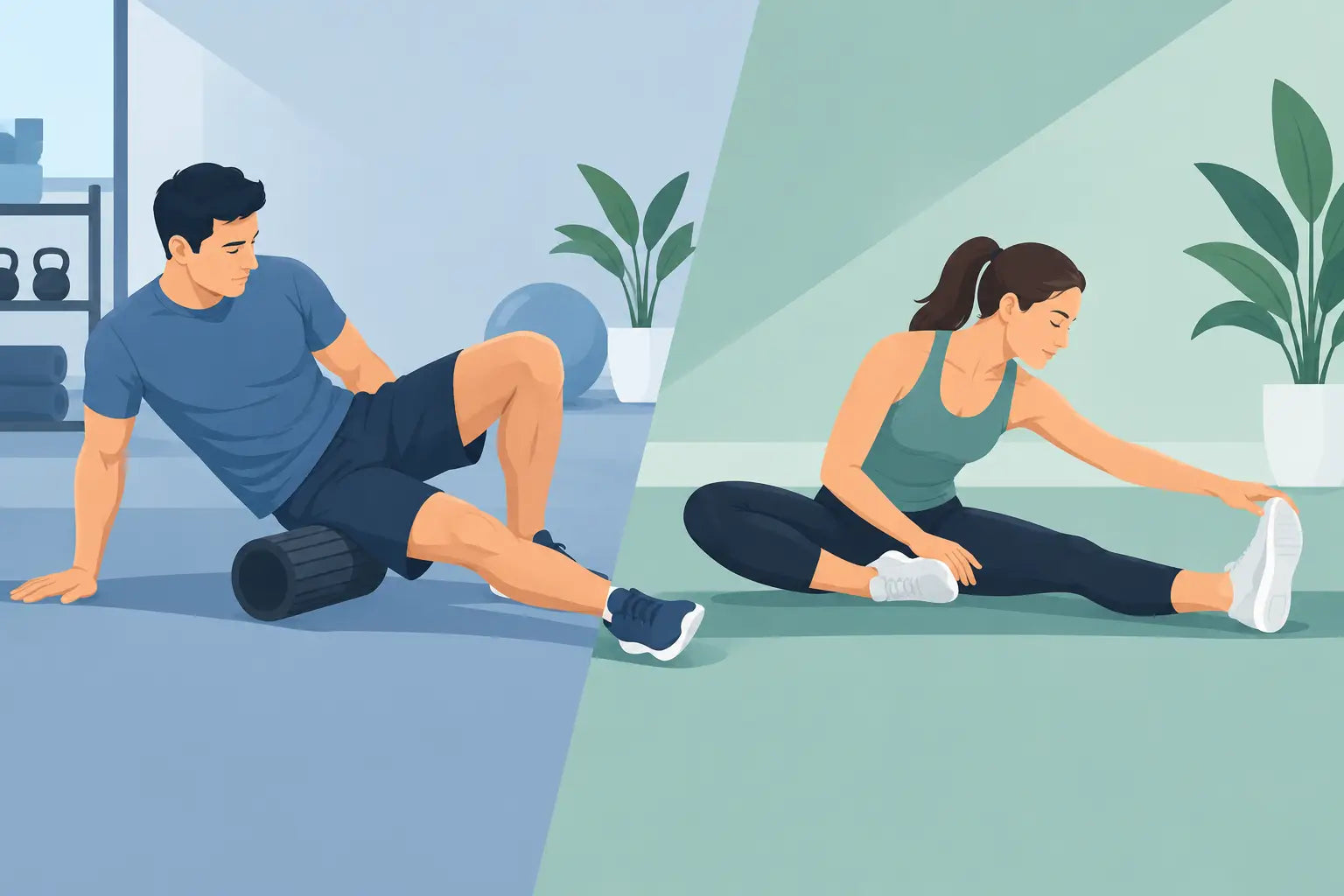
Your legs are tight after squats. Your shoulders feel locked after hours at a desk. Do you grab the roller or hold a stretch? In the foam rolling vs static stretching debate, the best answer is usually not choosing one tool forever. It is using the right tool at the right time so you can train hard, move well, and come back ready for the next session.
Both methods can help you feel less restricted, but they work differently. Foam rolling applies pressure to muscle and connective tissue, while static stretching places a muscle in a lengthened position and holds it there. One may make movement feel smoother in the moment. The other can build tolerance in positions you want to own. Neither replaces smart training, sleep, hydration, or medical care for an injury.
Foam Rolling vs Static Stretching: The Real Difference
Foam rolling is a form of self-massage. You use your body weight to apply controlled pressure with a foam roller, often on the quads, glutes, hamstrings, calves, upper back, and lats. That pressure can temporarily reduce the feeling of stiffness and help you access a greater range of motion before or after training.
Static stretching means moving into a comfortable end range and holding still, usually for 15 to 60 seconds. Think of a kneeling hip-flexor stretch, a calf stretch against a wall, or a seated hamstring stretch. It is simple, requires little equipment, and gives you time to breathe and settle into a position.
The key difference is the goal. Foam rolling is often best when you want to feel more prepared to move. Static stretching is useful when you want to spend focused time improving comfort and control in a specific position. Neither should be painful. Sharp pain, tingling, numbness, or symptoms that get worse are signals to stop and get guidance from a qualified professional.
When Foam Rolling Makes More Sense
Use a roller when your muscles feel generally heavy, stiff, or sluggish and you need a quick reset before a workout. A few slow passes over the areas you plan to train can make your warm-up feel better, especially if you follow it with active movement like bodyweight squats, lunges, band pull-aparts, or arm circles.
For example, before a lower-body session, spend 30 to 60 seconds rolling each quad, glute, and calf. Do not race back and forth like you are sanding a floor. Move slowly, pause on a tender area if the pressure is tolerable, and keep breathing. Then do a few sets of unloaded squats or hip hinges to teach your body to use that range.
Foam rolling can also be a solid post-workout recovery habit. It will not erase soreness or repair a hard training session overnight, but it may help you feel looser and more comfortable. That matters when feeling better helps you walk, work, sleep, and stick to tomorrow's plan.
Be selective with where you roll. Muscles are fair game; joints, the front of the neck, the low back, and areas with visible swelling are not places to attack with aggressive pressure. More pain does not mean more progress. Moderate pressure you can relax into beats grimacing through five miserable minutes.
Best fit for foam rolling
Foam rolling is a practical choice when you need a fast warm-up tool, have broad muscle tightness after training, or want to pair mobility work with recovery at home. It is especially convenient for lifters, runners, and anyone who spends long stretches sitting.
When Static Stretching Is the Better Move
Static stretching shines after training, later in the day, or as a separate mobility session. Your workout is done, your body is warm, and you can give attention to positions that feel limited. If your calves pull during deep squats or your chest feels tight at your desk, consistent static stretching can help you practice those ranges without rushing.
Hold each stretch at mild to moderate intensity. You should feel tension, not a fight. Keep your ribs down, breathe slowly, and avoid bouncing. Two or three rounds of 20 to 45 seconds per side is plenty for most people. Progress comes from repeating the work over weeks, not from forcing a dramatic stretch on day one.
Long static holds immediately before explosive work are not always the best choice. If you are about to sprint, jump, lift heavy, or play a fast-moving sport, keep pre-workout static stretching brief and follow it with dynamic movement. Your warm-up should leave you feeling switched on, not overly relaxed.
Best fit for static stretching
Choose static stretching when one area consistently feels restricted, when you are winding down after a session, or when you need a low-effort movement break between work tasks. It is also the better option when you do not have room for a roller or simply need something you can do anywhere.
Which One Helps Soreness and Flexibility?
Here is the honest answer: it depends on what you mean by "help." Both foam rolling and stretching may reduce the sensation of stiffness and improve short-term range of motion. But neither is a shortcut around doing too much too soon, poor exercise technique, or inadequate recovery.
If soreness is your main issue, foam rolling may feel more satisfying because it targets the muscles that feel beat up. Use it as comfort care, not punishment. A light walk, adequate protein, fluids, and quality sleep are still bigger pieces of the recovery picture.
If flexibility is your priority, static stretching deserves more regular attention. A roller can make a position feel easier temporarily, but holding and controlling a stretch is more specific practice for the range you want. If you want to touch your toes, improve your overhead reach, or sit comfortably in a deep squat, follow your rolling with active drills and targeted holds.
Mobility is more than flexibility. It is having usable range with strength and control. That is why the strongest approach often combines a short release, a stretch if needed, and an exercise that uses the new range.
A Simple Routine That Covers Both
You do not need a 30-minute recovery ritual to make progress. Try this 10-minute setup before or after a home workout, adjusting the areas to match your training:
- Roll your quads, glutes, upper back, and calves for 30 to 45 seconds each.
- Use active movement next: 10 bodyweight squats, 10 hip hinges, and 10 controlled arm circles.
- After training, hold one or two stretches that match your tightest areas for 30 seconds per side.
- Finish with a few slow breaths and an easy walk around the room before getting back to your day.
Common Mistakes That Waste Your Time
The first mistake is treating discomfort like a toughness contest. Digging into a painful spot until your body tenses up usually makes the session less productive. Back off enough that you can breathe and stay in control.
The second is expecting one method to fix every problem. A tight feeling may come from hard training, limited strength in a range, stress, poor sleep, or simply sitting in one position too long. Your recovery tools support the work, but they do not replace it.
The third is being inconsistent. One long session once a month will not do much. Five focused minutes after three workouts each week can build a habit that keeps your body feeling ready.
Build the Routine You Will Actually Use
If you want a quick pre-workout boost, start with foam rolling and active movement. If you want to unwind and work on a stubborn range of motion, make room for static stretching after training or at night. On days you feel good, do less. On days you feel stiff, use both without turning recovery into another exhausting workout.
Keep a foam roller where you can see it, not buried in a closet. Pair it with the time you already have: after coffee, before your warm-up, or while your dinner cooks. Small recovery actions done consistently help you Move Better, Feel Stronger Daily, and keep showing up for the work that makes you stronger.

