

Cart
0
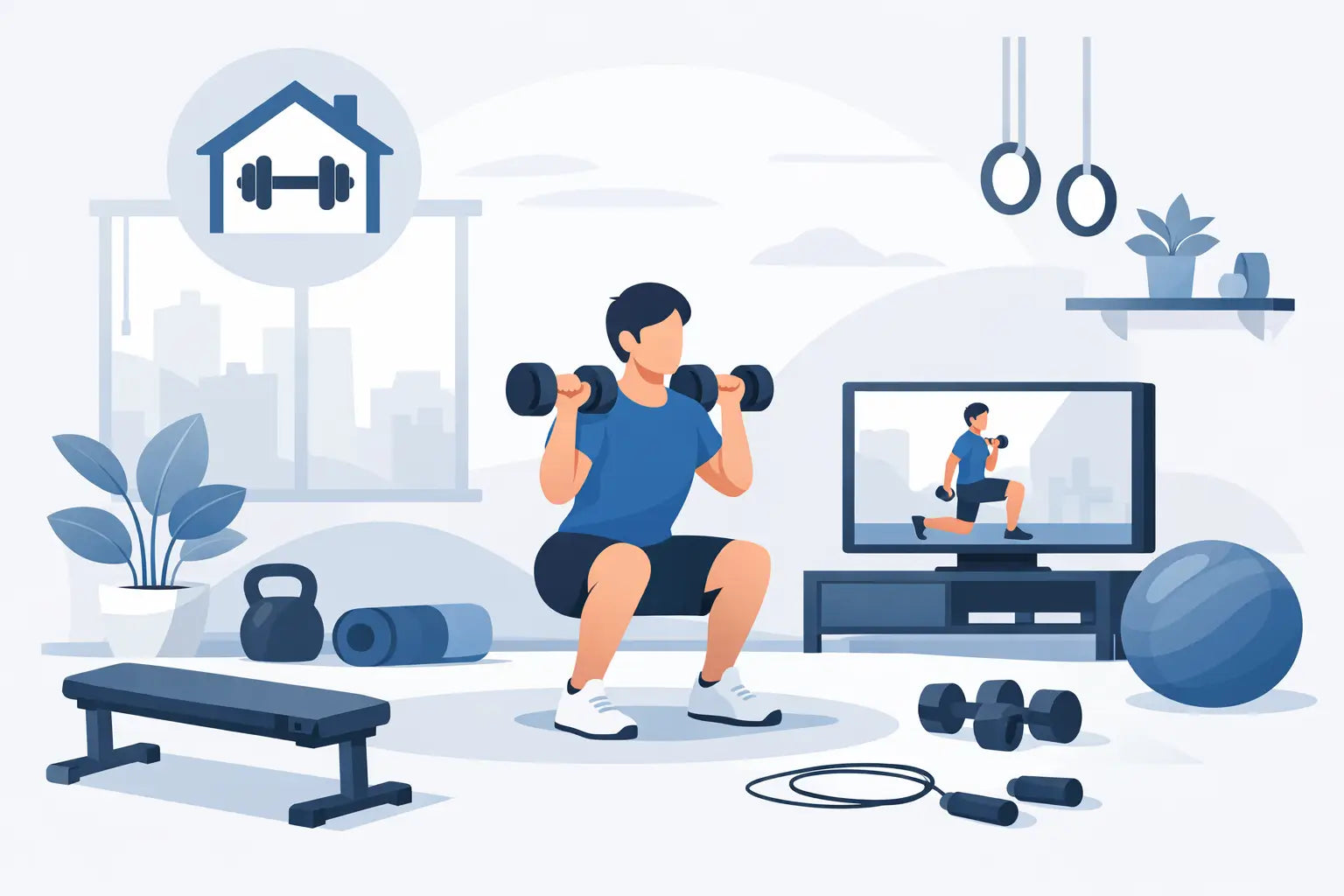
Skipping the gym does not mean lowering the standard. A good home strength training guide is not about doing random push-ups between emails or collecting gear you never use. It is about building a setup and a routine that make strength possible on busy days, low-motivation days, and the days when you only have 20 minutes but still need to get after it.
That is the real advantage of training at home. You remove friction. No commute, no waiting for equipment, no excuse to miss the work. If your goal is to get stronger, feel better, and stay consistent, home training can absolutely deliver - if you approach it with a plan.
What makes a home strength training guide actually useful
The best plan is not the most advanced one. It is the one you can repeat. For most people, home strength training works when it is simple enough to follow and challenging enough to drive progress.
That usually means focusing on movement patterns instead of chasing fancy workouts. You want some form of squat, hinge, push, pull, carry, and core work in your week. Those patterns train the major muscle groups, support posture, and build the kind of strength that transfers to everyday life.
It also means being honest about your equipment. You do not need a full rack and a wall of plates to make progress. A few well-chosen tools can cover a lot of ground. Dumbbells are one of the best starting points because they work for presses, rows, squats, lunges, deadlifts, and carries. Resistance bands add variable tension and make it easier to train your back, shoulders, and glutes in a small space. Kettlebells are excellent if you want one tool that can handle strength, power, and conditioning.
Start with the right setup, not the biggest setup
A lot of people waste money building a home gym before they build a habit. Start lean. A pair of dumbbells, a few bands, and a mat can carry a beginner or intermediate lifter a long way.
If your budget allows, add gear based on what you will actually use every week. Adjustable dumbbells make sense when space is tight. A heavier kettlebell is worth it if you like swings, goblet squats, and loaded carries. A jump rope can help with warm-ups and conditioning, but it is not a substitute for strength work.
Recovery tools matter too. If you train hard and sit a lot, your body will feel the difference between pushing through soreness and managing it. A foam roller or massage gun will not replace sleep, hydration, or smart programming, but they can make recovery more manageable and help you stay ready for the next session. That is part of the process, not an extra.
Home strength training guide for busy adults
If you are training at home, chances are convenience matters. That means your schedule should match real life, not fantasy life. Three full-body sessions per week is enough for most people to gain strength, improve muscle tone, and build momentum.
A practical week might look like Monday, Wednesday, and Friday. Each session should include four to six movements. Think one lower-body move, one upper-body push, one upper-body pull, one hinge or posterior-chain move, one core pattern, and maybe one finisher if you have time.
Here is what that can look like in plain terms. On one day, you might do goblet squats, dumbbell floor presses, bent-over rows, Romanian deadlifts, and planks. On another day, you could do reverse lunges, overhead presses, band rows, kettlebell swings, and dead bugs. A third day might include split squats, push-ups, one-arm rows, glute bridges, and carries.
That is enough. You do not need to turn every workout into a test. Train hard, stay strong, and leave a little in the tank so you can come back and do it again.
How to make strength gains without a gym
Progressive overload still matters at home. That just means asking your body to do a little more over time. In a gym, that often means adding weight. At home, you have more ways to progress.
You can increase reps, slow the lowering phase, add a pause, reduce rest time, improve range of motion, or move from bilateral exercises to single-side work. If your dumbbells are limited, a split squat with control and depth can be far more challenging than a rushed bodyweight squat. Tempo and stability can turn basic equipment into serious training.
Track your workouts. Not perfectly - just consistently. Write down your exercises, sets, reps, and how hard the work felt. If you did three sets of eight goblet squats this week, aim for three sets of nine next week or use a heavier load when ready. Small wins stack up.
This is where a lot of people stall. They repeat the same easy workout for months and wonder why nothing changes. Strength responds to challenge. If it never gets harder, your body has no reason to adapt.
Form matters, but perfection is not the goal
One of the biggest concerns with home training is whether you are doing movements correctly. That concern is valid, but it does not mean you need perfect mechanics before you start. It means you should choose exercises you can control and load them gradually.
Start with movements that feel stable and easy to understand. Goblet squats teach good squat mechanics. Dumbbell floor presses are often easier on the shoulders than bench pressing. Band rows can help reinforce upper-back engagement. Glute bridges and Romanian deadlifts are solid ways to train the posterior chain without overcomplicating things.
If an exercise feels awkward in your joints, change it. There is a difference between muscular effort and joint discomfort. Home training gives you flexibility, and that is a strength, not a weakness. The best exercise is the one you can perform safely, recover from, and repeat consistently.
Recovery is part of the plan
A strong body is not built only during workouts. It is built between them. If you want better results from your home strength training guide, take recovery seriously.
That starts with basics. Sleep enough. Eat enough protein. Drink water. Walk on rest days. If you are always sore, your training volume might be too high, your recovery habits might be weak, or both.
Mobility and soft tissue work can help you stay moving well, especially if you spend hours at a desk. A few minutes with a foam roller, massage gun, or mobility band after training can reduce stiffness and make the next session feel better. Posture support tools can also be useful if long workdays leave your shoulders rounded and your upper back tight, but they work best when paired with strength work for your back, core, and glutes.
The trade-off is simple. You can push hard every day for a short stretch, or you can train smart and stay consistent for months. Real progress comes from the second option.
Common mistakes in a home strength training guide
The first mistake is doing too much too soon. Motivation is high at the start, so people pile on volume, train seven days a week, and burn out fast. More is not better if it breaks your rhythm.
The second mistake is buying equipment without a training plan. Gear should support the work, not replace it. Before adding another tool, ask whether it fills a real gap in your routine.
The third mistake is ignoring pulling movements and posterior-chain work. Home workouts often lean too hard on push-ups, squats, and ab circuits. Your back, glutes, and hamstrings need direct attention too, especially if you want better posture and balanced strength.
The last mistake is treating recovery like an afterthought. If you want to move better, feel stronger daily, and keep showing up, recovery has to stay in the mix.
Build a routine you can keep
The best home strength training setup is the one that removes excuses and makes action easier. Keep your equipment visible. Choose a training time you can protect. Follow a simple plan long enough to see it work.
You do not need a perfect room, a giant budget, or elite-level knowledge to get stronger at home. You need a few useful tools, a clear structure, and the discipline to keep going when motivation dips. That is where progress starts.
Grit Gain Co. is built around that mindset. Train with what works. Recover with purpose. Stay ready for the next session.
Strength at home is not a backup plan. For a lot of people, it is the plan that finally sticks - and that is the one worth building.

