

Cart
0
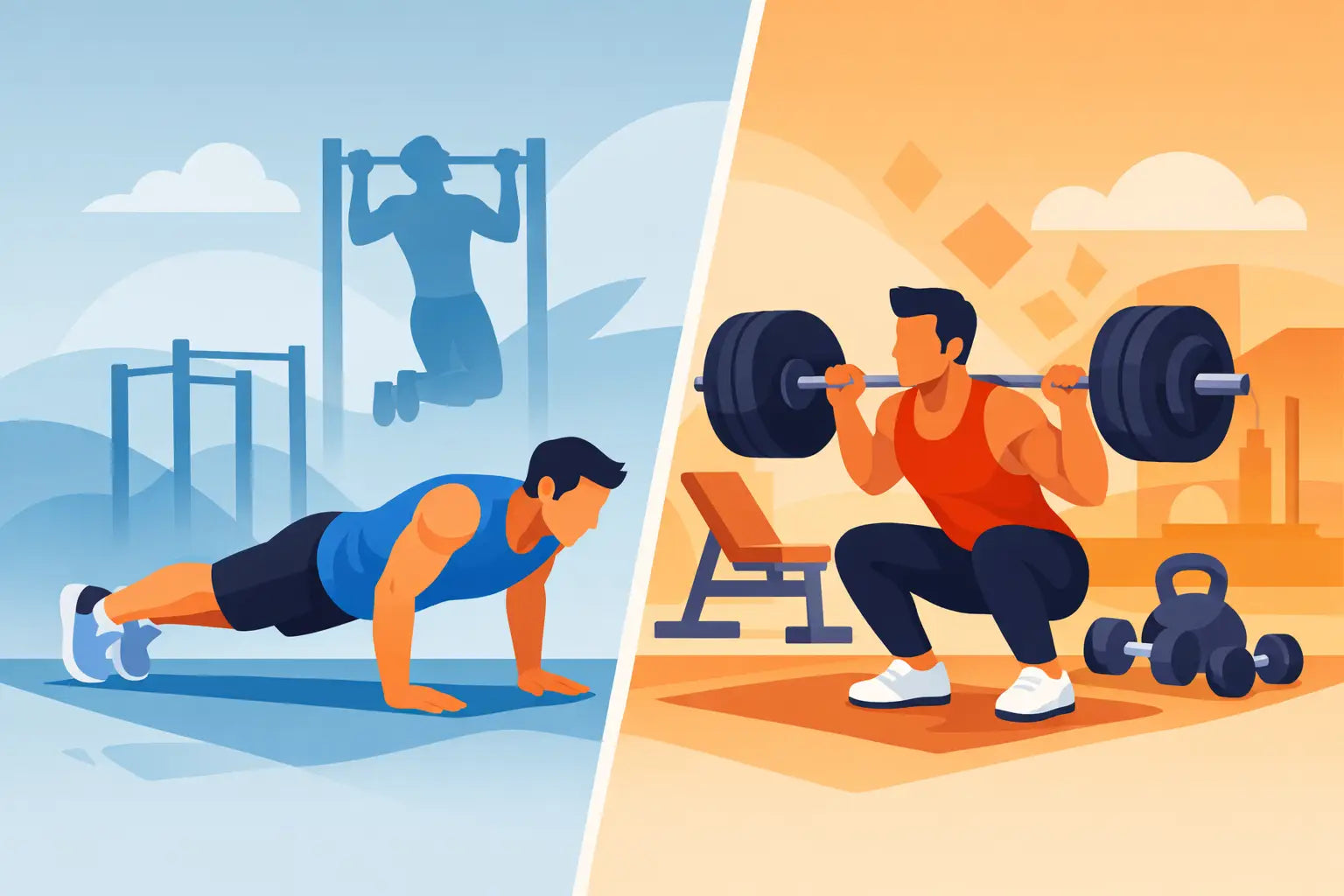
You do not need a barbell in the garage to get stronger. If you have ever wondered, does body weight training count as strength training, the short answer is yes - but only if you train it with the same intent you would bring to weights. Push-ups, pull-ups, split squats, pike presses, and even controlled core work can build real strength when the movement is challenging enough and progression stays part of the plan.
That matters for a lot of people training at home. You want results, not fitness labels. If your workouts help you produce more force, control your body better, and handle harder variations over time, you are doing strength work.
Does body weight training count as strength training or just conditioning?
This is where people get tripped up. Body weight training can be strength training, conditioning, mobility work, or muscular endurance training. The difference is not the equipment. It is the way you program the effort.
If you are doing 40 fast air squats, 30 mountain climbers, and 20 burpees with little rest, that leans more toward conditioning. It can absolutely make you fitter, and there is value in that. But if you are working on difficult sets of pull-ups, slow tempo push-ups, pistol squat progressions, or ring rows taken close to technical failure, that is strength training.
Strength training is about increasing your ability to create force. That usually means lower reps, harder sets, longer rest, and clear progression. Body weight exercises fit that definition when they are hard enough to challenge your current level.
What makes body weight training real strength work?
The biggest factor is relative intensity. A standard push-up may feel easy for one person and brutally hard for another. For a beginner, push-ups can be a serious strength builder for the chest, shoulders, triceps, and core. For someone more advanced, that same move may not be enough unless they change the angle, slow the tempo, increase range of motion, or add load.
Progressive overload still rules. Your body adapts when training demands increase over time. In a gym, that often means adding weight to the bar. In body weight training, it can mean moving from incline push-ups to floor push-ups, from floor push-ups to decline push-ups, and from there to rings, pause reps, or weighted versions.
Control also matters. Swinging through sloppy reps is not strength. Clean reps with full range of motion, stable joints, and intentional tempo create better results and usually keep your body feeling better too.
Where body weight training works best
Body weight movements are excellent for building upper-body strength, core strength, single-leg control, and joint stability. Pull-ups and chin-ups are one of the clearest examples. If you go from zero reps to five strict reps, you have built real strength. The same goes for push-up progressions, dips, handstand push-up work, and challenging plank variations done with intent.
Lower body gets a little more nuanced. Body weight squats are useful, especially for beginners, but many people outgrow them quickly for pure strength gains. That does not mean leg strength is off the table. Single-leg variations like Bulgarian split squats, step-ups, shrimp squats, and pistol squat progressions can become very demanding. Tempo changes and pause reps can make them even harder.
For core work, body weight training is often more than enough. Hollow holds, hanging knee raises, hanging leg raises, ab rollouts, and anti-rotation work can build a strong, stable trunk that transfers well to everyday movement and other training.
Where body weight training can fall short
Here is the honest answer: body weight training has limits if your goal is maximum strength, especially for the lower body.
Your legs are built to handle a lot of load. Once you are comfortable with body weight squats and split squat variations, it becomes harder to create enough resistance without external load. You can keep progress going with harder single-leg work, slower eccentrics, longer pauses, and more volume, but eventually dumbbells, kettlebells, or bands make progression simpler and more measurable.
The same thing can happen with upper body pressing. If you can knock out high-rep push-ups without much strain, you may need a tougher variation or added resistance to keep building strength instead of just endurance.
That is the trade-off. Body weight training is accessible, effective, and convenient, but external load makes it easier to target precise strength progress once your baseline gets higher.
How to make body weight strength training actually work
If you want results, train body weight movements like strength movements, not random exercise snacks.
Start by choosing exercises that are challenging in a moderate rep range. For many people, that means sets of about 4 to 12 tough reps with strong form. If you can do 25 easy reps, the movement is probably too light for strength-focused work.
Then build progression into the plan. You can increase difficulty by changing leverage, adding pauses, slowing the lowering phase, increasing range of motion, reducing assistance, or adding resistance with a vest, a band, or a backpack. Those are not gimmicks. They are how you keep forcing adaptation.
Rest enough between hard sets. A strength-focused set of pull-ups or split squats should not feel like a race. Give yourself time to recover so the next set is high quality.
Track what you are doing. Reps, variations, tempo, and set quality all matter. Strength tends to stall when training gets too casual to measure.
Does body weight training count as strength training for beginners?
For beginners, absolutely. In many cases, it is one of the best places to start.
Body weight training teaches control before load. You learn how to brace, move through a full range of motion, and own basic patterns like pushing, pulling, hinging, squatting, and lunging. That foundation pays off whether you stay with body weight training or eventually add equipment.
It is also easier to stay consistent when the barrier to entry is low. No commute. No waiting for machines. No complicated setup. You can train in a spare room, garage, living room, or backyard and still make progress if the program is smart.
For people rebuilding fitness, protecting joints, or returning after time off, body weight work can be especially useful. Controlled movements and gradual progressions let you build momentum without jumping straight into heavy loading.
When adding equipment makes sense
There is nothing wrong with body weight training doing most of the work. But there is also nothing magical about limiting yourself.
If your goal is to keep getting stronger over the long term, a few simple tools can go a long way. Resistance bands can add challenge to presses, rows, squats, and glute work. Dumbbells and kettlebells make lower-body strength training more scalable. A pull-up bar opens the door to one of the best upper-body strength movements you can do at home.
Recovery tools matter too. If hard training leaves you tight, sore, or inconsistent, the smartest move is not always more intensity. Sometimes it is better recovery, better mobility, and fewer missed sessions. That is part of getting stronger, not separate from it.
At Grit Gain Co., that home-training mindset is the whole point - train hard, recover smart, and keep moving forward.
The real answer depends on your goal
If your goal is general strength, better muscle control, improved fitness, and a stronger body for everyday life, body weight training absolutely counts as strength training. For many people, it is enough to create serious progress.
If your goal is maximizing total strength, especially in the legs and hips, body weight work may become one part of the plan rather than the whole plan. That is not a knock against it. It just means the best tool depends on the job.
The mistake is thinking strength only counts when iron is involved. Your muscles do not care whether resistance comes from a barbell, a kettlebell, a band, or your own body. They respond to tension, effort, and progression.
So if your push-ups are getting cleaner, your pull-ups are going up, your split squats are getting stronger, and your body feels more capable week after week, you are not doing fake strength training. You are building strength the honest way - one hard rep at a time.
Keep it challenging. Keep it consistent. Keep earning the next level.

