

Cart
0
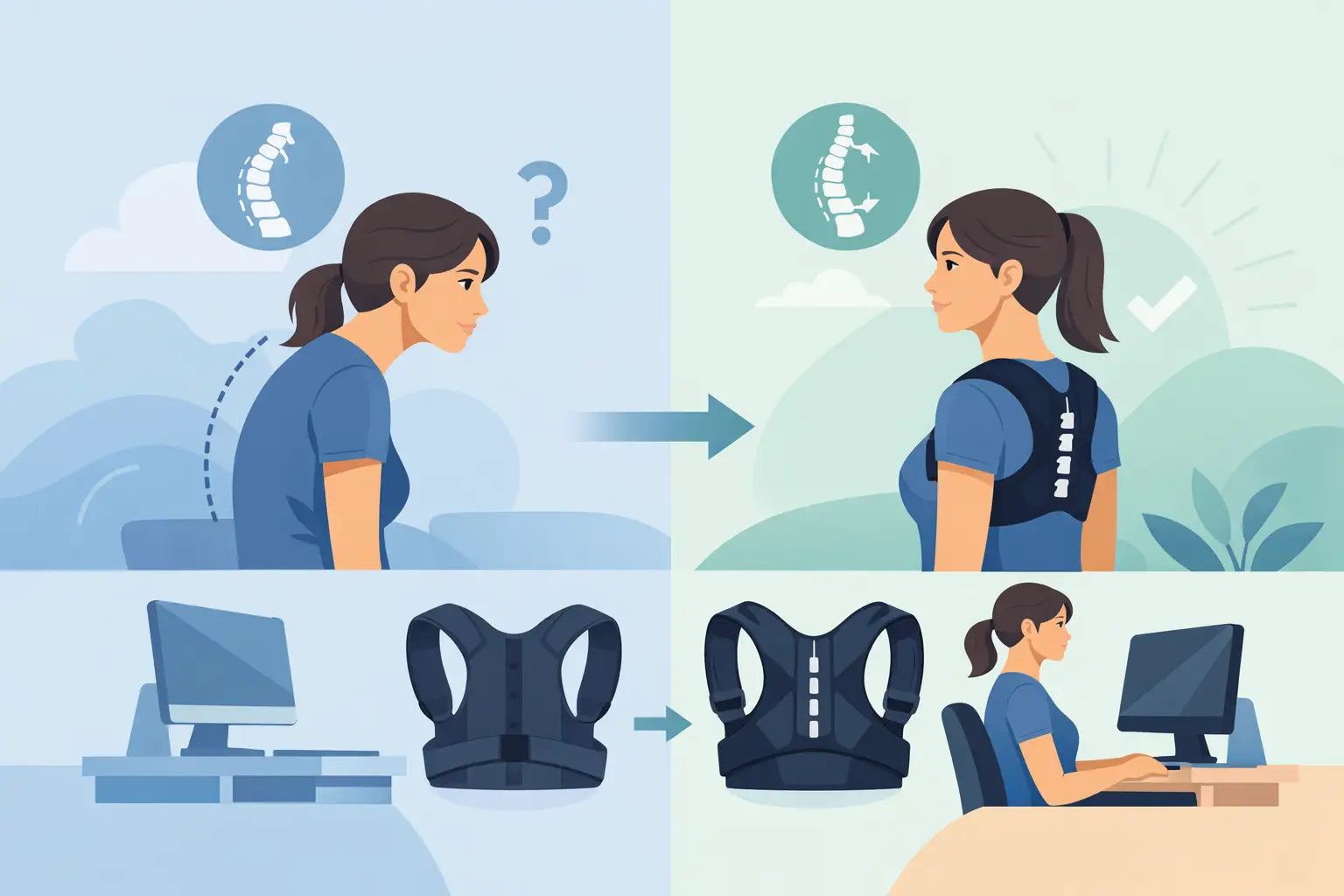
You feel it after a long workday - shoulders rolled forward, neck tight, upper back stiff, and that low-energy slump that makes everything feel harder. So the question comes up fast: do posture correctors really work, or are they just another quick-fix fitness gadget that looks better in ads than in real life?
The honest answer is yes, sometimes - but not by themselves.
A posture corrector can help you become more aware of how you sit, stand, and move. It can reduce slouching for a period of time and give your upper body a reminder to stay in a stronger position. But if your muscles are weak, your mobility is limited, and your daily habits keep pulling you back into the same rounded posture, a brace alone will not solve the problem.
That is the real conversation. Posture support tools can be useful, but only when you treat them like support equipment, not a replacement for strength, movement, and consistency.
Do posture correctors really work for posture support?
They can, especially for short-term awareness.
Most posture correctors are designed to gently pull the shoulders back and encourage a more upright upper-body position. That can be helpful if you spend hours at a desk, drive a lot, scroll on your phone, or feel yourself collapsing forward during the day. In that sense, the product does what it claims - it helps guide your body into a better position while you wear it.
What it does not do is permanently fix posture on its own. Good posture is not something you strap on. It is the result of muscle endurance, joint mobility, body awareness, and repeated daily habits. If those pieces are missing, the benefit fades as soon as the corrector comes off.
Think of it like lifting straps in the gym. They can support performance in a specific moment, but they do not replace grip strength. A posture corrector works the same way. It can assist the process, but it is not the process.
Why posture gets worse in the first place
Poor posture usually is not about laziness. It is about repetition.
If you sit for long hours, train chest more than upper back, skip mobility work, or spend most of your day with your arms and head forward, your body adapts. Tight chest muscles, weak upper back muscles, reduced thoracic mobility, and limited core control all make it easier to fall into a rounded position.
Fatigue also matters. You might start the day standing tall, but once your postural muscles tire out, your body takes the path of least resistance. That is where slumping starts to feel normal.
This is why people often get mixed results from posture correctors. The device may improve alignment while it is on, but the body returns to its default pattern afterward if nothing else changes.
When a posture corrector helps
A good posture corrector can be useful in a few common situations.
First, it helps with awareness. Many people do not realize how often they round forward until a support brace gives them feedback. That reminder can be powerful, especially during work, chores, or light daily movement.
Second, it can reduce strain during habit change. If you are trying to build better posture but your upper back fatigues quickly, temporary support may make the transition more manageable. It can help you feel what a stronger position should be like.
Third, it can work well as part of a broader routine. If you are already training your back, improving mobility, and paying attention to workstation setup, a posture corrector can reinforce those efforts instead of trying to do all the work alone.
That is the key difference. Used strategically, it supports progress. Used as a passive shortcut, it usually disappoints.
When posture correctors fall short
This is where expectations need to stay realistic.
If you wear a posture corrector all day and never strengthen the muscles that hold you upright, you may become dependent on the support. Your body can start relying on the brace instead of building the endurance needed to maintain posture naturally.
Comfort is another issue. Some correctors dig into the underarms, feel restrictive, or are difficult to wear for more than short periods. If a product is annoying enough that you stop using it after three days, it is not helping much.
They also do not address every cause of bad posture. If your issue comes from mobility restrictions, pain, muscular imbalance, or a workstation setup that keeps pulling you forward, the brace is only one piece of the puzzle.
And if you are dealing with significant pain, numbness, tingling, or a diagnosed spinal condition, a posture corrector is not the place to guess your way through it. That calls for medical guidance, not trial and error.
How to use a posture corrector without relying on it
If you want better results, use it like a training tool.
Start with short sessions instead of wearing it all day. For many people, 15 to 30 minutes at a time is enough to build awareness without overdoing it. You want the corrector to remind you, not carry you.
Pay attention while wearing it. Shoulders should feel gently guided back, not forced into an exaggerated military stance. Good posture is not rigid. It is stacked, balanced, and sustainable.
Then back it up with movement. If you take the brace off and go right back to a weak, stiff pattern, nothing sticks. Your body needs a reason to keep the new position.
What actually improves posture long term
If your goal is to move better and feel stronger daily, your posture plan needs more than one lane.
Upper back and rear shoulder strength matter a lot. Rows, band pull-aparts, reverse fly variations, and face pulls help build the muscles that support a more open chest and stable shoulder position. You do not need an advanced program. You need consistency.
Mobility matters too. Tight chest muscles and a stiff upper back can make upright posture feel unnatural. Simple chest opening work, thoracic extension drills, and shoulder mobility exercises can make better alignment easier to maintain.
Core control plays a role as well. Posture is not only about shoulders. If your ribcage, pelvis, and trunk are out of position, your upper body often compensates. A few basic core stability movements done well can make a real difference.
Then there is your environment. If your laptop is too low, your chair setup is poor, or your phone is always at waist level, your body is being coached into bad posture for hours every day. Training for 20 minutes cannot fully undo 10 hours of bad positioning. Set up your space to help you win.
Do posture correctors really work better for some people?
Yes. Results depend a lot on the person using them.
If you are new to fitness, spend most of the day seated, and need a simple reminder to stop collapsing forward, a posture corrector may feel immediately helpful. It gives structure and awareness fast.
If you already train regularly but still struggle with desk posture, it can be a useful add-on during work hours. It may help reinforce what your body is already learning in workouts.
But if you expect it to reverse years of poor movement habits with zero effort, you are setting yourself up for frustration. The people who get the most value are usually the ones who combine support with action.
What to look for in a good posture corrector
Keep it simple. You want adjustable tension, a comfortable fit, and enough support to cue better position without cutting off movement. If it is bulky, scratchy, or impossible to wear for even a short stretch, it is the wrong tool.
It should feel like a nudge, not a cage. The best posture support products help you stay aware while still letting your muscles do their job.
For everyday use, comfort matters just as much as design. A decent product you actually use beats a heavy-duty one that sits in a drawer.
The real answer
So, do posture correctors really work? Yes - when you use them for awareness, not as a permanent fix.
They can help you stop slouching, improve body positioning in the moment, and support better daily habits. What they cannot do is build strength, restore mobility, or outwork a full day of poor movement patterns by themselves.
If you want posture that lasts, pair support with effort. Train your back. Open up your chest. Build core control. Set up your day so your body is not fighting the same battle from morning to night. Tools help, but habits win.
That is the mindset at Grit Gain Co. Get support where you need it, put in the work where it counts, and keep stacking small wins until better posture stops feeling forced and starts feeling normal.

