

Cart
0
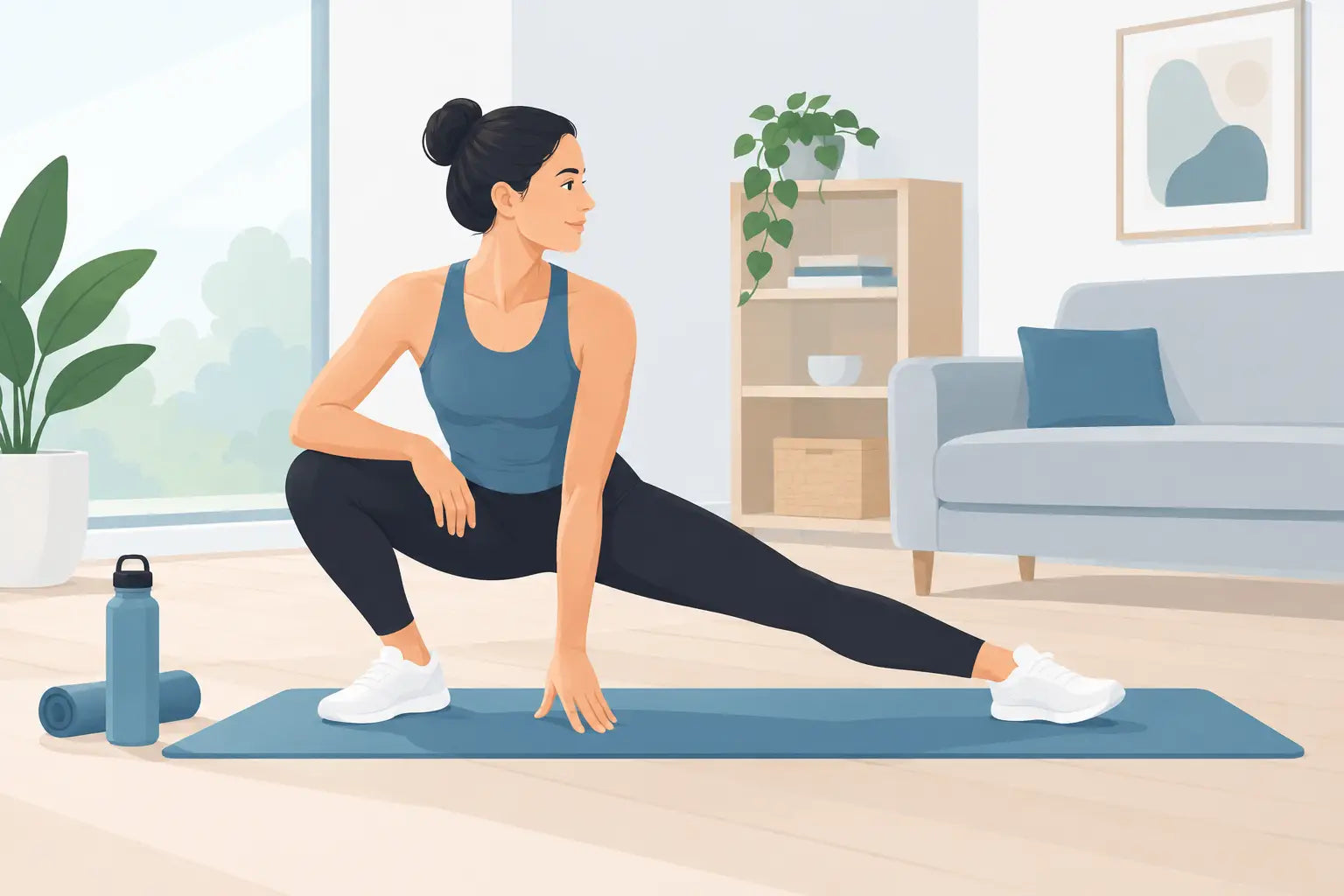
Your warm-up should not feel like a punishment before the real workout. If your hips pinch in a squat, your shoulders feel locked overhead, or getting off the couch takes a few extra seconds, this mobility training at home guide gives you a better starting point. You do not need an hour of stretching or a room full of gear. You need consistent movement, control, and a plan you will actually use.
Mobility is one of the simplest ways to support stronger training. Better joint control can help you squat with more confidence, hinge more smoothly, press with a steadier shoulder position, and recover from long days at a desk. The goal is not to force your body into impressive positions. The goal is to move well enough to train hard, stay active, and feel stronger daily.
What Mobility Training Really Means
Mobility is your ability to move a joint through a useful range of motion with control. Flexibility is part of that picture, but it is not the whole job. You might be able to pull your foot toward your glutes, for example, yet still struggle to control your knee and hip during a lunge.
That control matters. A passive stretch may feel good, but strength in a new range is what helps that range show up when you squat, carry groceries, climb stairs, or lift a kettlebell. Think of mobility work as practice for better positions, not a contest to see how far you can bend.
At home, the biggest advantage is convenience. A 10-minute session done four times a week will usually beat a long routine you only attempt once a month. Keep the floor space clear, move at a pace you can control, and make the routine easy to repeat.
Mobility Training at Home Guide: Start With Your Needs
Do not copy a routine just because it looks advanced online. Start with the movements that match your day and your training. If you sit often, your hips, upper back, and ankles may need attention. If you lift weights, focus on the positions used in your squat, hinge, press, and pull. If your shoulders feel stiff after work, add gentle upper-back rotation and controlled shoulder movement.
Use discomfort as information. Mild muscle tension during a drill can be normal. Sharp pain, numbness, tingling, sudden swelling, or a feeling that a joint is unstable is not something to push through. Stop that movement and speak with a qualified healthcare professional if symptoms persist or are severe.
You also do not need to chase exhaustion. Mobility training should leave you feeling more prepared, not wiped out. Breathe steadily, use a range you can own, and avoid bouncing into stretches. Small, clean reps beat aggressive ones every time.
Your 12-Minute Daily Mobility Routine
This routine covers the areas that tend to get stiff from sitting, training, and everyday life: spine, shoulders, hips, ankles, and squat position. Do it before a workout, after work, or whenever your body feels stuck. Move slowly enough that you can keep breathing through every rep.
1. Breathing with reach - 60 seconds. Lie on your back with knees bent. Reach both arms toward the ceiling, breathe into your ribs and belly, then slowly lower your arms overhead only as far as you can without arching your lower back. This helps set a more controlled rib and shoulder position.
2. Cat-cow with pauses - 8 reps. Get on hands and knees. Round your upper back, pause for one breath, then gently extend through your spine without dumping into your lower back. Let the movement travel through your whole back instead of forcing one area.
3. Thread-the-needle rotations - 6 reps per side. From hands and knees, slide one arm underneath your body, then rotate that same arm toward the ceiling. Keep your hips mostly still. This is a simple way to build upper-back rotation for more comfortable pressing, pulling, and reaching.
4. 90-90 hip switches - 8 reps per side. Sit with both knees bent and feet wider than hip width. Rotate both knees from one side to the other with as little help from your hands as possible. Slow down at the end of each switch and stay tall through your chest.
5. Half-kneeling hip rocks - 8 reps per side. Place one knee on the floor and one foot in front. Gently shift forward until you feel a stretch at the front of the kneeling hip, then return. Squeeze the glute on the kneeling side instead of leaning forward and overextending your back.
6. Knee-to-wall ankle rocks - 10 reps per side. Stand facing a wall with one foot a few inches away. Drive your knee toward the wall while keeping your heel down. If you cannot reach the wall without your heel lifting, move your foot closer. Better ankle motion can make squats, lunges, and walking feel smoother.
7. Supported squat hold - 30 to 45 seconds. Hold a sturdy doorframe, countertop, or post for balance and sit into a comfortable squat. Shift gently side to side, keep your heels down if possible, and use the support to maintain a tall chest. Do not force depth. Your best squat is the deepest position you can control without pain.
Run through the sequence once when time is tight. On days you feel especially stiff, repeat the hip, ankle, or upper-back drill that addresses the problem. Consistency matters more than turning a short session into a complicated project.
Use Mobility to Improve Your Home Workouts
The best mobility routine supports the work you are about to do. Before lower-body strength training, spend extra time on ankle rocks, hip switches, and supported squats. These drills prepare you for goblet squats, lunges, deadlifts, and kettlebell work without wasting energy.
Before an upper-body workout, use breathing with reach, cat-cow, and upper-back rotations. Then add light band pull-aparts or controlled banded shoulder circles if they feel good. A resistance band is useful because it gives your shoulders light tension without requiring heavy loading.
After training, keep recovery simple. A foam roller or massage gun can help you relax tight-feeling muscles, especially around your quads, glutes, calves, and upper back. But recovery tools do not replace movement. Use them to feel better, then follow with a few controlled reps in the range you want to keep.
If you are building a home setup, you do not need every tool at once. A resistance band, stable support surface, and enough open floor space are plenty to begin. Add dumbbells or kettlebells when you are ready to strengthen the ranges you are improving. At Grit Gain Co., the goal is practical: train hard, recover smart, and keep your progress moving.
Common Mobility Mistakes That Slow Progress
The first mistake is treating every tight feeling like a stretching problem. Sometimes a joint feels restricted because the surrounding muscles need more strength, not more pulling. If your hips collapse at the bottom of a squat, practice controlled bodyweight squats and loaded carries alongside your mobility drills.
The second mistake is forcing range too fast. Pushing hard into a stretch can make you tense up, and it may irritate an already sensitive area. Work just below your edge, pause, breathe, and return to it often. Mobility adapts through repeated quality exposure.
The third mistake is doing random drills with no connection to your life or training. If overhead pressing is your goal, prioritize shoulder and upper-back control. If you want deeper, stronger squats, prioritize ankles, hips, and squat practice. Your routine does not have to be long, but it should have a reason.
Finally, do not use mobility as a substitute for rest or medical care. Poor sleep, high stress, a sudden injury, or persistent pain can change what your body needs. Training discipline includes knowing when to reduce the load, recover, and get help.
Make It a Habit That Sticks
Attach mobility to something you already do. Run the 12-minute routine before your first cup of coffee, after a walk, or while your workout gear is already on the floor. Keep a resistance band where you can see it. Make the first step easy enough that skipping feels harder than starting.
Progress can be subtle at first. You may notice that your first set feels less stiff, your squat feels more stable, or your shoulders stop protesting after a long workday. Those wins count. Set a timer tonight, take the range you have, and earn a little more control with every rep.

