

Cart
0
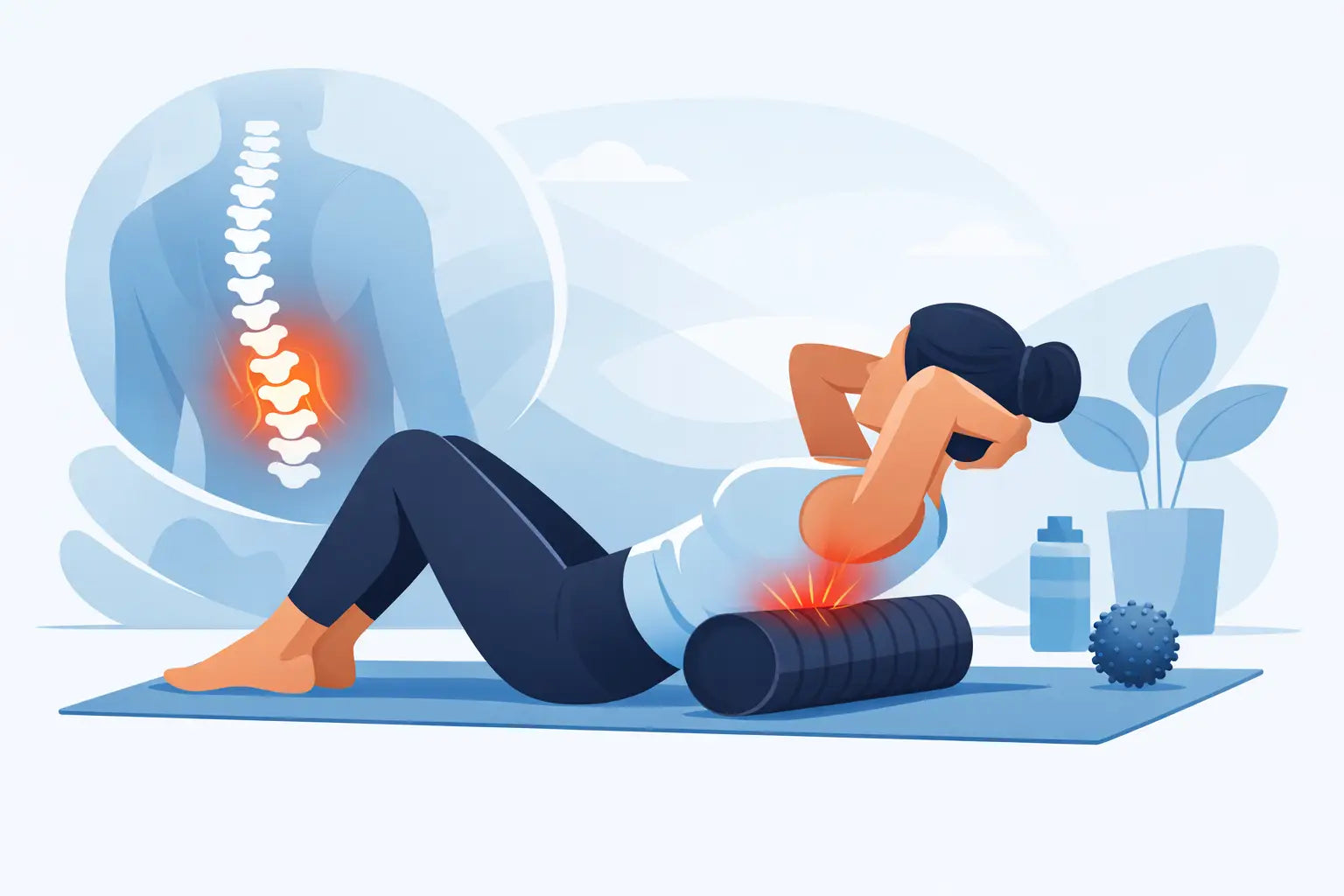
That stiff, locked-up feeling in your back usually does not show up at a convenient time. It hits after a hard workout, a long drive, a day at your desk, or one bad night of sleep. A foam roller for back pain can help in the right situation, but it is not a cure-all, and using it the wrong way can make an irritated back feel worse.
That is the part most people skip. They buy the roller, lie on it for thirty seconds, and expect magic. Recovery does not work like that. If your back pain is tied to muscle tension, poor movement habits, or post-workout soreness, a foam roller can be a simple tool that helps you move better, feel looser, and get back to training with less resistance.
When a foam roller for back pain actually helps
A foam roller works best when your discomfort is coming from tight muscles around the back, hips, and trunk rather than a serious injury or a sharp structural issue. Think soreness after lifting, stiffness from sitting too long, or tension that builds from weak posture and low daily movement.
In those cases, the roller creates pressure on the muscles and fascia, which can temporarily reduce tightness and improve how easily you move. That matters because a lot of what people call back pain is not always coming from the spine itself. Often, the muscles around it are overworked, guarded, or simply not recovering well.
If your upper back feels rounded and stiff after hours at a laptop, rolling the thoracic area can help open things up. If your lower back feels cranky after leg day, the real target may be your glutes, hip flexors, and lats rather than the lower back directly. That is where smart recovery beats random pressure.
When not to use a foam roller for back pain
This tool has limits. If your pain is sharp, shooting, numb, tingling, or traveling down your leg or arm, stop guessing. A foam roller is not the answer for nerve symptoms, acute injury, or pain that keeps getting worse.
The same goes for pain after a fall, pain with weakness, or discomfort that feels deep and unstable rather than muscular. In those situations, rolling through it is not grit. It is just bad strategy.
Even with common stiffness, the lower back needs more caution than people think. Rolling directly over the lumbar spine can put pressure where you do not want it, especially if you arch over the roller instead of keeping your core engaged. For many people, it is better to roll the muscles that influence the back rather than grinding right on the sore spot.
The biggest mistake people make
They go too hard.
More pressure is not always more progress. If you are holding your breath, wincing, and fighting the roller, your body usually responds by tightening up more. Recovery should challenge the tissue, not start a battle with it.
A better approach is controlled pressure, slow movement, and short sessions. Think thirty to sixty seconds per area, not ten minutes of punishment. The goal is to reduce tension enough to move better, not leave the floor feeling beat up.
Where to roll if your back hurts
Upper back
The upper back is usually the safest and most useful place to start. Place the roller across your upper back, support your head with your hands, lift your hips slightly, and roll slowly from the bottom of the shoulder blades to the top of the shoulders. Keep your ribs down so you are not overextending.
This area responds well because it often gets stiff from screens, driving, and pressing movements. If your shoulders feel restricted or your posture feels collapsed, this can make a real difference fast.
Lats
Your lats connect the upper body to the trunk, and when they get tight, they can pull on the back and shoulders. Lie slightly on your side with the roller under the side of your upper back, just below the armpit. Move slowly and breathe.
This is especially useful if back discomfort shows up during overhead work, rows, or even basic reaching.
Glutes
A lot of lower back tension is really hip tension. Sit on the roller, cross one ankle over the opposite knee, and lean into the glute of the crossed leg. Roll slowly through the meaty part of the muscle.
If you sit a lot or train lower body regularly, this area is often part of the problem. Looser glutes can take stress off the lower back during squats, hinges, and everyday movement.
Hip flexors and quads
Tight hips can pull your pelvis forward and add strain to the lower back. Rolling the front of the thighs and the upper front hip area can help reduce that pull. Use slow passes and do not force pressure into bony areas.
This matters for people who alternate between long periods of sitting and bursts of training. Your back feels the cost of that pattern.
How to use it safely
Start with the right roller
A medium-density roller is the best place for most people. If it is too soft, you may not get much benefit. If it is extra firm with aggressive texture, it can be too intense for beginners or anyone already flared up.
That middle ground usually gives you enough pressure without turning recovery into a chore. If consistency is the goal, comfort matters.
Keep your core lightly engaged
Especially when working around the back, do not hang over the roller. Brace your abs lightly, keep your ribs from flaring, and move with control. That keeps pressure focused on muscle tissue instead of dumping stress into the spine.
Move slow
Fast rolling looks active, but it usually does less. Slow passes help you notice tender areas and let your muscles adapt to the pressure. Two or three controlled passes over a region are often enough.
Breathe normally
If you stop breathing, you are forcing it. Steady breathing helps the body relax into the pressure. That is where the best results usually happen.
What results to expect
A foam roller can help you feel less stiff, improve short-term mobility, and reduce that heavy, tight sensation after training or long periods of sitting. It may also help you warm up for movement when used before a workout, especially for the upper back and hips.
What it probably will not do is fix chronic back pain by itself. If your back keeps getting tight because your hips are weak, your posture breaks down all day, or your training form needs work, the roller is only one piece of the job.
That is not a downside. It is just reality. Good recovery tools work best when they support better habits, not replace them.
The best time to roll
It depends on why your back hurts.
Before training, use short sessions to loosen stiff areas and improve movement. Think upper back, lats, glutes, and quads for thirty seconds each. After training, use it to calm down tight muscles and support recovery. On rest days, a few minutes can help break up the stiffness that comes from sitting too much.
If your back feels worse immediately after rolling, that is feedback. Change the area, reduce pressure, or stop altogether.
Should you roll your lower back directly?
Usually, no or only very carefully.
The lower back is more sensitive than the upper back because there is less protective rib structure and more tendency to overarch. Direct rolling can feel good for a moment, but for many people it adds irritation instead of relief.
A better strategy is to target the surrounding muscles first. Roll the glutes, upper back, lats, and hips. Then follow that with light mobility work like cat-cow, child's pose, or gentle trunk rotation. Often the lower back feels better when the areas pulling on it calm down.
Making the roller part of a real routine
The people who get the most from recovery tools are not using them once a month in a panic. They use them consistently in small doses. Two to five minutes before or after a workout is enough to matter.
Pair the roller with strength and movement basics. Build stronger glutes and core control. Get up from your chair more often. Pay attention to how you hinge, squat, and press. Train hard, but recover smart.
That is where a tool like this earns its place. It is simple, affordable, and easy to use at home. For everyday athletes, busy parents, office workers, and anyone building a stronger routine outside the gym, that convenience matters.
If you want a recovery tool that helps you stay ready for the next session, a foam roller can be a strong addition to your setup. Just use it with purpose. The goal is not to crush pain into submission. The goal is to move better, recover faster, and keep showing up. That is how real progress is built.

