

Cart
0
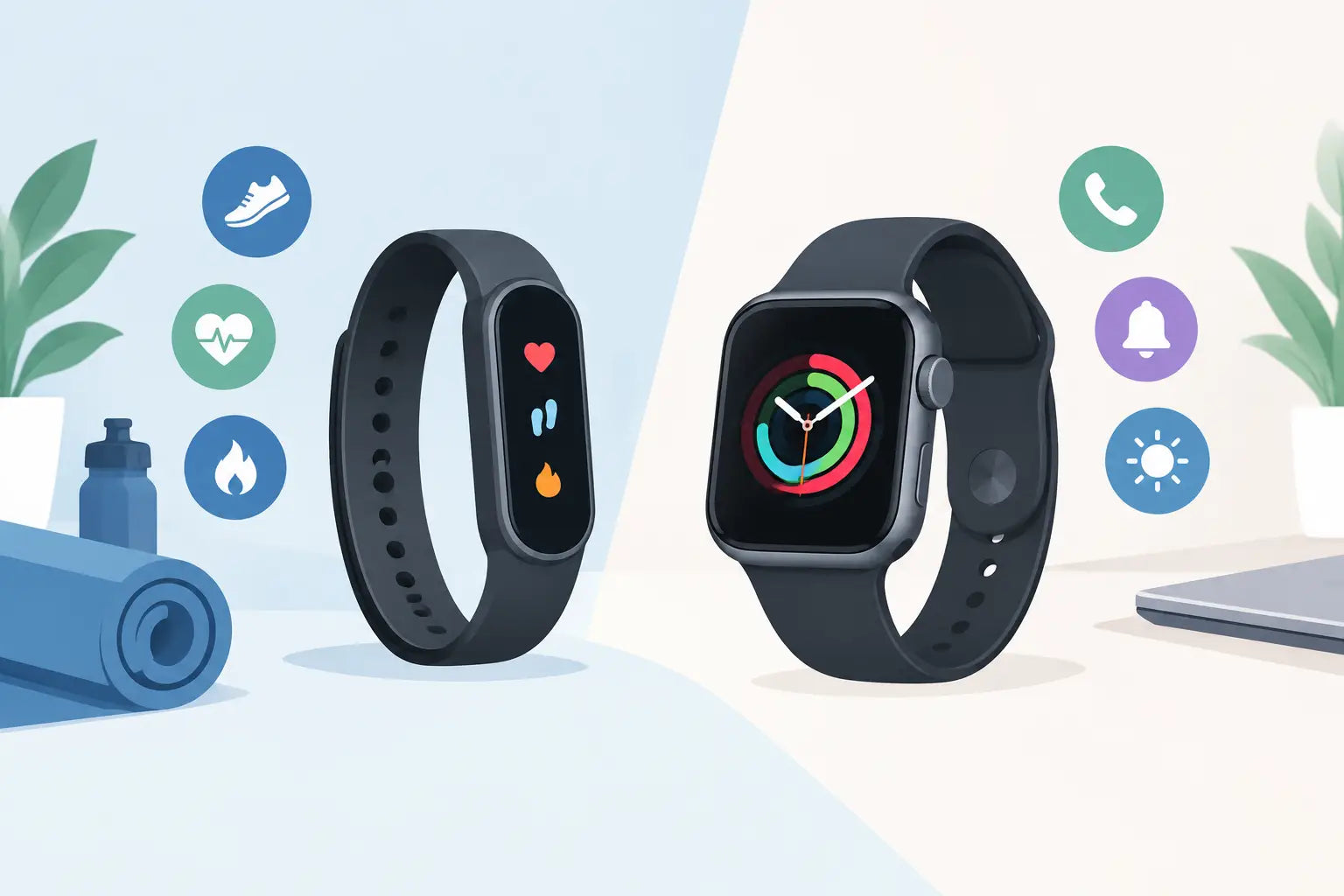
Your workout does not need more distractions. It needs a tool that helps you show up, measure progress, and recover with purpose. In the fitness tracker vs smartwatch decision, the right pick comes down to what you need when the work starts: focused fitness data, or a connected device that does far more than training.
Both can count steps, monitor heart rate, track sleep, and log workouts. But they are built for different routines. One keeps things simple and fitness-first. The other puts training features beside calls, messages, music, apps, and daily planning. Choose the device that supports your habits, not the one with the longest feature list.
Fitness Tracker vs Smartwatch: The Main Difference
A fitness tracker is designed around movement and recovery. It is usually smaller, lighter, and easier to wear all day and all night. Most trackers focus on the numbers that matter for consistent progress: steps, active minutes, calories burned, heart rate, workouts, sleep, and sometimes blood oxygen or stress trends.
A smartwatch does those things too, but it is closer to a mini computer for your wrist. It can show notifications, take calls, run apps, store music, offer maps, make payments, and connect more deeply with your phone. That extra capability can be useful. It can also mean a bigger price tag, more charging, and another screen competing for your attention.
Neither choice automatically makes you fitter. The win comes from using the data to train harder when you are ready, pull back when recovery is poor, and keep your daily movement from slipping.
Choose a Fitness Tracker for Focused, Everyday Progress
A fitness tracker makes sense when your goal is to build a routine without overcomplicating it. If you are starting home workouts, taking more walks, using resistance bands between meetings, or trying to improve sleep, a tracker gives you clear feedback with very little setup.
It is easier to wear consistently
The best tracker is the one that stays on your wrist. Fitness trackers are often slimmer and less bulky than smartwatches, which matters during sleep, strength sessions, and long workdays. Consistent wear creates a more useful picture of your activity and recovery patterns.
For many people, sleep data is where a tracker earns its place. You may notice that poor sleep lines up with lower activity, higher resting heart rate, or a workout that feels unusually tough. That does not mean a device can diagnose your health. It does give you a practical signal to adjust your plan. Choose mobility work, a walk, or a lighter dumbbell session instead of forcing a hard workout when your body is clearly asking for more recovery.
Battery life usually works in your favor
Many fitness trackers run for several days on one charge, and some last longer. Less time on a charging cable means fewer gaps in your tracking. That matters if you want reliable sleep, step, and recovery trends rather than a few scattered workout records.
A long battery life is especially helpful for people who want simple accountability. You should not have to remember another daily task just to see whether you moved enough.
It keeps the spotlight on health and training
A tracker can be the better choice if notifications pull you out of the moment. During a kettlebell circuit, a recovery walk, or a stretch session, you do not need every text, headline, and social alert on your wrist. A fitness-first device helps you stay locked in on the work.
Trackers are also often more budget-friendly. That leaves room in your fitness budget for equipment that creates action: a set of resistance bands, a jump rope, a foam roller, or dumbbells you will use week after week.
Choose a Smartwatch for More Training Tools and Connectivity
A smartwatch is built for the person who wants their wrist device to handle both fitness and everyday life. It is a strong option if you enjoy technology, use phone-based apps often, or want more control without constantly reaching for your phone.
It can make workouts more flexible
Many smartwatches offer larger displays, more detailed workout screens, GPS, music controls, and a wider range of exercise modes. GPS can be valuable for runners, cyclists, hikers, and anyone who trains outdoors and wants pace, route, or distance data without carrying a phone.
Some models also support more advanced training metrics, guided workouts, and app integrations. These features can help if you already follow structured runs, cycling plans, or interval workouts. Just remember that more data is only useful when you know what you will do with it. A screen full of charts will not replace good form, progressive overload, or rest days.
It can support a busy routine
For people balancing work, family, errands, and training, a smartwatch can reduce phone checking. You can see a calendar reminder, respond to an important message, control a playlist, or use a timer between sets from your wrist. That convenience can make a workout feel easier to fit into a packed day.
The trade-off is distraction. If every notification breaks your focus, use the device settings with discipline. Turn on only the alerts you truly need, or use a workout focus mode. Your training hour should build strength, not become another scrolling session.
It may cost more to own
Smartwatches often cost more upfront, and some features may depend on a specific phone ecosystem or paid service. Battery life can also be shorter, particularly when using GPS, streaming music, or a bright always-on display. If you forget to charge it overnight, you may miss sleep tracking when it matters most.
That does not make a smartwatch a bad investment. It simply means you should buy for your actual routine. If you will use navigation, calls, music, and detailed workout tools every day, the added cost may be worth it. If you mainly want steps, heart rate, sleep, and workout tracking, it may be more device than you need.
What to Look for Before You Buy
Start with the activities you do now, not the version of you who might train differently six months from now. A device should make your current routine easier to sustain while leaving room to grow.
Pay attention to comfort, battery life, display size, water resistance, and phone compatibility. If you lift weights, look for a band that feels secure but does not dig into your wrist when gripping a barbell or kettlebell. If you swim or sweat heavily, check water-resistance details instead of assuming every wearable handles water the same way.
Heart rate tracking is useful for spotting general effort and trends, but wrist-based readings are not perfect. Strength training, fast intervals, cold conditions, loose bands, and wrist movement can affect accuracy. Use the numbers as guidance, then match them with how you feel. If your heart rate looks normal but you are exhausted, sore, and sleeping poorly, recovery still deserves attention.
Also think about the metrics that motivate you. Some people stay consistent when they see a daily step goal. Others care more about sleep, workout duration, pace, or active minutes. The right device makes those numbers easy to find without making you obsess over them.
Match the Device to Your Training Style
Choose a fitness tracker if you want affordable, low-distraction accountability; you prioritize sleep and daily movement; or you want a lightweight device that can go days between charges. It is a strong fit for beginners and experienced exercisers alike because simple feedback is often the feedback you actually use.
Choose a smartwatch if you train outdoors, rely on GPS, want music and calls without your phone, or enjoy using workout apps and detailed screens. It is also a smart move when your device needs to work as a daily organizer as well as a training companion.
If you are still undecided, do not overthink it. Your strength, endurance, and mobility will not come from a wrist screen. They come from the reps you complete, the walks you take, the sleep you protect, and the recovery work you do when no one is watching.
Pick the wearable that makes those actions easier to repeat. Then charge it, put it on, and get after your next session.

